
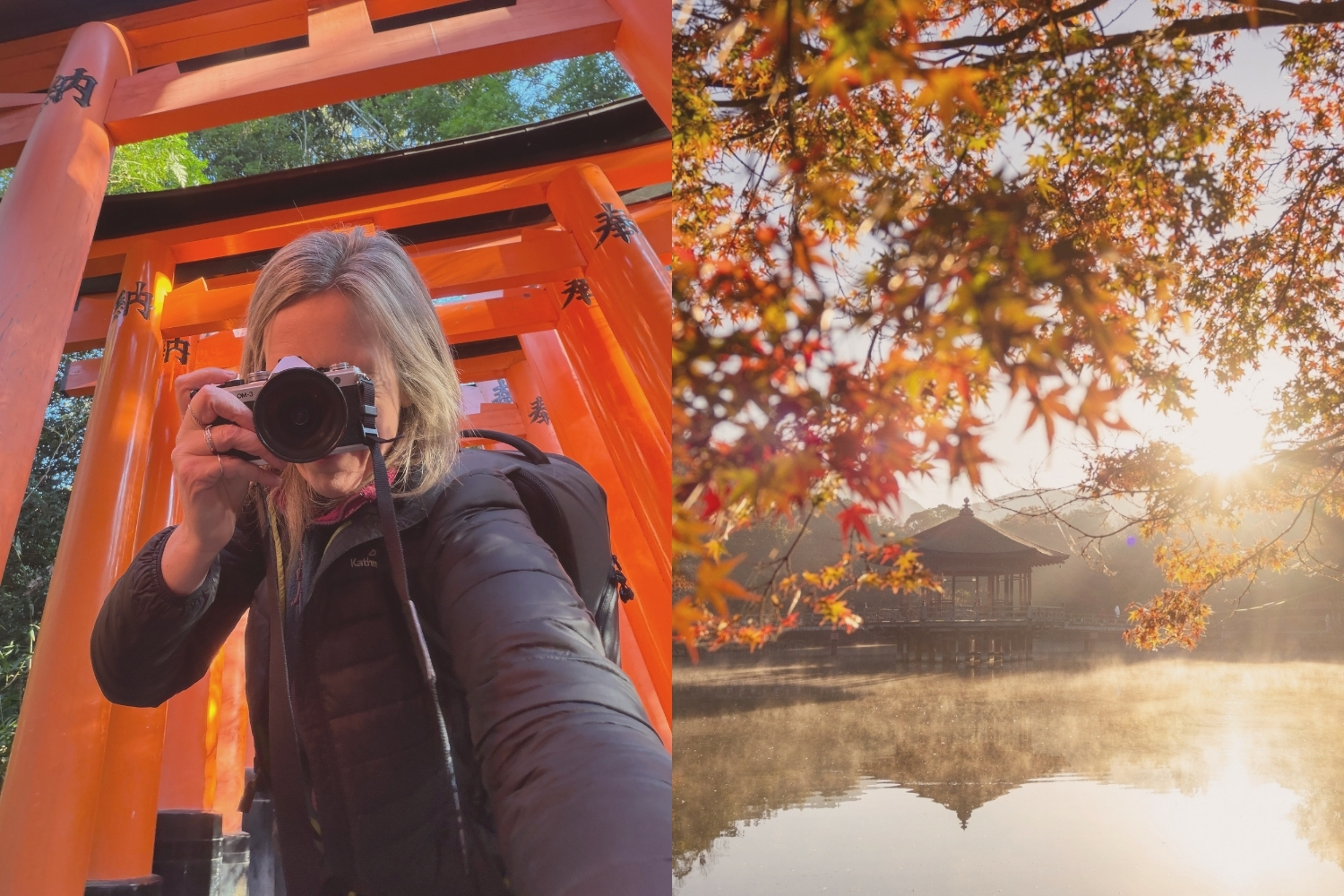
Gaining Confidence in Speaking Japanese before Travel
This article was created in partnership with Preply, who provided lessons for me to experience the platform ahead of my upcoming travels in Japan. All thoughts and experiences are my own.
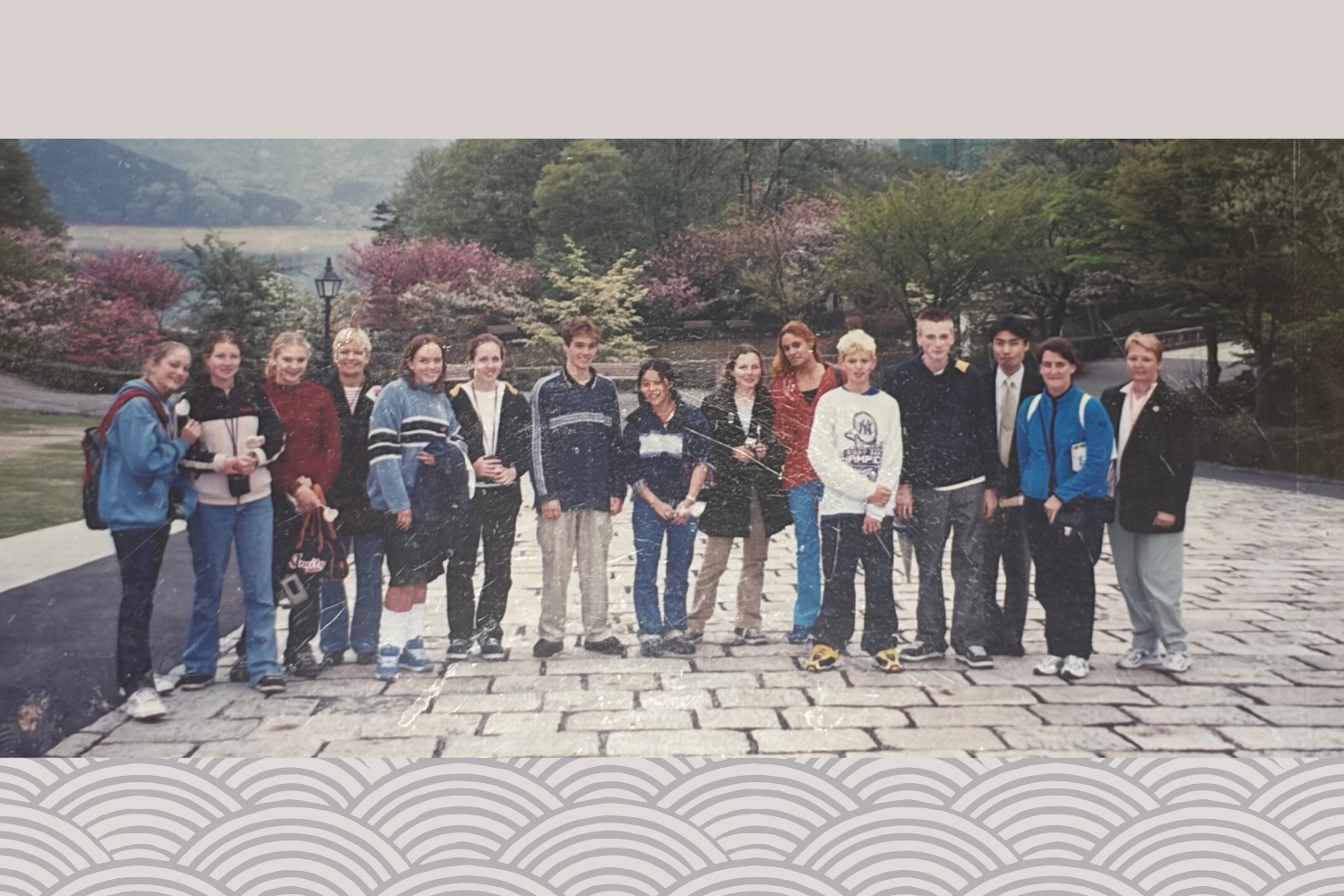
I began learning Japanese when I was 15, visiting Japan as a student with my high school and staying with a host family in Sapporo, Hokkaido. As a shy teenager, I wasn’t great at speaking, instead learning polite phrases like ‘hajimemashite/nice to meet you’ and quietly listening and observing during the experience.
The trip opened my eyes to another culture, another language and instilled in me a love of travel. I was utterly hooked and did everything possible to ensure travel would play a role in my career, firstly signing up to train as a pilot, then transitioning to journalism when I realised I got a teeny bit airsick in small planes!
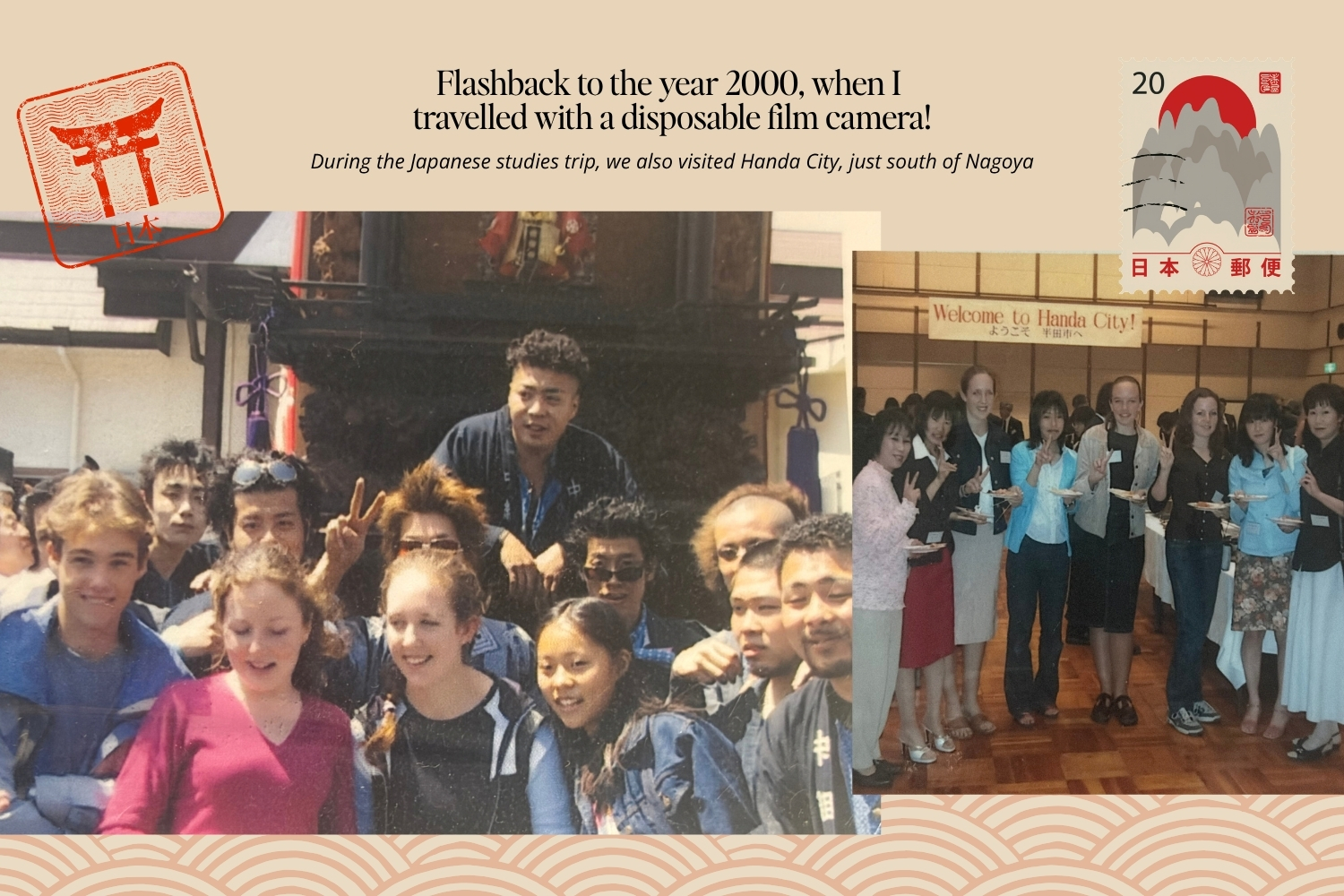
My host sister Mizuho and I stayed in touch, sending letters back and forth along with boxes of magazines and all the important teenage things we thought the other needed to know about from our countries: boy bands (SMAP/Backstreet Boys), lip gloss, and sweets. While she speaks fluent English, my Japanese skills never progressed much, and despite still being close friends some 30 years later, we’ve never had a full conversation in Japanese.
Japanese remained in the back of my mind until I moved to France in 2015. As I slowly (very slowly) learnt French, it seemed to occupy the small section of my brain previously reserved for foreign languages and gradually pushed most of my Japanese vocabulary out, except for the all-important phrase when travelling, ‘toire wa doku desu ka/where is the toilet?’.
For years, whenever I tried to think of a Japanese word, French would appear first, which wasn’t particularly useful as my adventures in Japan became more frequent.
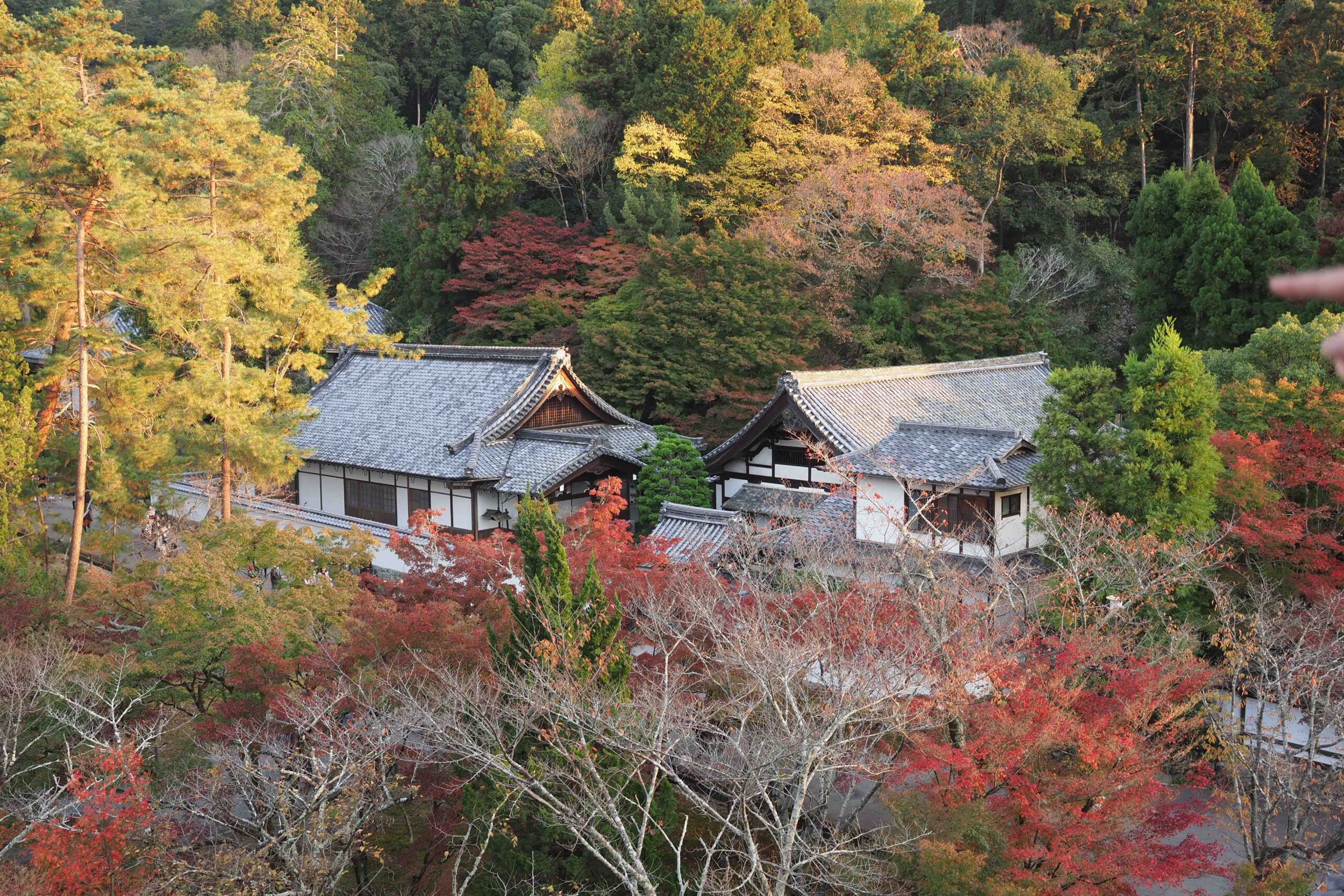
I’ve visited Japan more than a dozen times now and, until recently, I’ve been quite happy travelling with a handful of familiar phrases. I can be polite, say hello and thank you, order something, point at things and, when all else fails, Google Translate usually saves the day. My travel guides for visitors include photogenic destinations in Kyoto, Tokyo and beyond, but it’s the local stories and regional areas I’m keen to explore deeper for future articles.
Over my last few trips, the basics haven’t felt like enough. The more time I spend in Japan, particularly when travelling beyond the major cities, the more I want to be able to have an actual conversation. To ask someone about the landscape I’m photographing, understand a little more about the area I’m visiting, or chat without pulling out my phone every few seconds.
Plus, my friend now has children, and while they’re learning English, I want the skills to speak with them in Japanese too; it’s only fair!
With another trip approaching and a few weeks travelling around Hokkaido on the itinerary, I decided to give Japanese another proper attempt, this time with a tutor.
Japanese Lessons: Finding Yuka on Preply
Preply has thousands of Japanese tutors, which initially sounds like it could make choosing one slightly overwhelming, but I actually found the browsing process quite fun.
You can filter tutors by interest, skills or education purpose (eg. for business, casual conversation, travel), read about their experience and watch their introduction videos before booking anything. I spent some time clicking through profiles until I found Yuka, who also happens to live in Hokkaido. Considering that’s exactly where I’m heading, it felt like a pretty good match! You can view her profile here if you’re keen to start learning Japanese too 🙂
The process begins before your trial lesson with questions about your skill level, interests, reasons for learning, and any topics you’re keen to improve on. For me, the main aim was to confidently ask questions or have a conversation, not in a generic way (ordering food/directions), but in a friendly way to connect and learn about the places I’ll be visiting.
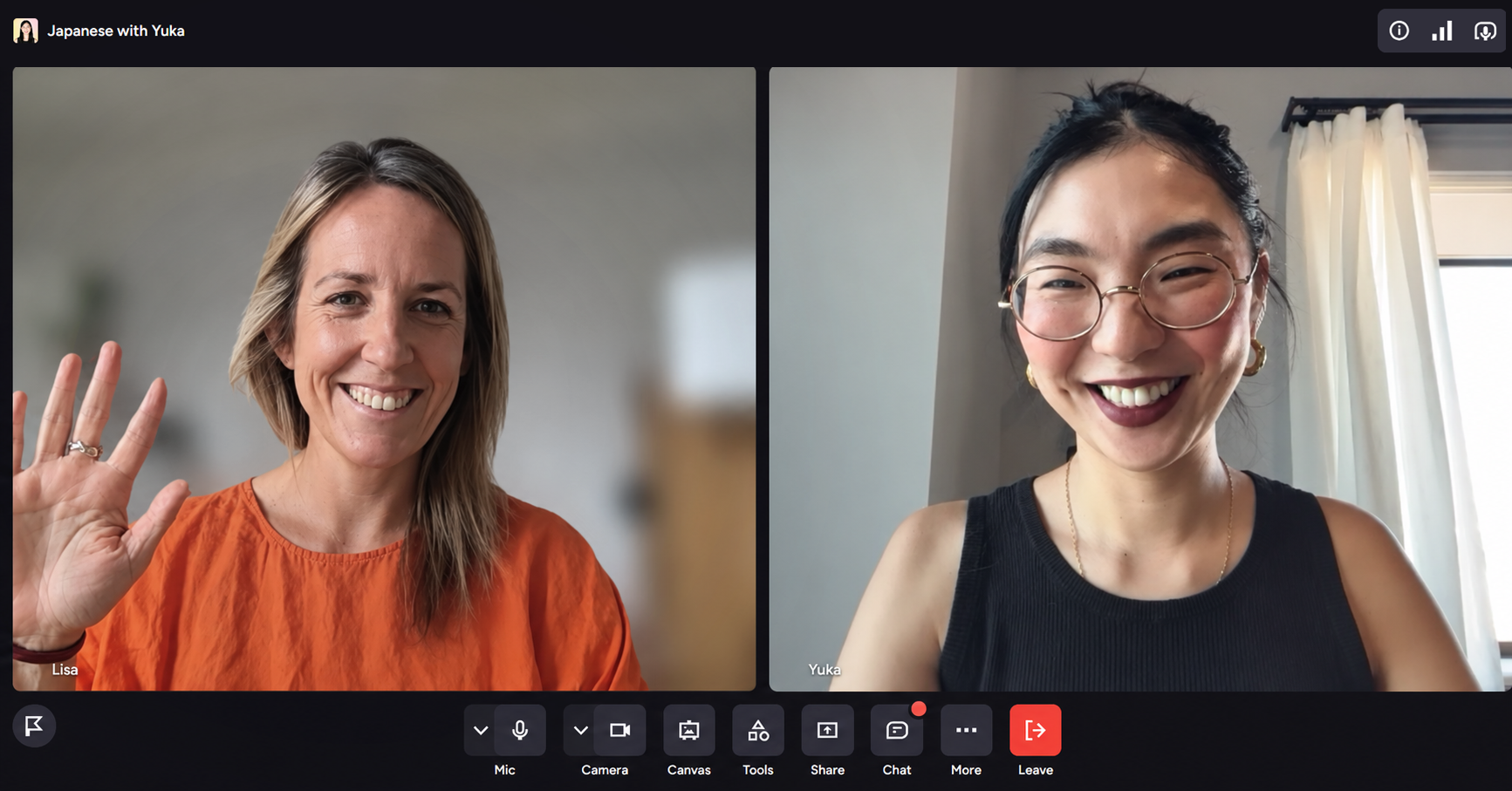
Because of this structure, from our very first interaction, Yuka knew why I’m learning Japanese and where I’ll be travelling, so we’ve been able to shape the lessons around words and conversations I’m actually likely to use. There’s been notes on signs like ‘Beware Bear’ for my hiking plans, how to enquire about hiking trails, have a conversation with information centres, and how to ask about people’s life and interests.
We’ve talked about wildlife, landscapes and natural wonders, practised phrases that might help while I’m travelling and worked on conversations rather than simply memorising individual words. She’s also incredibly patient, which is very useful when her student is staring into the distance trying to retrieve a word that was discussed approximately 60 seconds earlier.
If you’re learning a language, be patient with yourself – 自分に焦らないでください/ jibun ni aseranaide kudasai! It’s quite a funny feeling to go from being able to read, write and speak to suddenly speaking in single sounds and not understanding what you’re saying, ka, ga, ne, sa, yo!
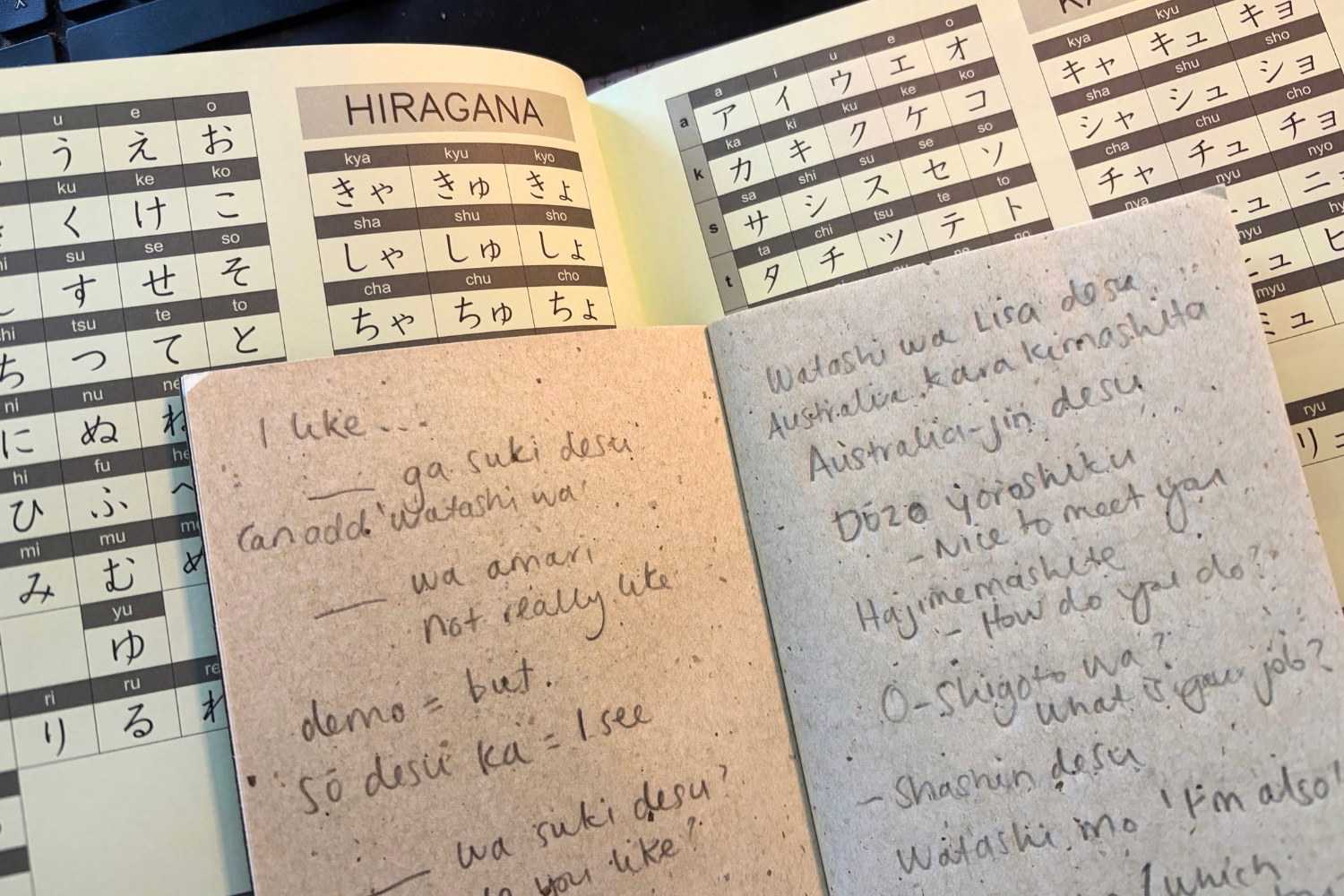
Alongside my lessons with Yuka, I’ve been studying Hiragana, learning the characters so our lessons can be delivered in written Japanese, which has helped to progress my skills faster, even if I do feel like a six-year-old reading them.
The Benefit of a Consistent Tutor + Ongoing Learning
This is probably the part I’ve enjoyed most. I’ve tried language apps before and have every Japanese language book on my shelves, but learning one-to-one feels completely different because there’s nowhere to hide when someone asks you a question in Japanese and waits for you to answer. You have to listen, attempt a response and, occasionally, get it completely wrong.
Yuka has kept track and knows what we’ve already covered, what I keep forgetting and what I’m travelling to Japan to do. If something comes up naturally in conversation, she’ll adapt the lesson and teach me a word or phrase that relates to it. She’s even set homework for me, additional tasks and notes to focus on to keep the flow of learning happening beyond each lesson.
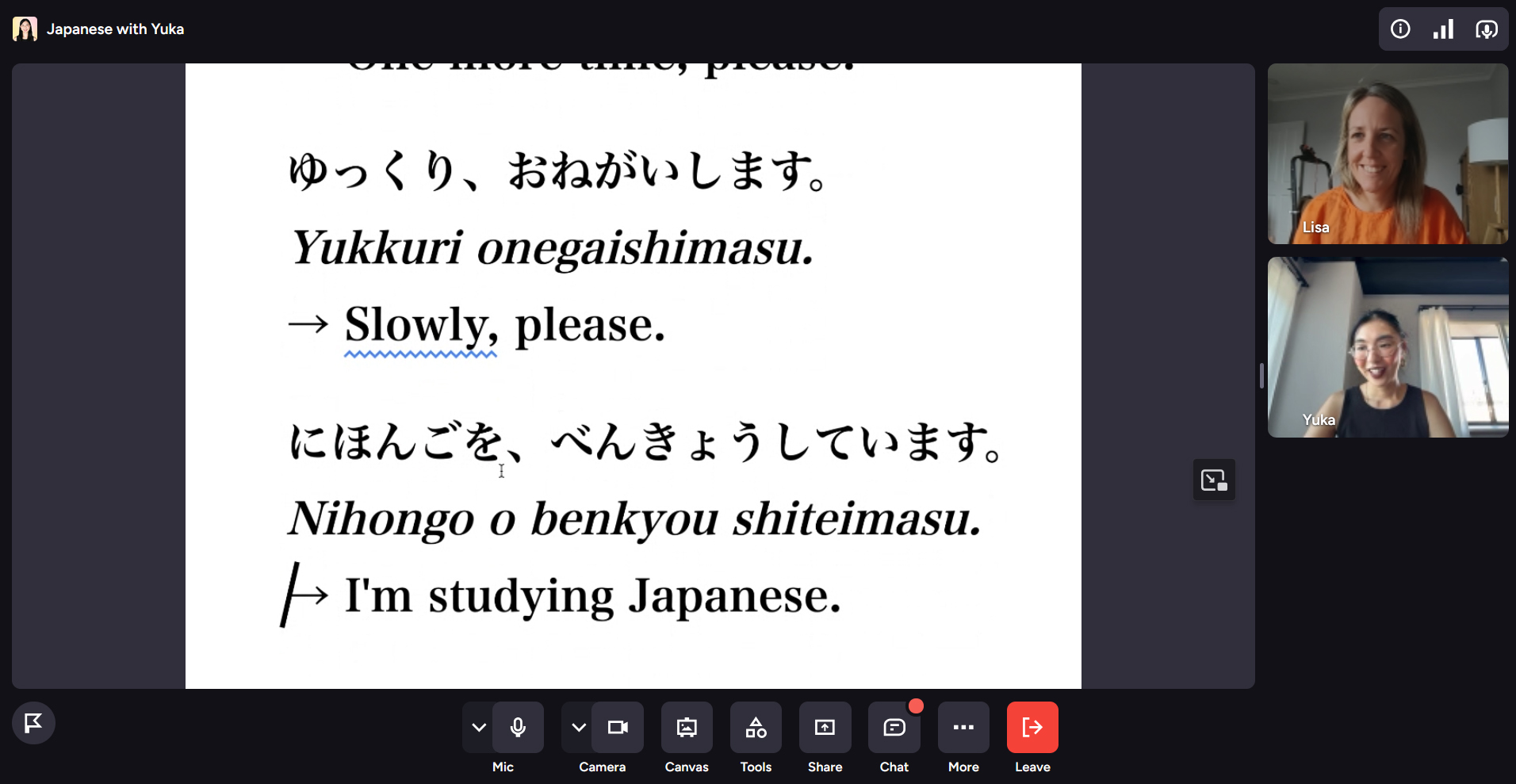
I was actually really impressed with the personalised notes, learning materials and documents Yuka prepared after my first lesson. They’ve been updated every time we chat, and it’s a great way to keep track of the progression and have such valuable resources to refer back to.
There’s also a connection that starts to develop when you’re meeting the same person each week. I’m not simply logging in to complete another Japanese lesson, I’m logging in to chat with Yuka, tell her how much I’ve forgotten since our last lesson and hopefully surprise both of us by remembering something!
It’s made learning feel much more personal and, importantly for me, much more relevant to why I want to learn Japanese in the first place.

How Preply works:
The platform is refreshingly straightforward. You can browse tutors across languages or other skills too, watch their introduction videos, read reviews and see their availability before choosing who you’d like to learn with.
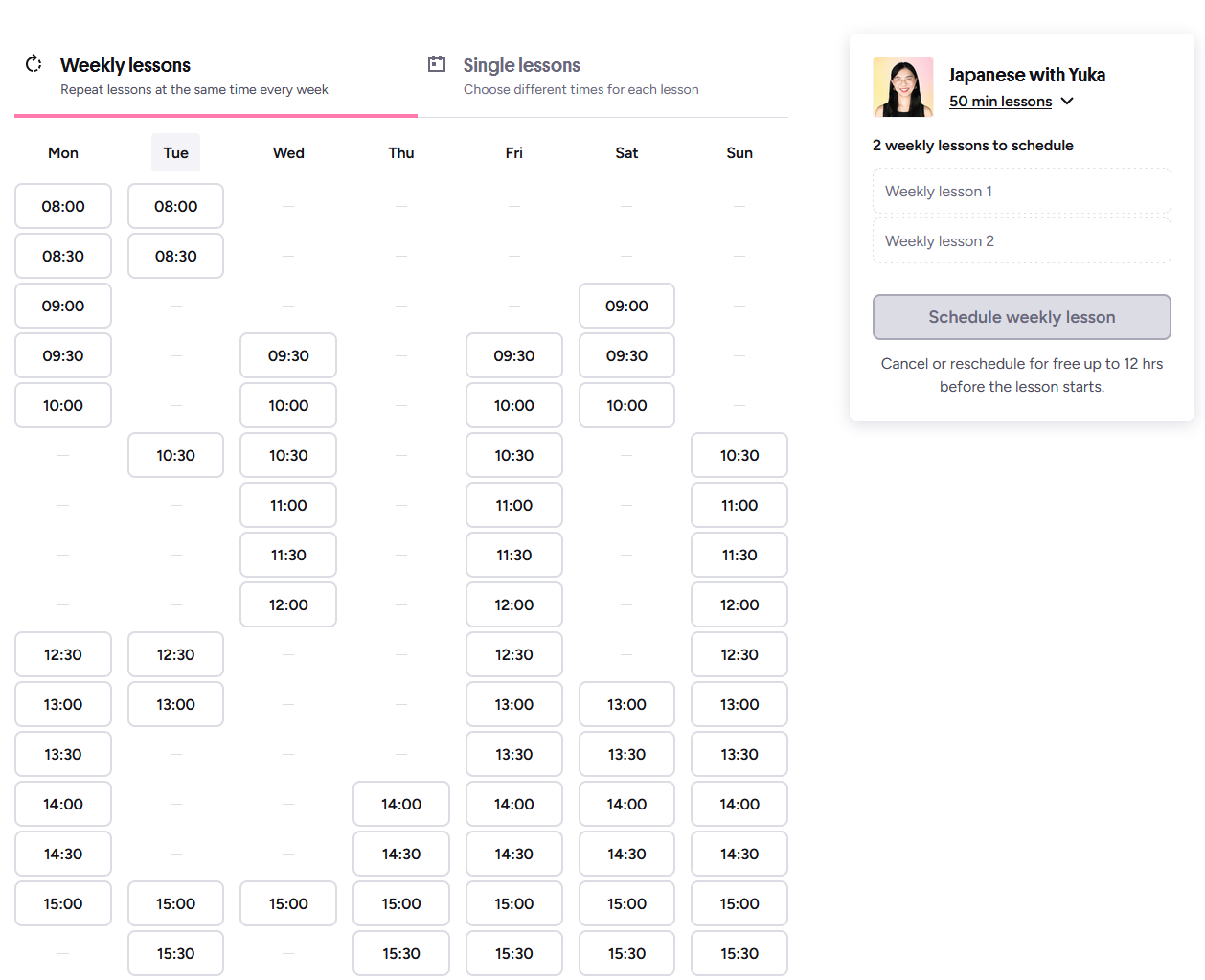
You then book a trial lesson, either 25 or 50 minutes, to meet your tutor and talk about what you want to achieve. If you’d like to continue learning together, you can subscribe and schedule lessons each week.
I’ve found the subscription format particularly useful because it keeps Japanese sitting firmly on my weekly schedule and the site offers guidance depending on how quickly you’d like to progress. I opted for two lessons per week, but there’s the option to fill up your schedule if you’re keen to learn faster and can dedicate more time to it. Language apps are very easy for me to ignore, whereas a real person waiting for me on a video call is considerably harder and it’s been so lovely to log on and see Yuka, and her cat Margaret, of course!
Having those lessons coming up each week gives me a reason to practise, revise what we covered and keep moving forward rather than enthusiastically learning Japanese for four days and then forgetting about it for three months.
The encouraging emails, reminders, notifications and lesson prompts are innovative too. I didn’t expect that during the lesson, an encouraging note would pop up to say I’ve been speaking for 50% of the time and that I should try to improve upon this to gain more confidence. Little things that really help when you’re feeling frazzled!
So, has it helped?
I think the real test will come when I arrive in Hokkaido. I’m certainly not heading to Japan expecting to suddenly launch into lengthy conversations with everyone I meet, and I’ll still have Google Translate ready for the inevitable moments when every Japanese word I’ve learnt mysteriously disappears.
What I am looking forward to is trying with renewed confidence.
After years of photographing Japan, I’m increasingly interested in what exists beyond the photographs: the conversations, local knowledge and little details you don’t necessarily find in a guidebook. I want to understand more about the landscapes I’m photographing and the regions I’m travelling through, and to have the confidence to start conversations rather than assuming I won’t understand the response.
Perhaps, after all these years, I’ll be able to hold down a conversation and understand not only what I’m saying, but what I’m hearing and seeing too! It’s actually the reading that’s also surprised me, really excited to land in Japan and start reading signage.
Oh, and I’ll be continuing to have lessons with Yuka as I travel, I’m sure it’ll be even more beneficial knowing I can put what I learn into practice immediately on my trip.
If you’re keen to learn a language for your upcoming travels, take a peek at Preply.com and explore the available tutors!
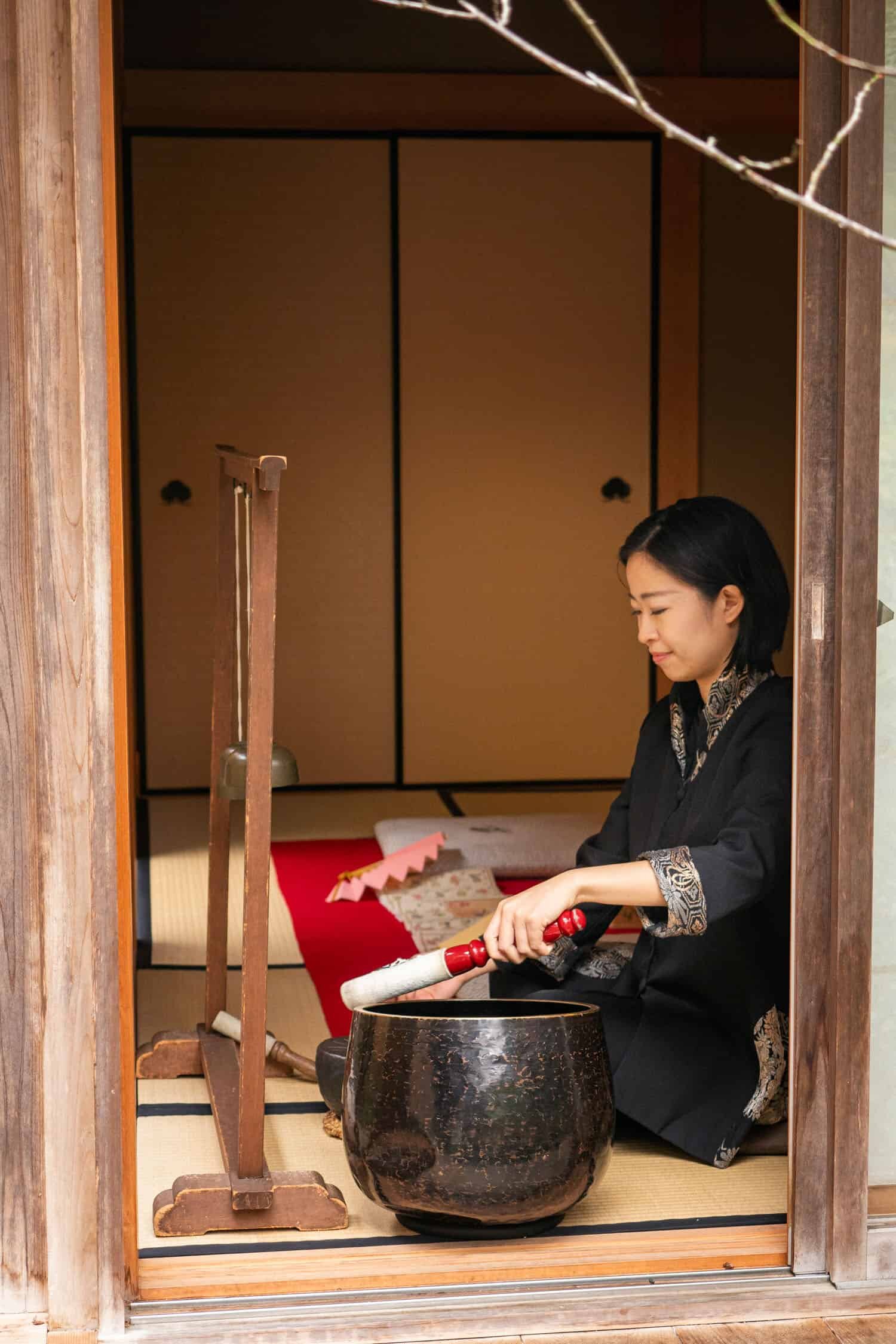

Travel and landscape photographer from Australia who is far more comfortable in a pair of flippers than heels! Having worked for publications such as Lonely Planet, Wanderlust and the Sunday Times, Lisa founded The Wandering Lens to share destination guides to the worlds most photogenic places and outdoor experiences.


Leave a Comment