
A Photographer’s Guide to Arashiyama, Japan
Arashiyama is one of Kyoto’s most photographed areas, and for many visitors, it begins and ends with a short walk through the Bamboo Grove. It’s an iconic scene, tall green stalks arching overhead and light filtering through the dense forest, but it’s also one of the most crowded stretches of pavement in the city, if not all of Japan.
I’ve visited Arashiyama twelve times, yes twelve, Kyoto is one of my favourite cities, and each time I expect my favourite spots in Arashiyama to be suddenly overwhelmed by crowds, but to my surprise, they’re still not, despite the Bamboo Grove mere minutes away, seeing thousands of tourists packed like sardines along the path.
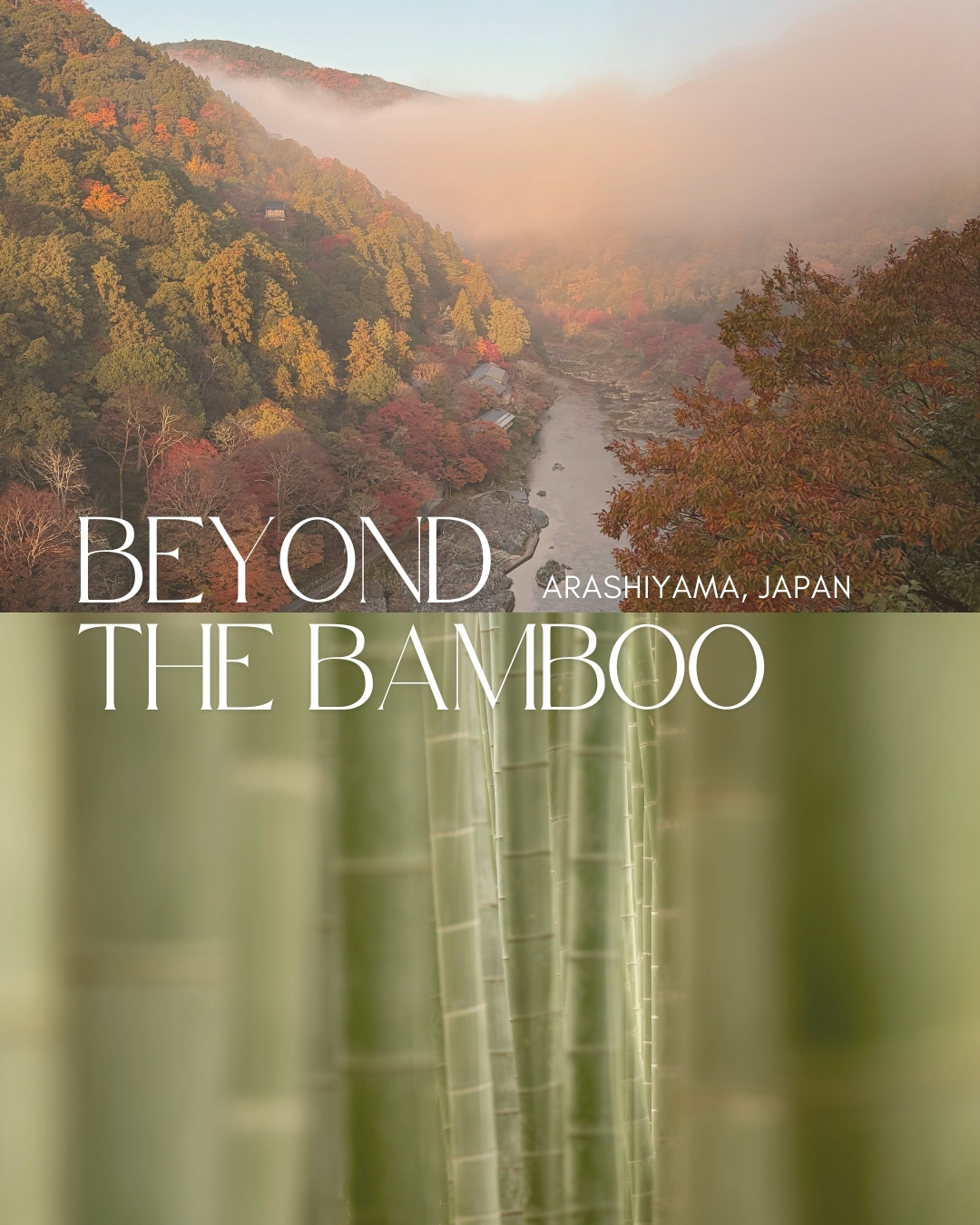
Every time I go to write this guide, I hesitate because I don’t want the quieter places spoiled; however, I noticed on my most recent visit that new cafes and stores are starting to open up along the route I walk, and it would be nice to see them get a little more love and foot traffic. Plus, one of the temples in this guide now has a new ticket machine, so I’m assuming it’s gaining in popularity already, particularly in the peak seasons.
There will still be many people who visit Arashiyama to simply photograph the bamboo grove and leave, particularly tour groups, so this guide is for those who want to explore beyond the famous bamboo grove and see another side of Arashiyama, one that invites you to slow down, soak in the culture, the natural environment, and to breathe deeper.
What often goes unnoticed is just how large and varied Arashiyama really is. Beyond the bamboo path lies a landscape of river valleys, forest trails, and hillside temples, where the pace changes and the photographic opportunities become far more rewarding.
If you’re willing to step beyond the crowds, this western corner of the city offers some of the most beautiful and peaceful photographic opportunities in Kyoto.
Let’s explore Arashiyama, beyond the Bamboo Grove.
ps – there’s a map of all locations noted at the end of the guide!
The Reality of the Bamboo Grove
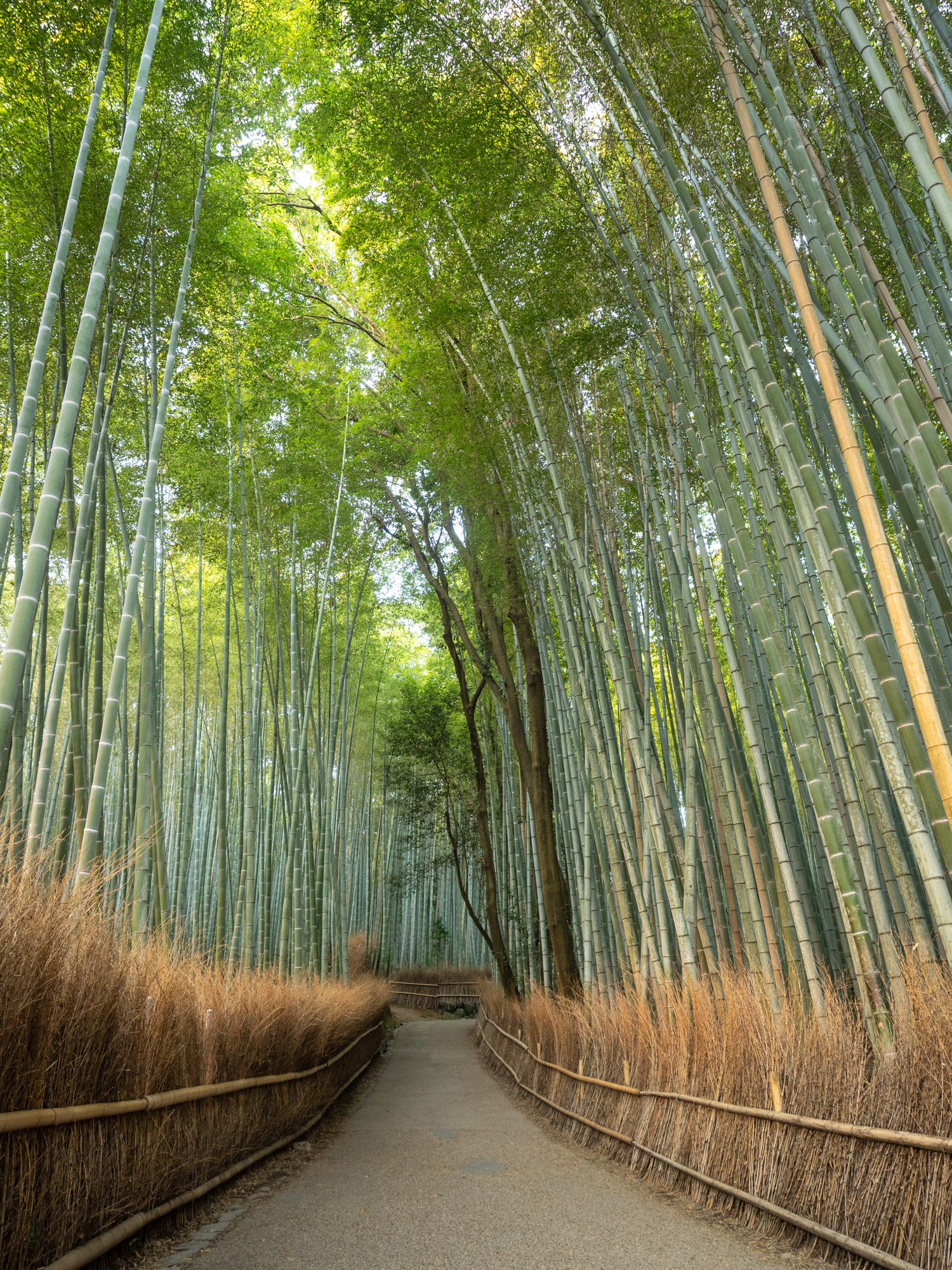
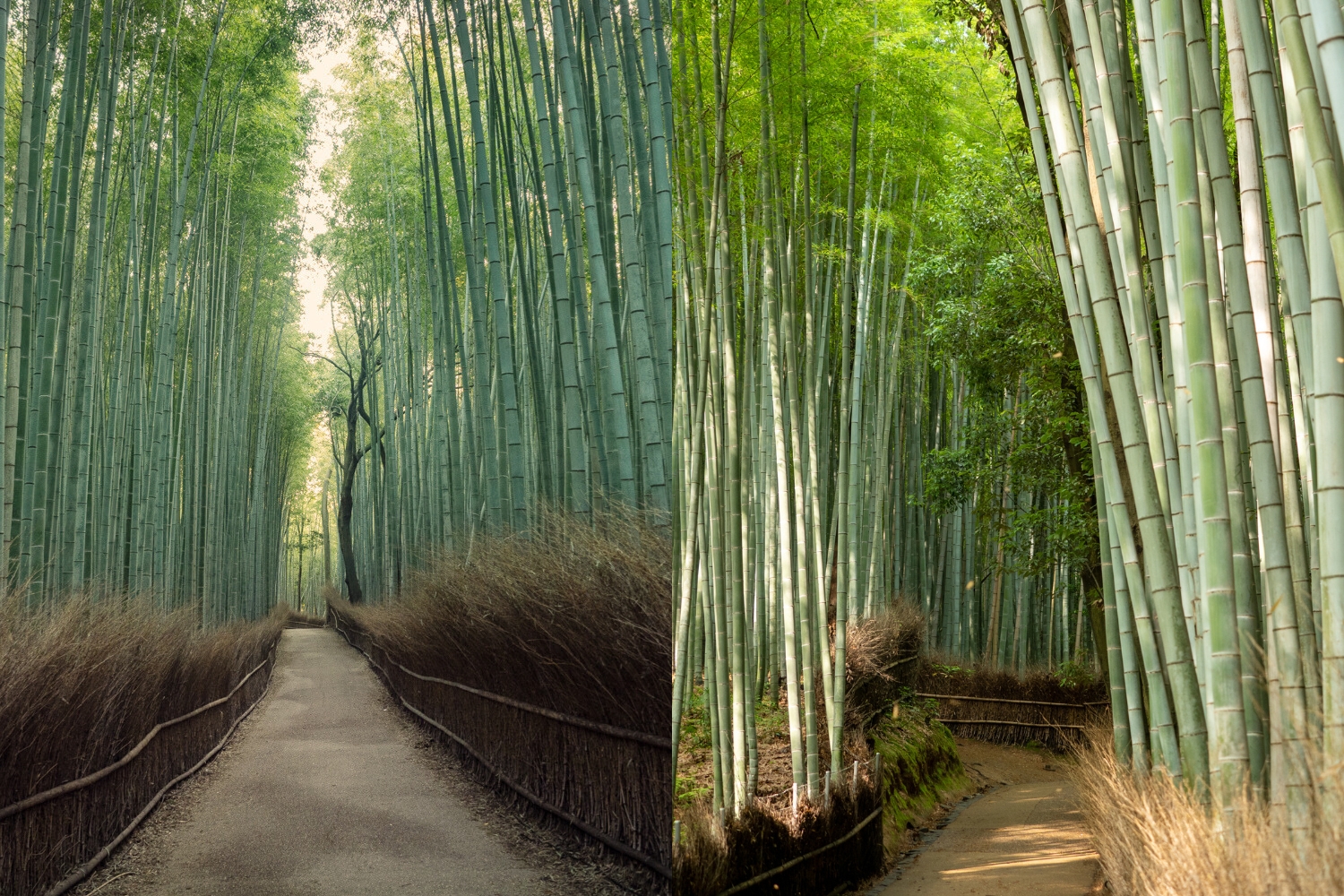
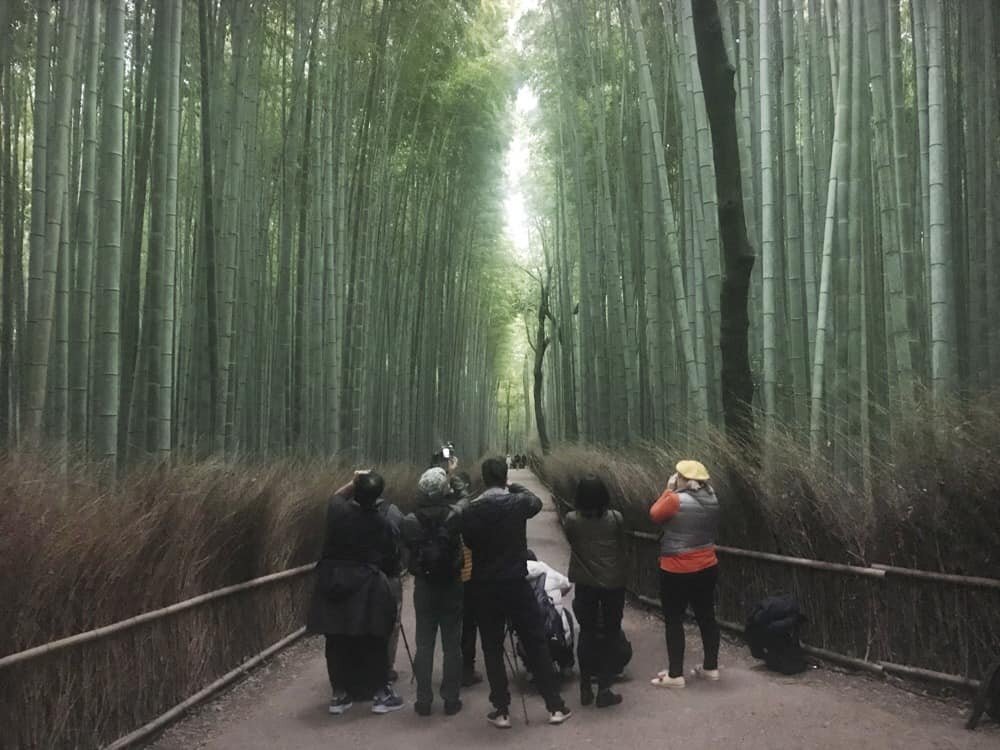
There’s no denying the Bamboo Grove’s visual appeal; getting a great shot here feels so rewarding and can be one of the highlights of visiting Kyoto. The vertical lines, repetitive patterns and shifting light can be stunning when conditions are right. But in reality, it’s also a narrow corridor that fills quickly, often from early morning onward.
For photographers, this can make it one of the most difficult places in Kyoto to capture, especially if you like to take your time, observe, immerse yourself, and then start taking photos. Once the crowds arrive, movement is constant, tripods feel impractical, and compositions are often limited to a handful of familiar angles repeated by other photographers thousands of times each day. You can read a more in-depth guide about Photographing the Bamboo Grove here.
That doesn’t mean the grove should be avoided altogether, it’s somewhere I’d absolutely is still on your must-see list, and there are always options for getting creative and experimenting photographically despite the crowds. I’m writing this just to assist anyone keen on clear(ish) shots to plan ahead and manage expectations. Timing is everything, and so is a sprinkle of creativity. The only time I’d recommend photographing the bamboo grove, if you’re keen to get a relatively clear path, is early in the morning, ideally before, at or just after sunrise, when the paths are at their quietest, and the light is soft. It’s still relatively empty and evokes that special feeling that ignites a creative spark, you’ll want to take more photos of bamboo than you ever have before!
There are also times throughout the year when it’s illuminated in the evening, but most of the year, it’s very dark in there after the sun sets. I’ve attempted it before for long exposures; it’s eerie…but quite fun at night if you’re keen!
After a sunrise visit in the morning, it’s worth moving on to the surrounding hills and viewpoints, particularly Arashiyama Park in the Kameyama area, where early morning light falls beautifully across the river and surrounding forests. Getting your shots inside the bamboo grove early, opens the day up to exploring the true beauty of Arashiyama that lies beyond the popular grove.
Just a few minutes’ walk away, Arashiyama opens into something much richer.
Arashiyama as a Landscape
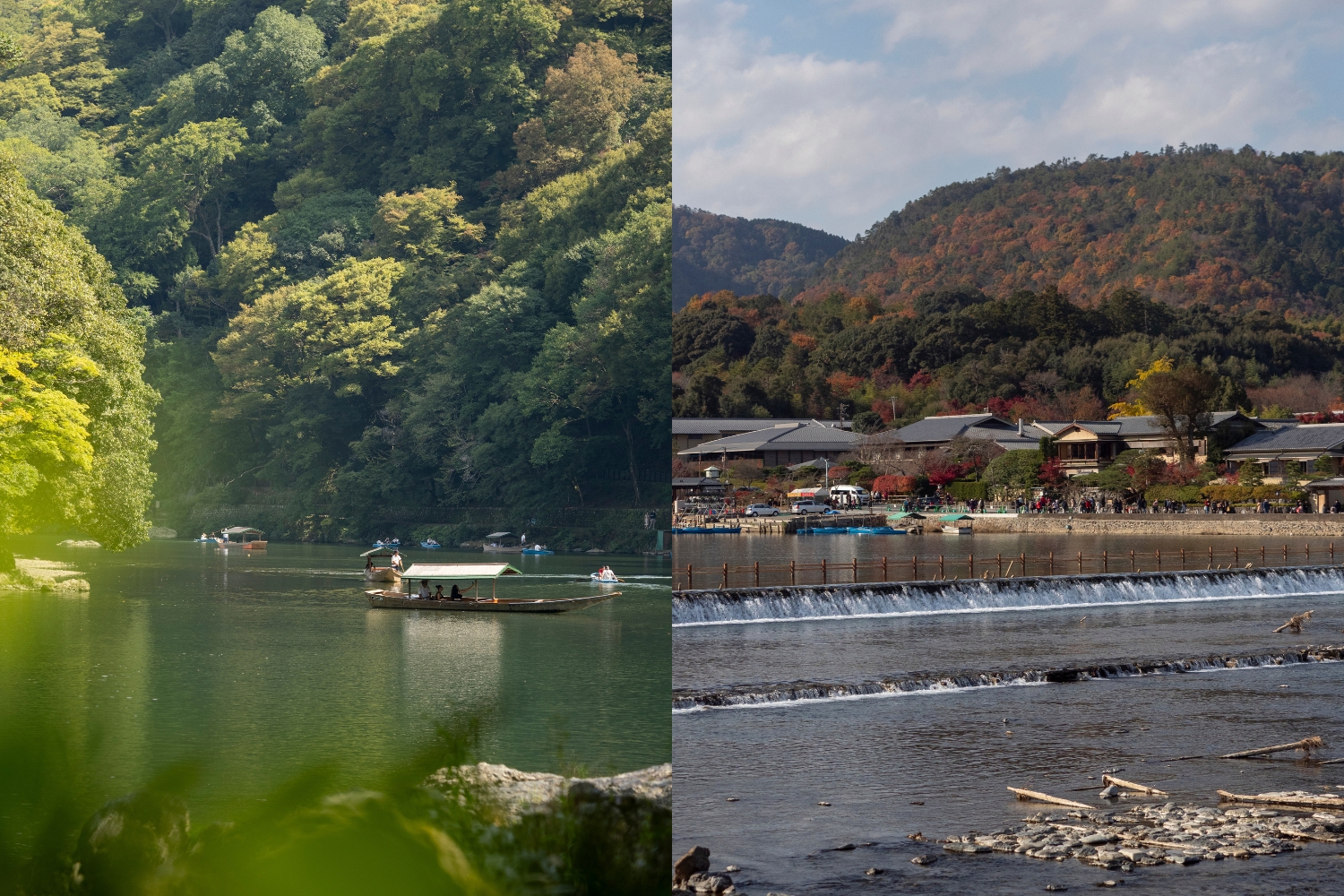
Arashiyama sits at the base of a river valley framed by mountains and forested ridges. The Katsura River curves through the district, crossed by the Togetsukyo Bridge, with wooded hills rising on both sides and a hive of activity on the water from row boats to cormorant fishing.
This geography gives Arashiyama its real photographic strength. Depending on the season and time of day, you’ll find reflections on the water, mist drifting through the hills, intensely humid conditions or even snow sprinkling on forest paths that feel far removed from central Kyoto.
Autumn brings vivid colour to the riverbanks and hillsides, summer offers deep greens and cool shade beneath the trees, and winter reveals a quieter, more restrained version of the landscape. In spring, soft foliage and fresh growth add a gentle brightness to the scene.
Rather than focusing on one famous walkway, it’s worth thinking of Arashiyama as a series of interconnected environments, river, forest, hills and temples, each offering its own photographic possibilities.
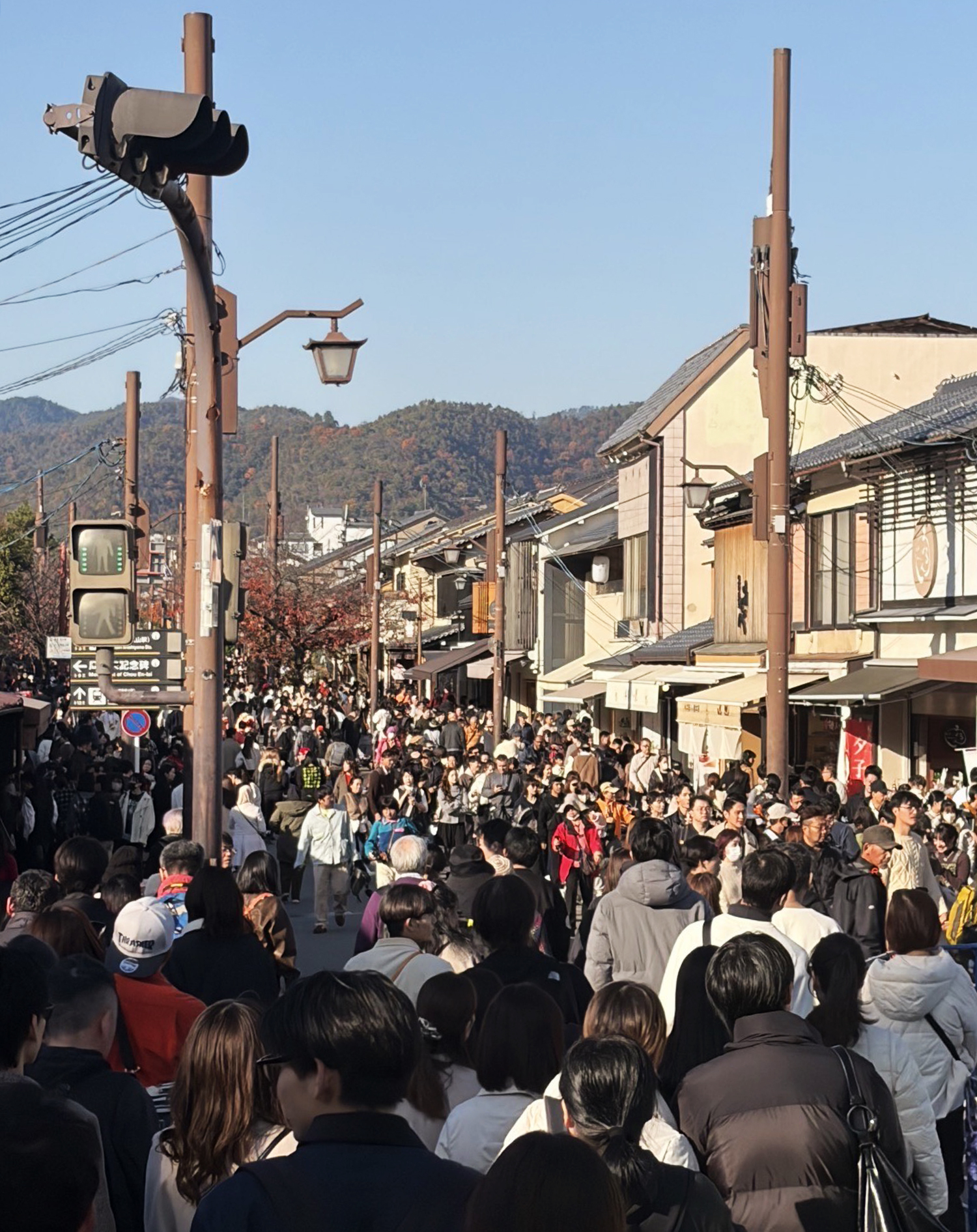
Below is an image of the main street in Arashiyama on a Saturday in November, and it’s one of the reasons I’m writing this guide to present some options for anyone seeking to escape crowds like this. I know there are a lot of travel blogs or social media videos that say, ‘This is the SECRET place to escape crowds’, or ‘Kyoto’s most beautiful hidden temple’, but really, once you start wandering away from the main tourist thoroughfares, you’ll find your own spots quite easily. It applies to Gion, Higashiyama, downtown Kyoto and beyond. Wander, explore with your camera, and see what you find. The same rule applies to Arashiyama and this guide is simply some photo spots that I enjoy visiting every time I’m in Kyoto, ones that have always provided inspiration and peace when photographing.
Arashiyama Park (Kameyama Area): Views Above the River
One of the best places to begin exploring beyond the bamboo grove is Arashiyama Park in the Kameyama area. Once you’ve photographed the bamboo at sunrise, turn left at the end of the main path and wander up short hill into a network of quiet paths and viewpoints overlooking the Katsura River and surrounding hills.
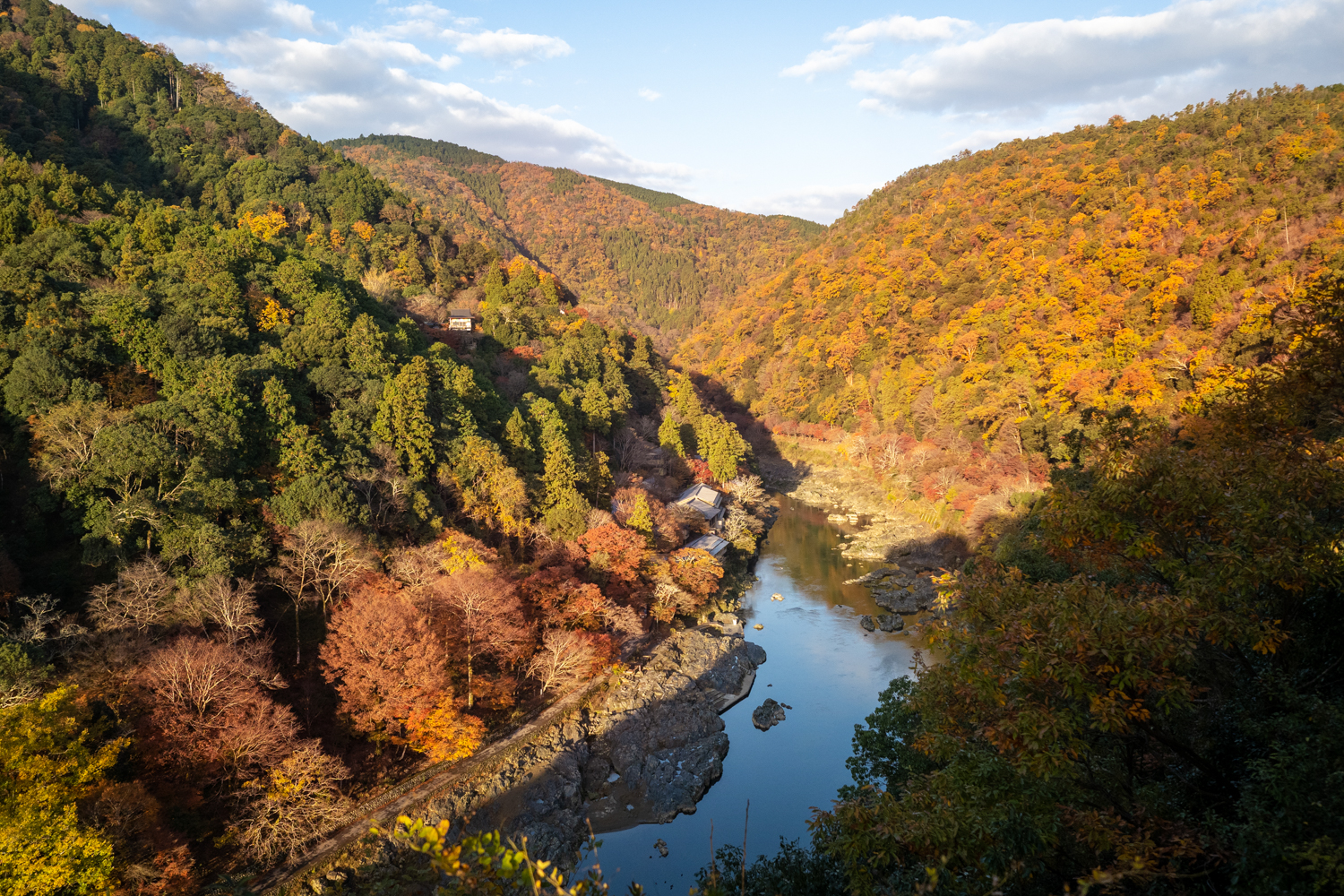
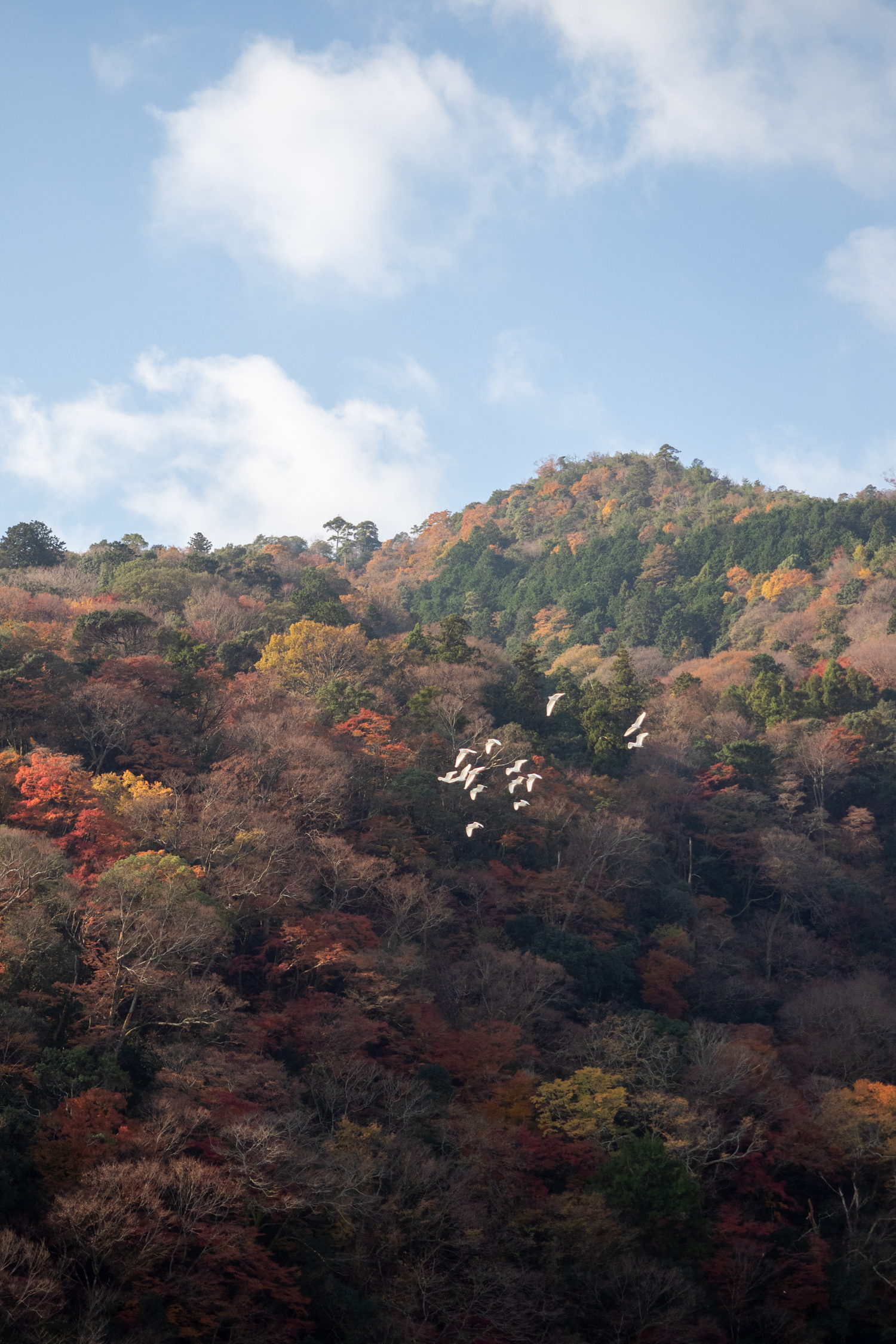
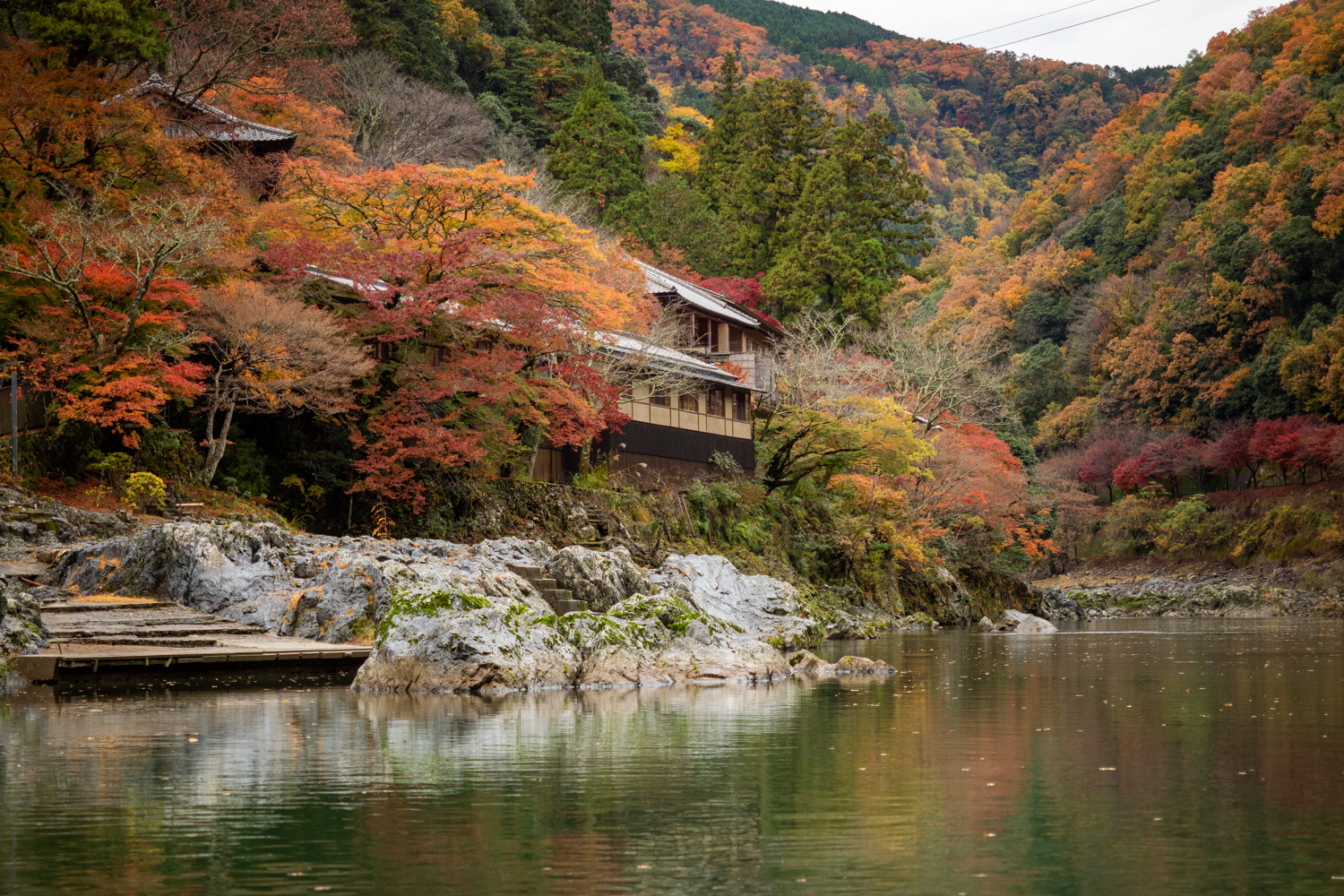
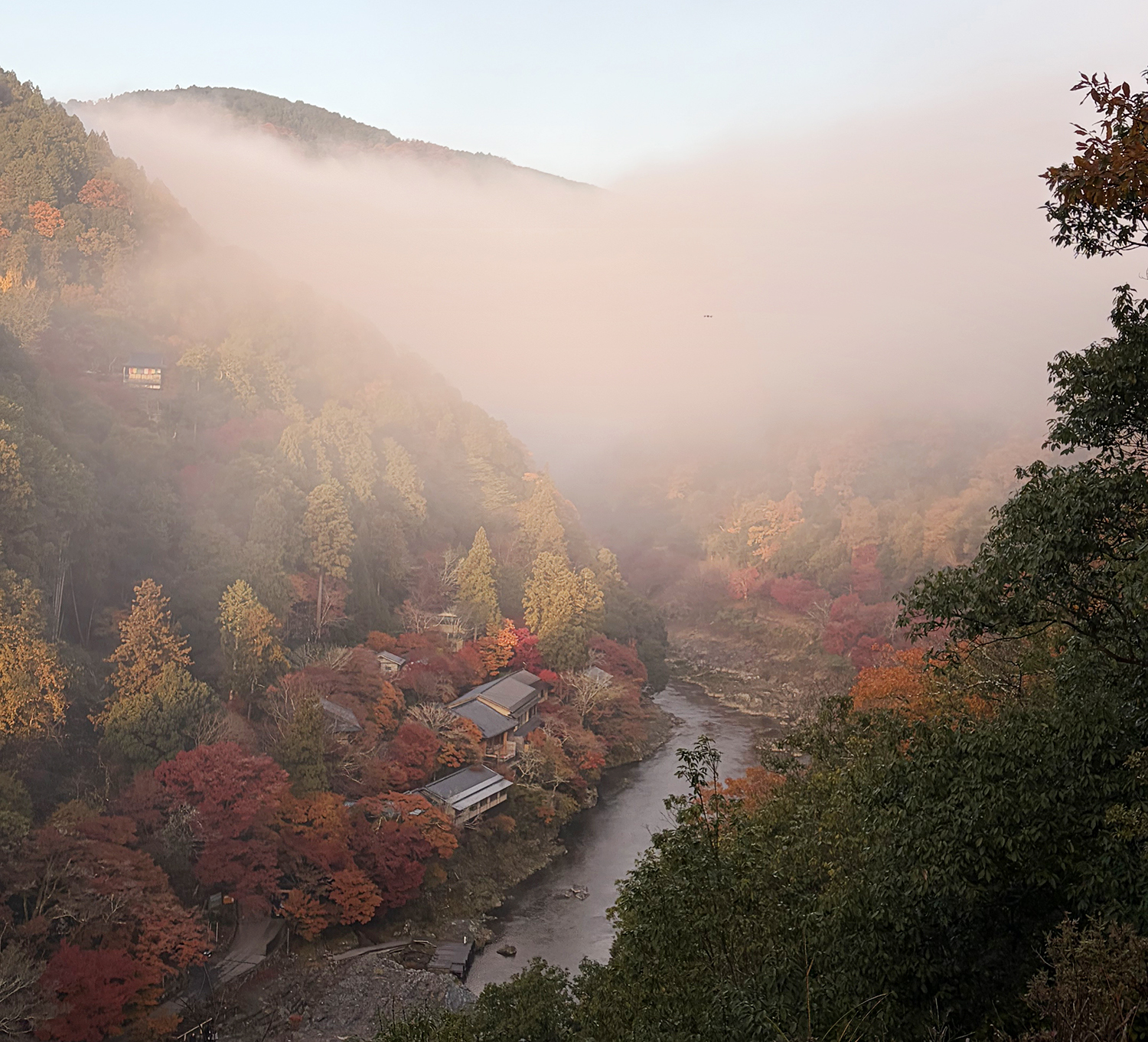
From here, you can look down towards the river bend and across to the secluded buildings of Hoshinoya Kyoto, one of the most photogenic riverside and luxury lodges in the region. The morning light here is stunning, I’ve witnessed fog rolling over the vibrant autumn leaves, blue skies and gentle greens, and more moody conditions too, all bringing their own photographic magic.
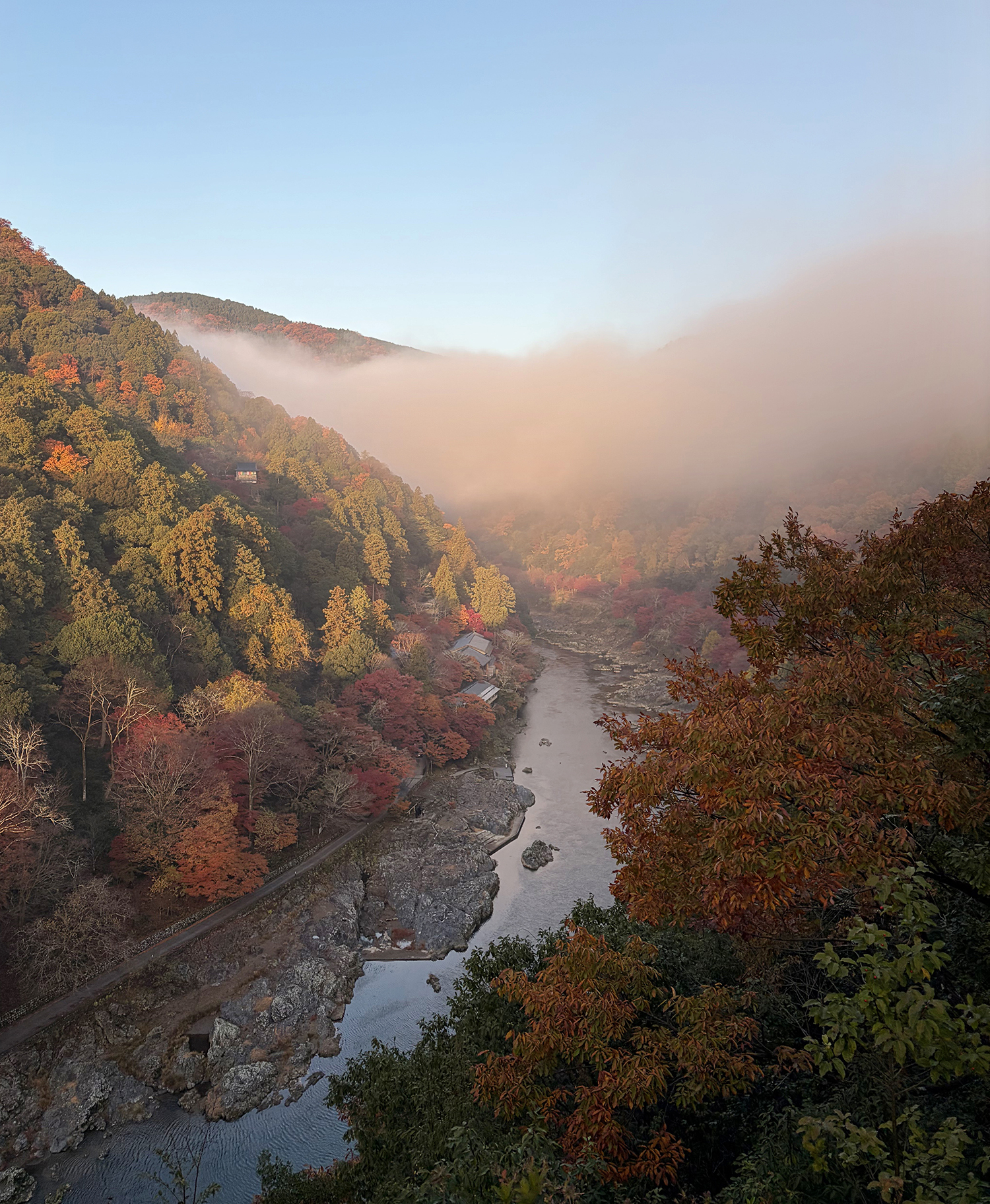
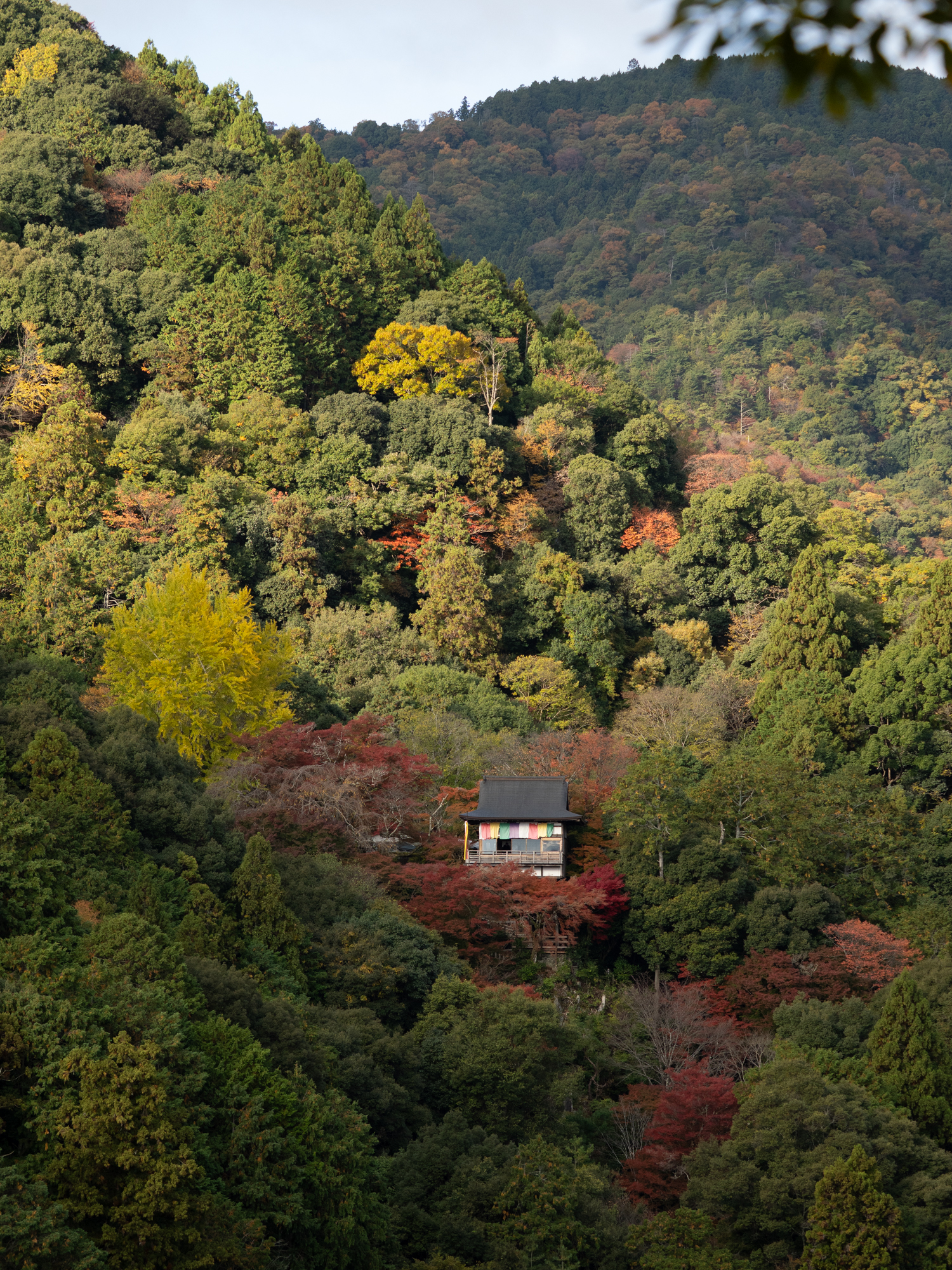
If you plan on photographing the Bamboo Grove early, I’d recommend packing some breakfast and a coffee to enjoy at the viewpoint here while you photograph. Nearby coffee shops don’t open until around 8am, so it’s a nice place to pause, observe, and escape the growing crowds of the Bamboo Grove nearby. Also, in the image above, note the path in the image, this is the one I recommend in the next section, on the southern bank of the Katsura River, Daihikaku Senkō-ji Temple is also visible, almost hidden amongst the foliage in the hillside.
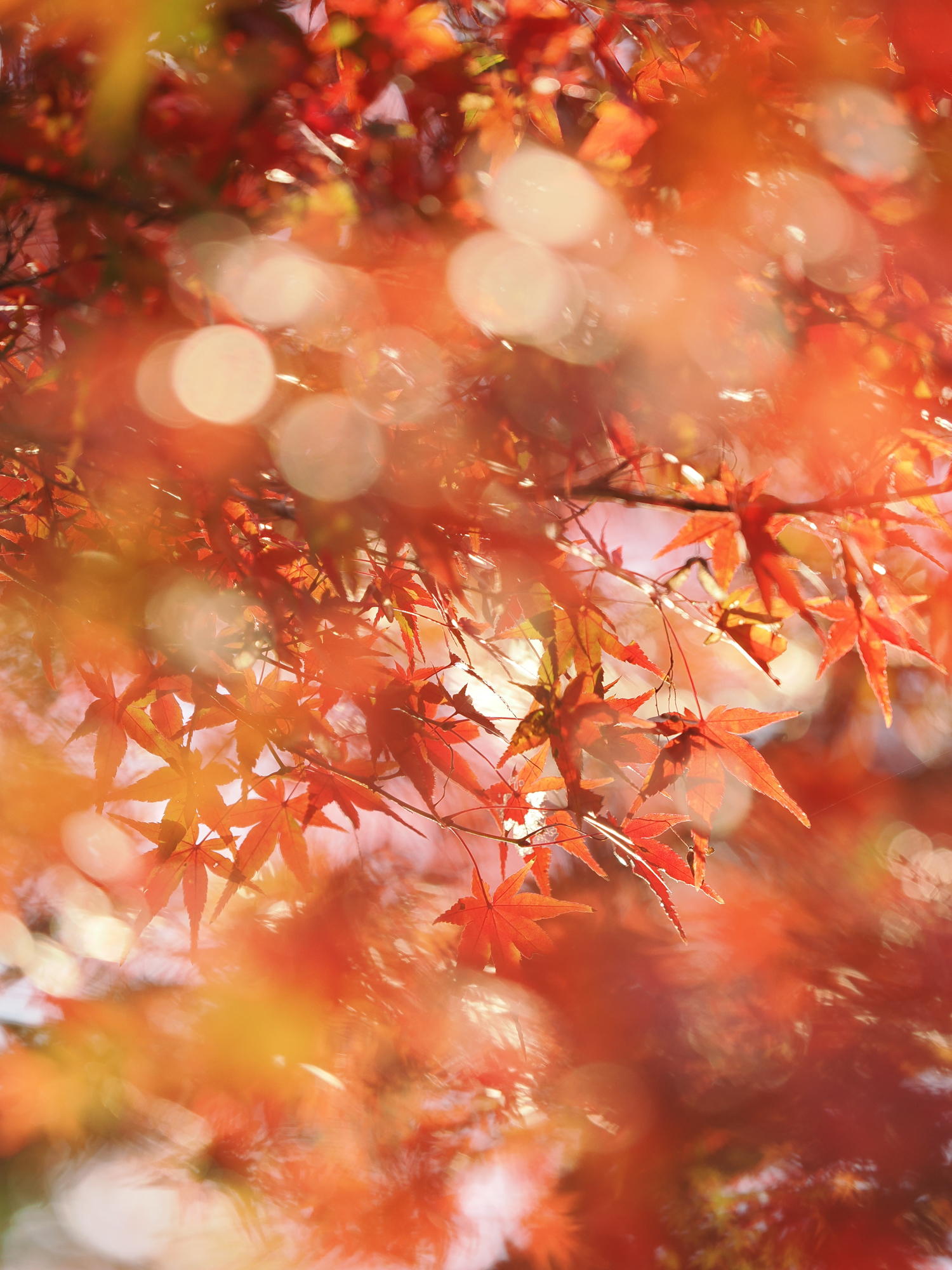
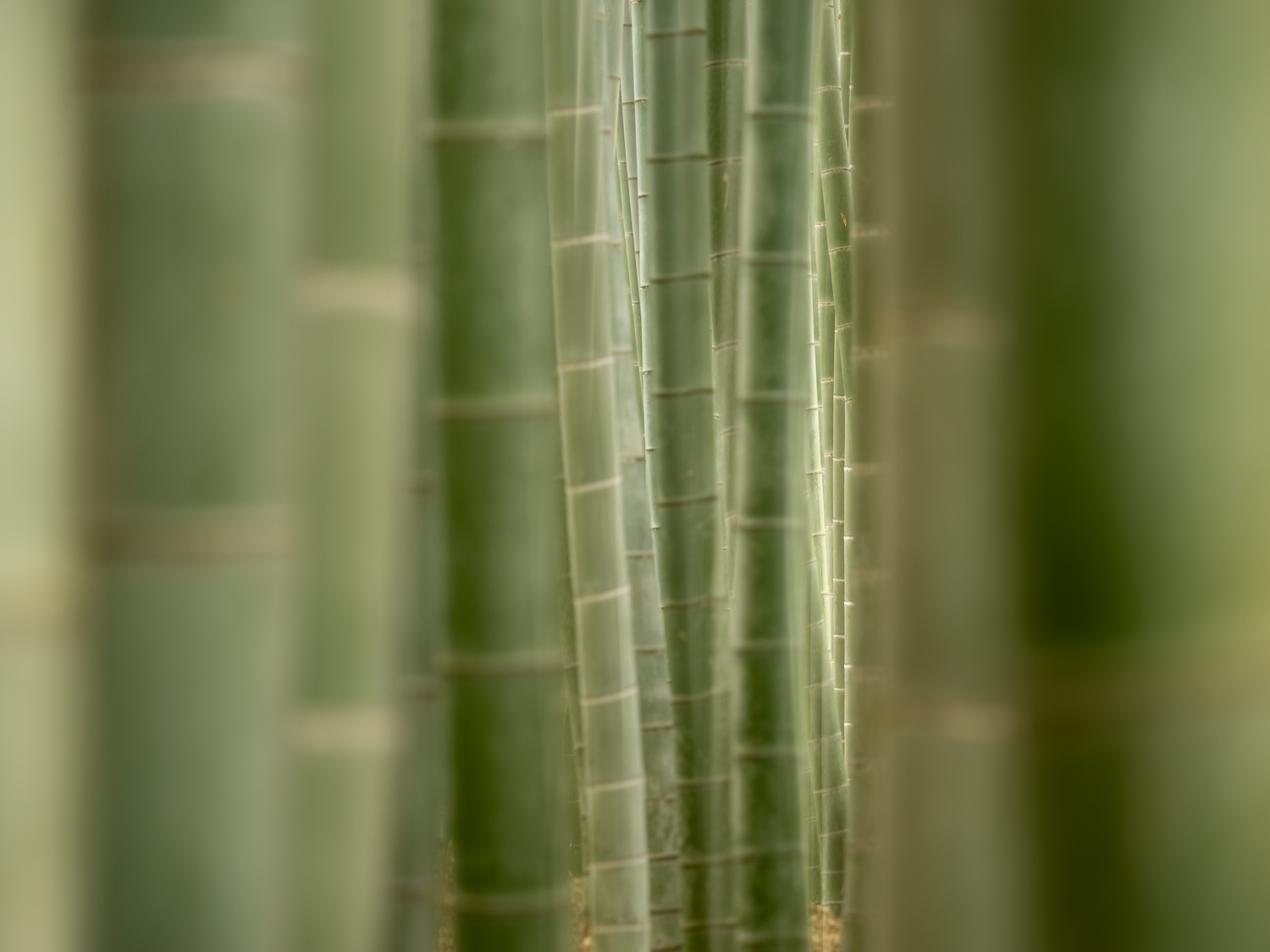
The park itself is worthy of a wander, particularly in late November when the foliage alone can fill your memory card. On the edges of the bamboo forest, there are a few gaps where you can use a zoom lens to capture more detailed shots of the greens, stalks, and shadows, just last November I spent almost an hour here enjoying the conditions and capturing some of my favourite bamboo photos yet.
The Katsura River Pathway
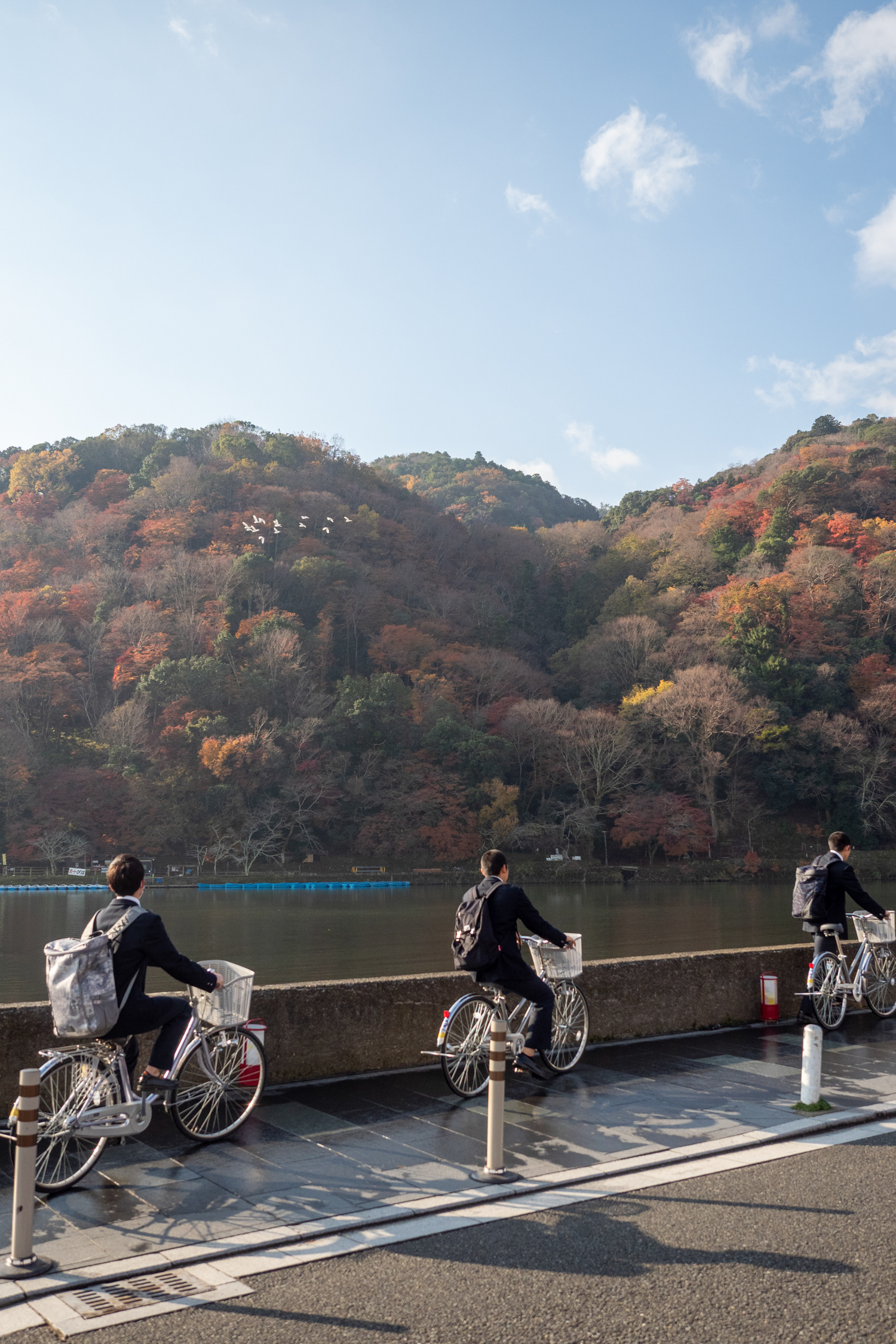
While most visitors cross Togetsukyo Bridge when arriving from Arashiyama Station and the Hankyu-Arashiyama Line, or crossing from the north to visit the Monkey Park, the quieter stretches of river on either side are far more interesting for photography. The northern side which also has the Bamboo Grove and a %Arabica Branch on the waterfront, can get busy, however, the southern side is one of my favourite paths to walk in all of Kyoto.
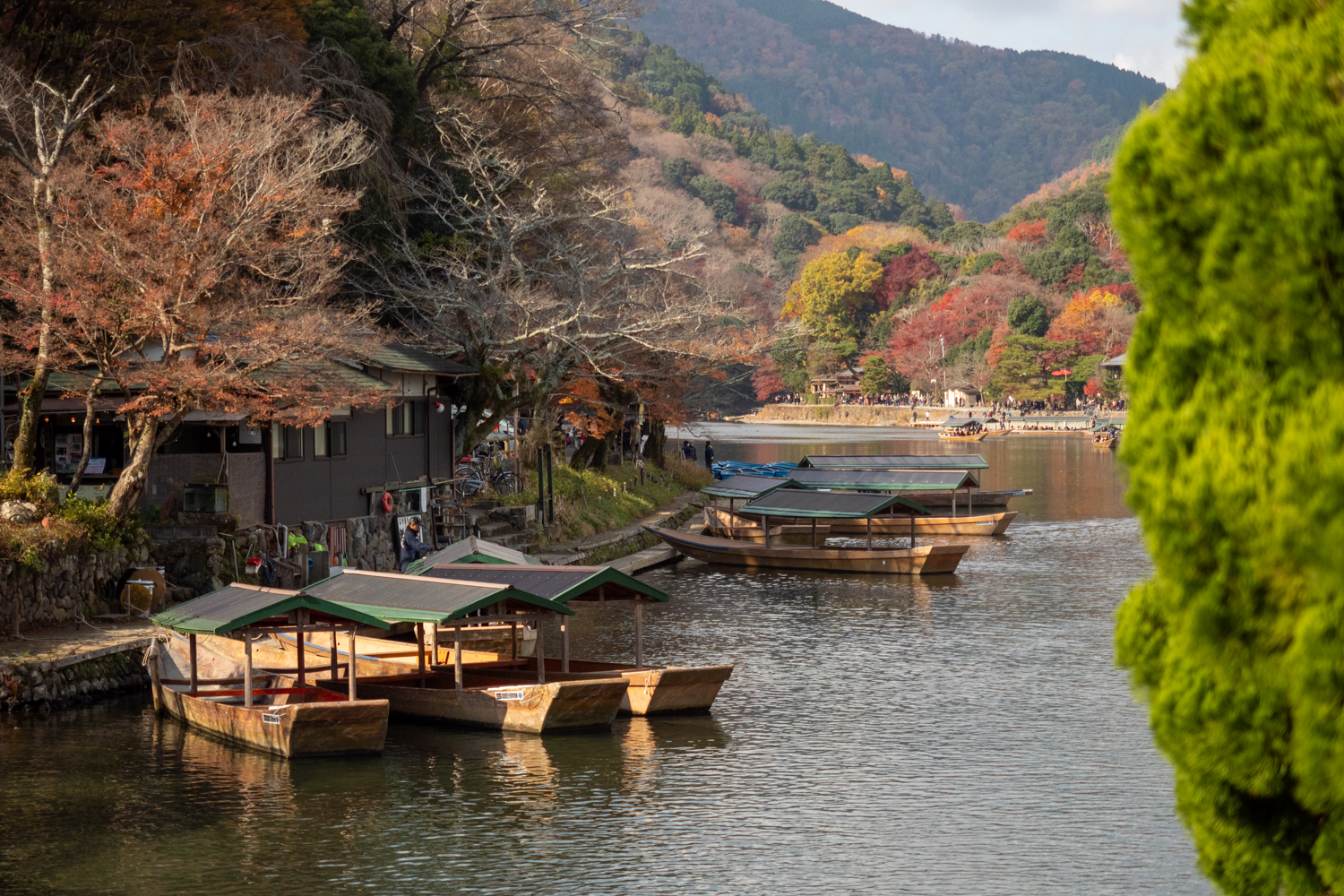
Walking a little upstream, particularly on the southern side (where the Arashiyama Monkey Park is), reveals calm sections of water where reflections linger, wooden boats are moored along the banks, and the surrounding hills frame the scene naturally. In autumn, fallen leaves collect along the edges of the river, while in early morning, mist often hangs low over the surface.
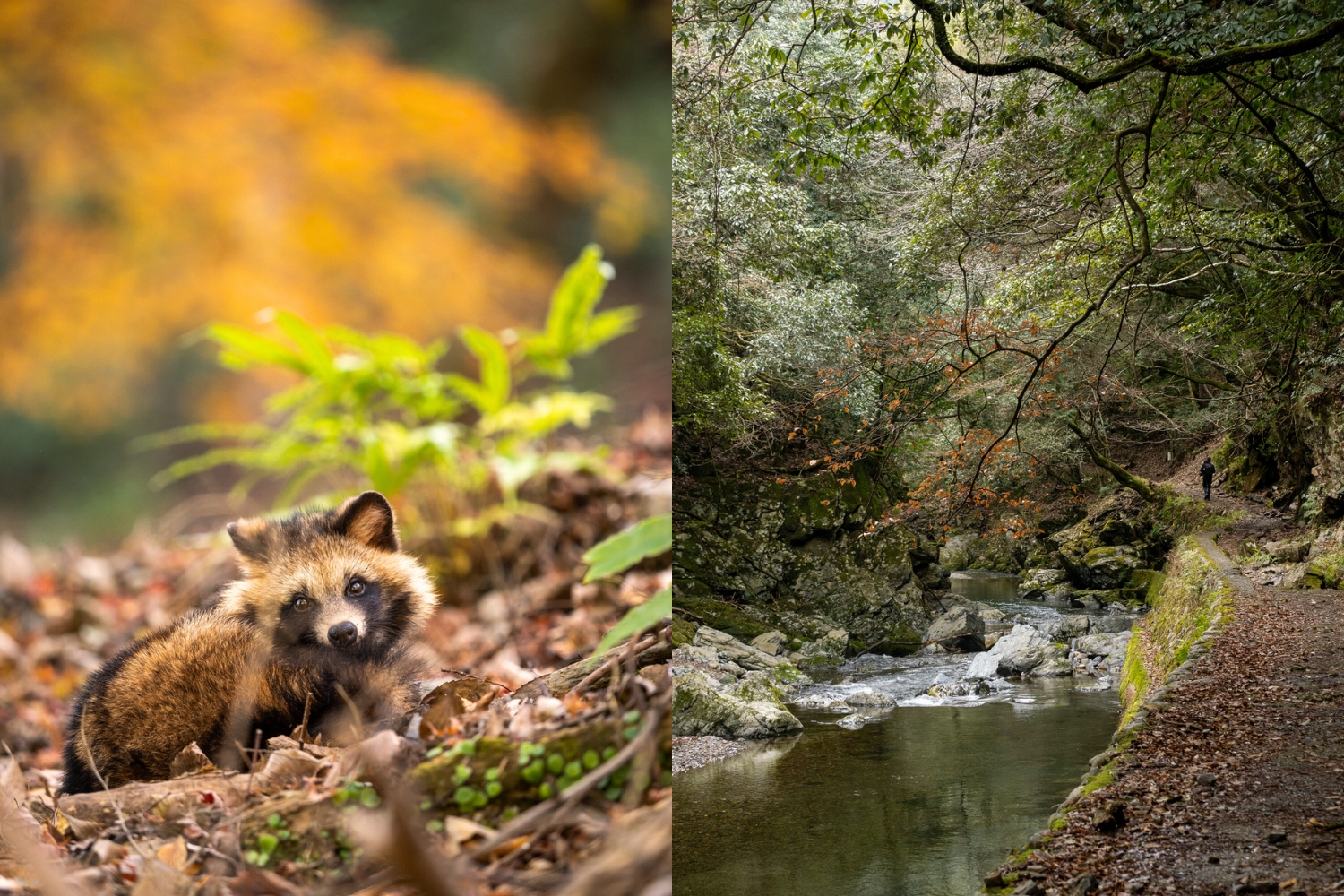
These riverbanks are particularly beautiful in the early morning and early evening, when the light is low and the ambience is beautifully inspiring. I’ve also seen monkeys and raccoons along this path as it’s far, far quieter than anywhere else in Arashiyama.
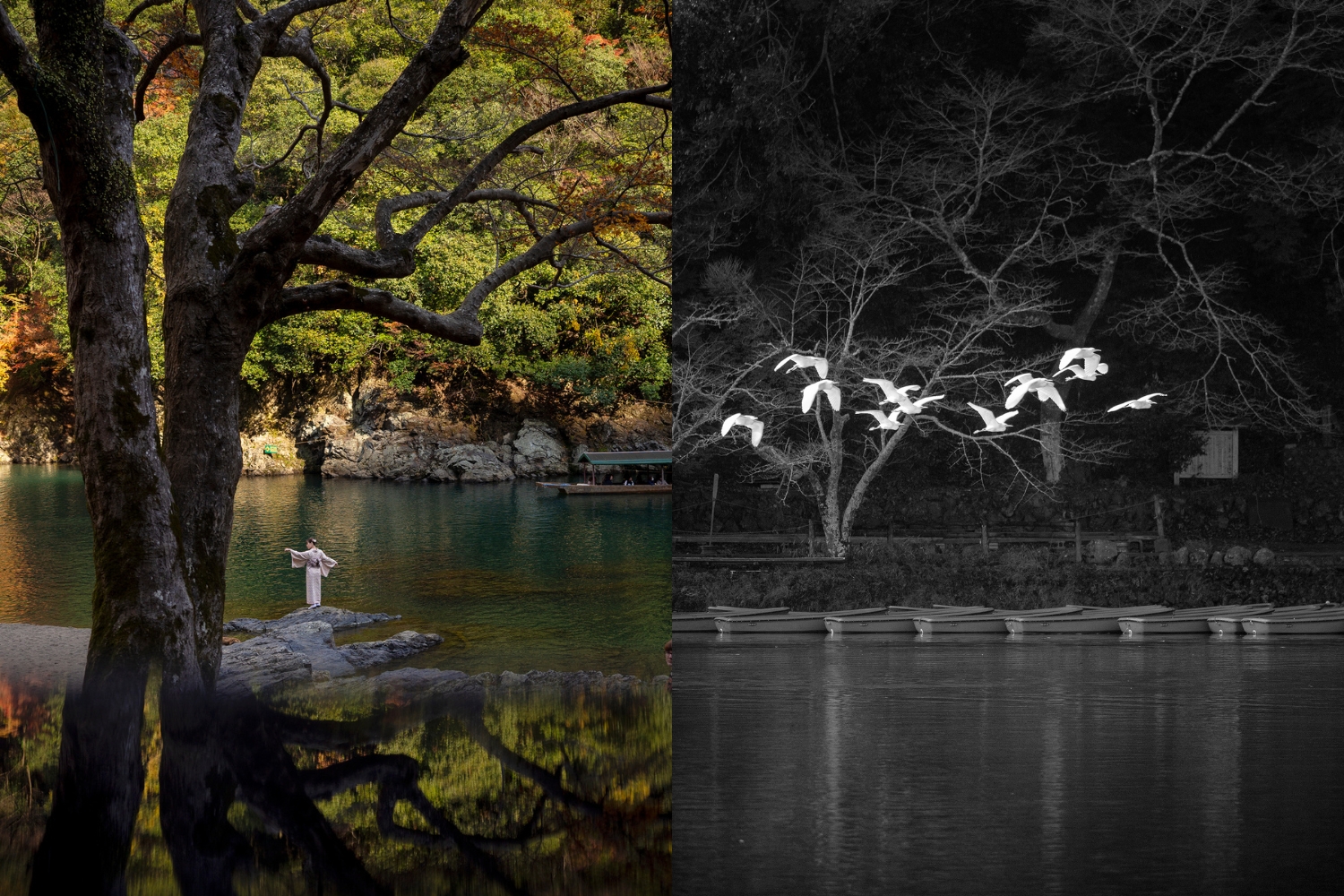
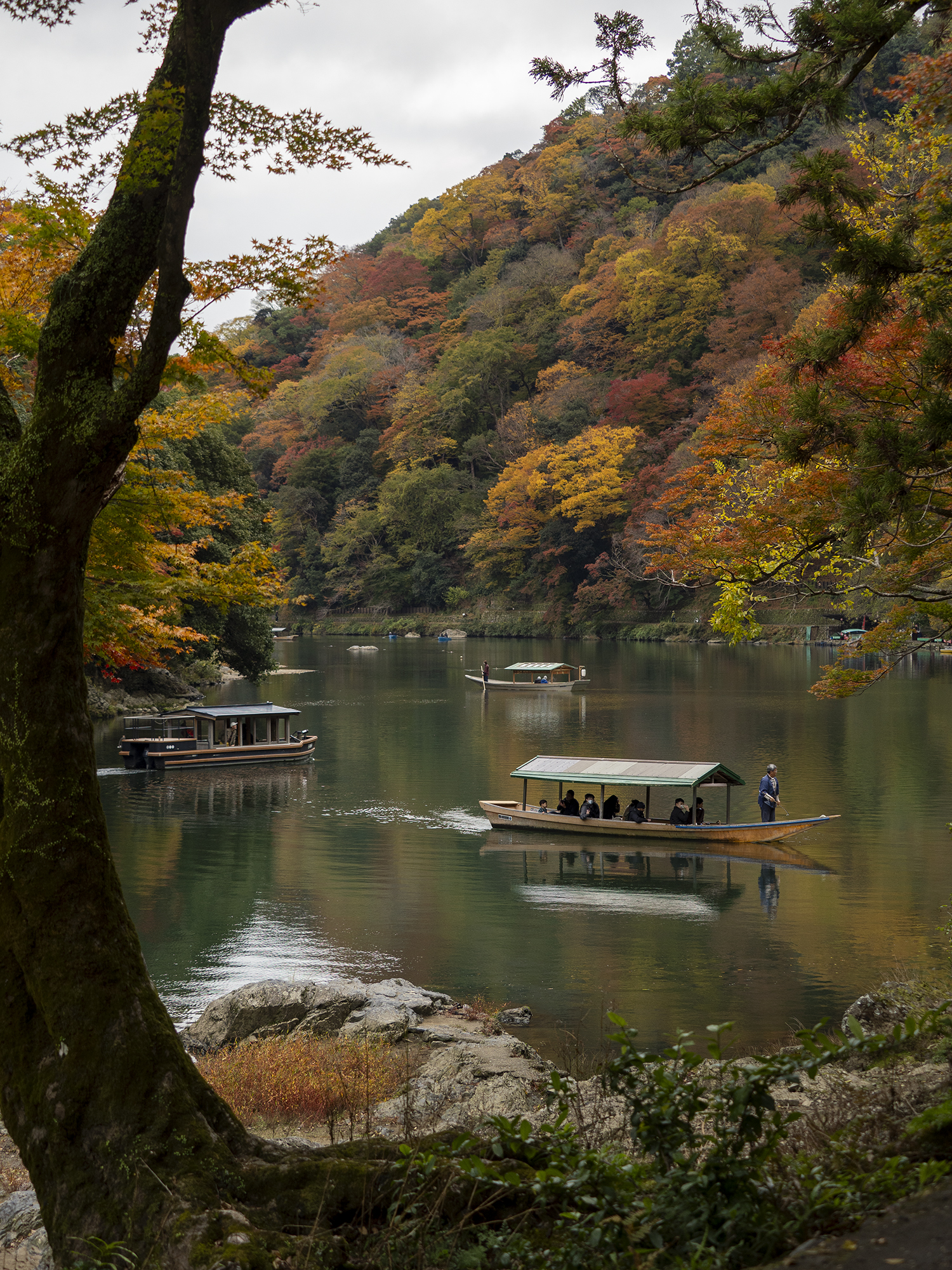
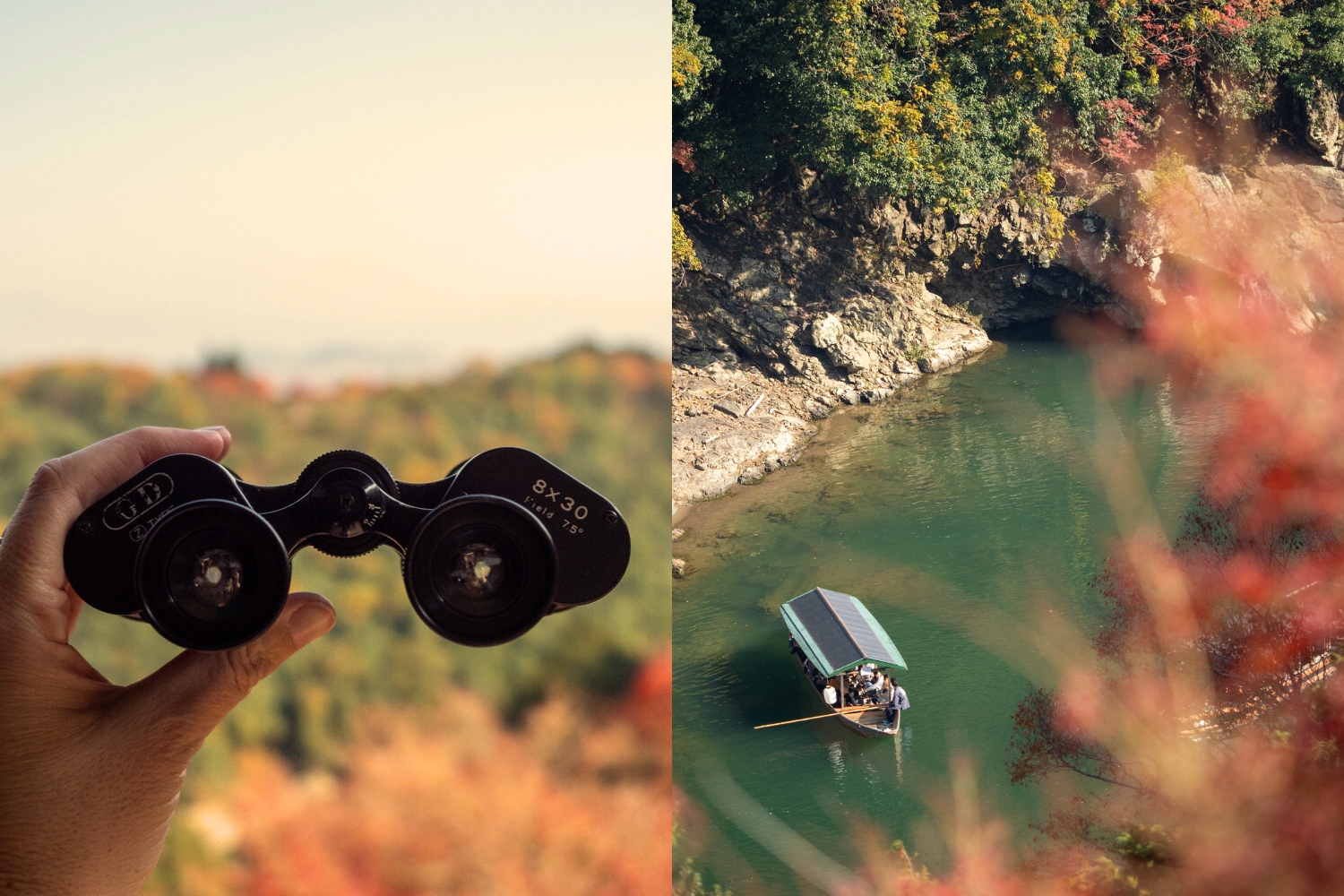
You can follow the path to Daihikaku Senkō-ji Temple, there are signs saying ‘Best View’, or just wander as far as the rocky beach, where river boats pass and provide a great subject to photograph alongside the scenery. There’s no connection at the end of the path though, you have to turn around and walk back to Togetsukyo Bridge to access the other side of Arashiyama or get back to central Kyoto on the train.
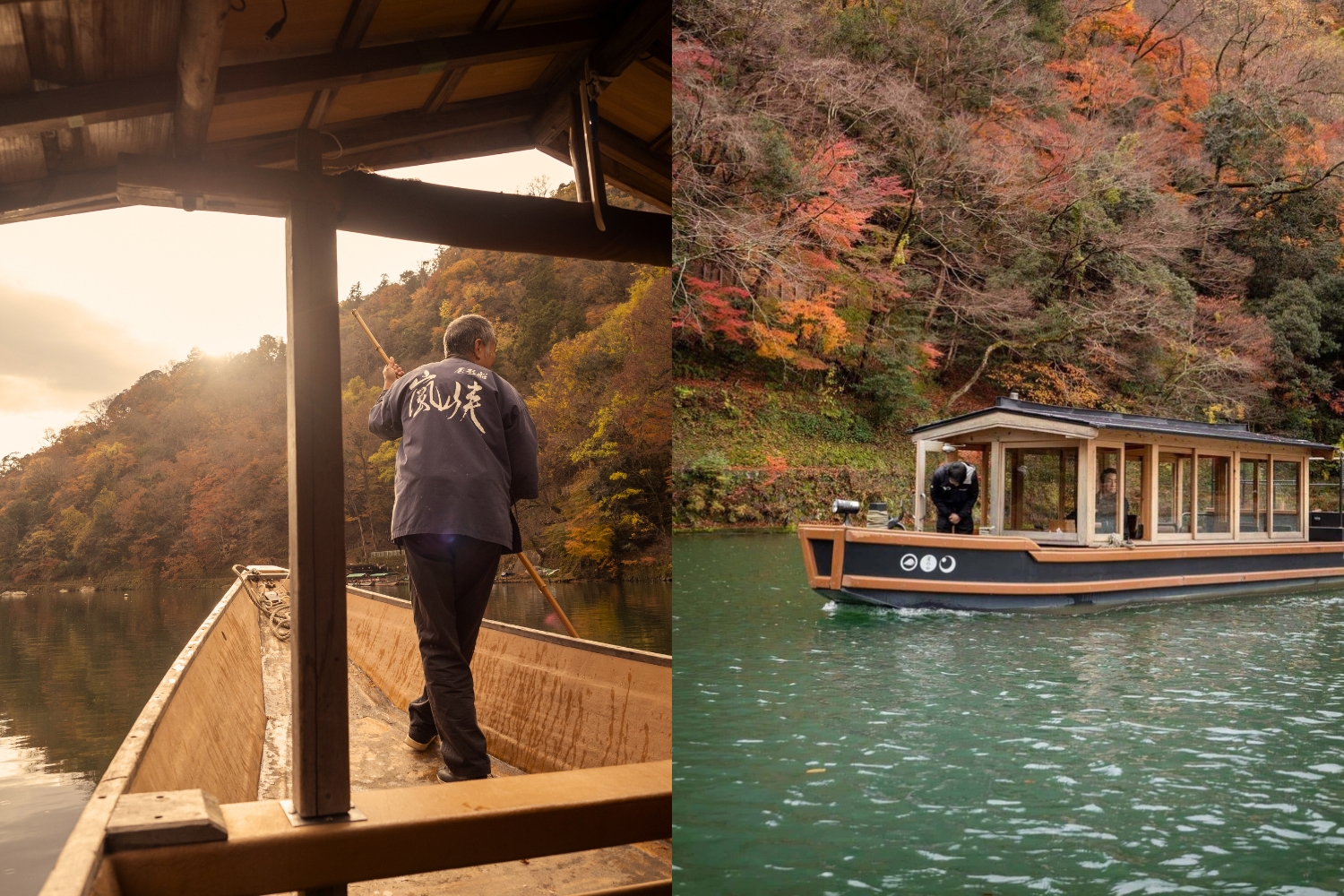
If you’re opting to stay at Hoshinoya Kyoto, it’s located at the end of the path before it goes upward to the temple. Guests are transported down the river on a private boat, it’s a very special stay if you’re looking to treat yourself!
Daihikaku Senkō-ji: A Temple Above the River
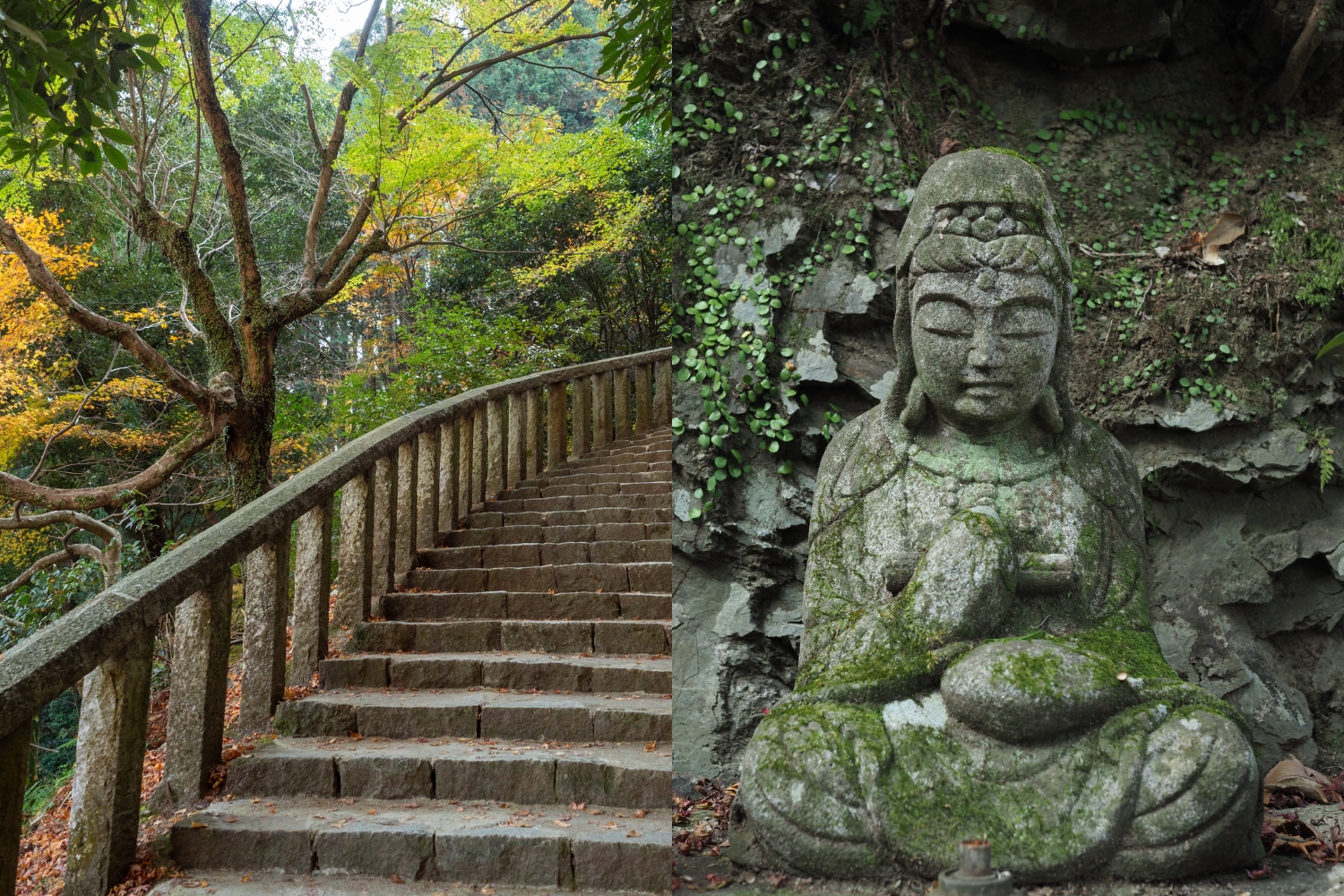
On the southern side of the river, away from the main shopping streets, a steep staircase climbs through the forest to Daihikaku Senkō-ji Temple. This is one of Arashiyama’s quietest and most overlooked temples, yet it offers some of the finest views in the area.
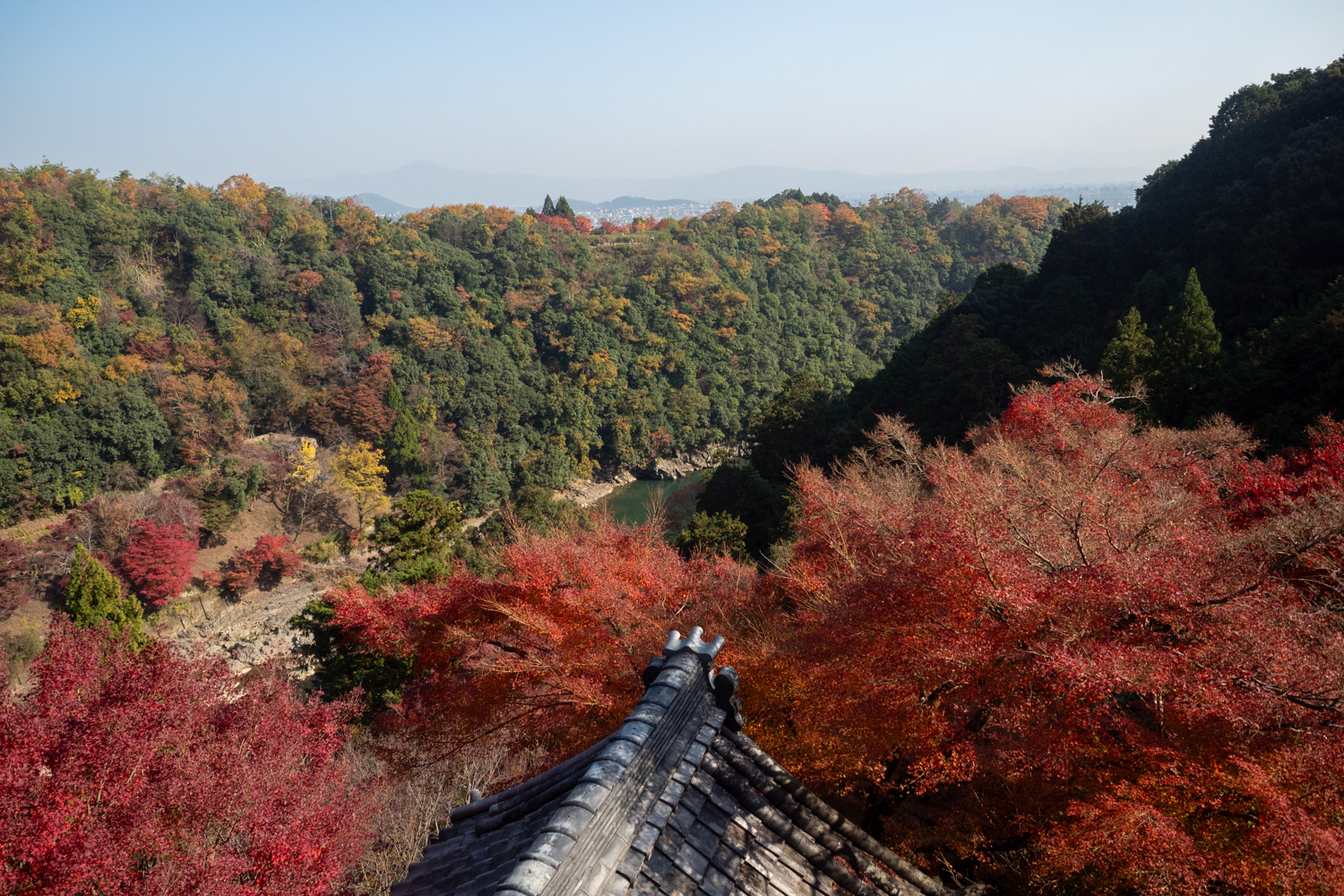
The ascent itself becomes part of the experience. Stone steps wind upward through dense trees, with occasional glimpses back toward the river below. At the top, the temple opens onto a small terrace overlooking the Katsura River and the valley beyond.
From here, the perspective shifts entirely. The bridge and buildings disappear behind the hill and the sounds of the town fade into the background.
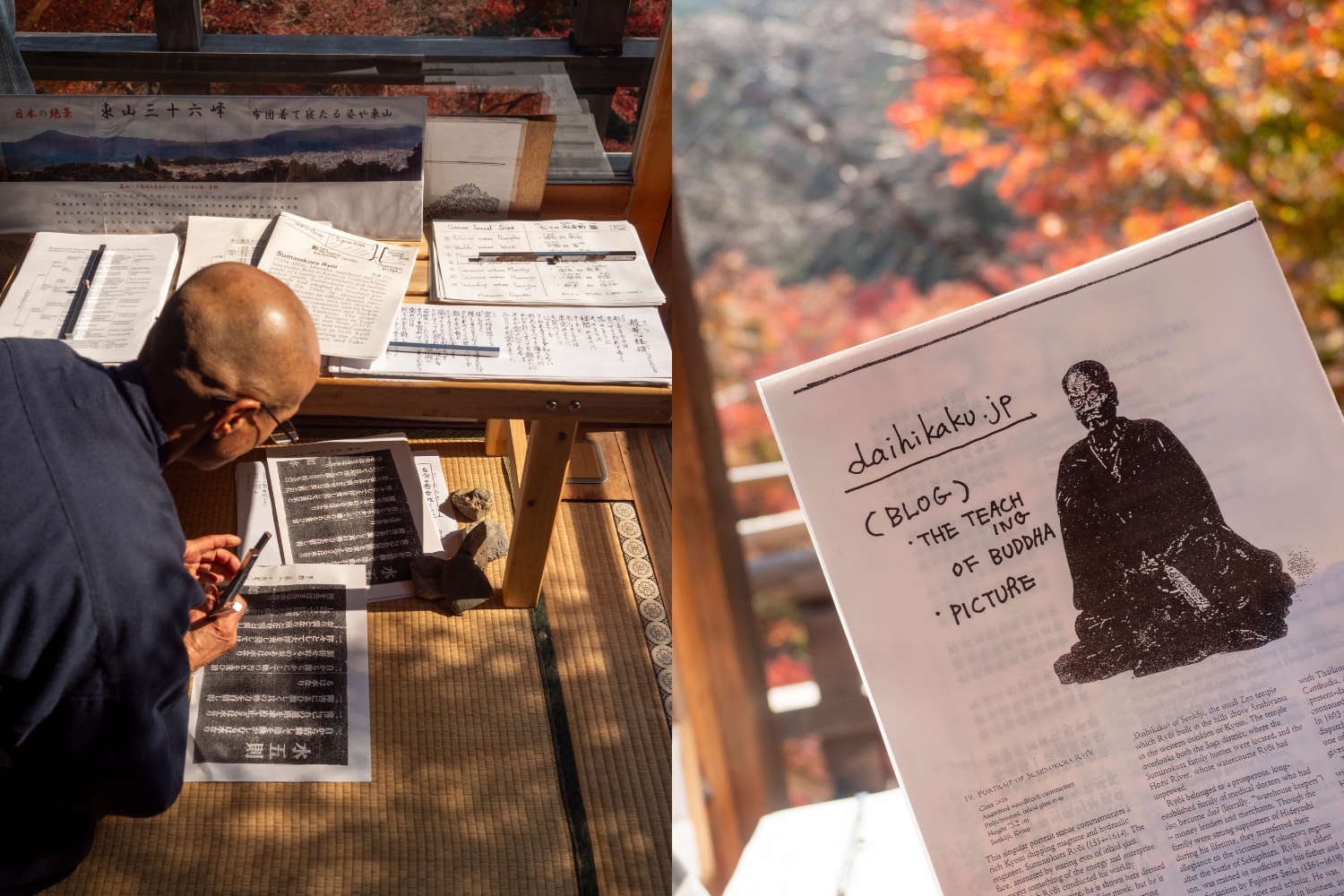
It’s a beautiful place to photograph in the late afternoon or morning, when light filters through the trees and touches the river far below. The temple grounds are usually quiet, and the combination of a higher vantage point, surrounding forest and old imagery and books sprawled across the interior makes this one of Arashiyama’s most atmospheric locations.
Please note that there’s an entry fee payable upon arrival.
OLYMPUS DIGITAL CAMERA
Adashino Nenbutsu-ji and Gio-ji: Lanterns, Moss and a Quiet Walk
Beyond the main bamboo path, a beautifully quiet walking route winds through the back streets of Arashiyama, linking several of the area’s most atmospheric temples. This short walk follows narrow residential lanes and forest edges, gradually leaving the busiest part of the district behind.
There’s the Saga-Toriimoto Preserved Street, dating back to the Meiji era, and here you’ll find Adashino Nenbutsu-ji Temple, one of the highlights along this route. You can either take a taxi from town, or stroll through the back streets depending on how much time you have, but I’d recommend starting your journey here, then wandering slowly back to town (this is after you’ve photographed the Bamboo grove at sunrise, and the river banks). Known for its almost 8000 Buddhist statues placed in memory of those who died without kin/family or friends, the temple feels beautifully hidden within the hillside. A small bamboo corridor inside the temple grounds offers a quieter alternative to the main grove, with space to pause and work more carefully with light and composition. I’d recommend spending some time here photographing the varied green tones of the bamboo, in addition to the colourful foliage that frames that stone statues.
While it’s definitely getting a little more known that my first visit many years ago, there’s still space to feel creative, and if you’re visiting outside the peak foliage week in autumn, you’ll find there’s plenty of time to explore the bamboo grove here without feeling rushed or pressured to get out of someone else’s shot.
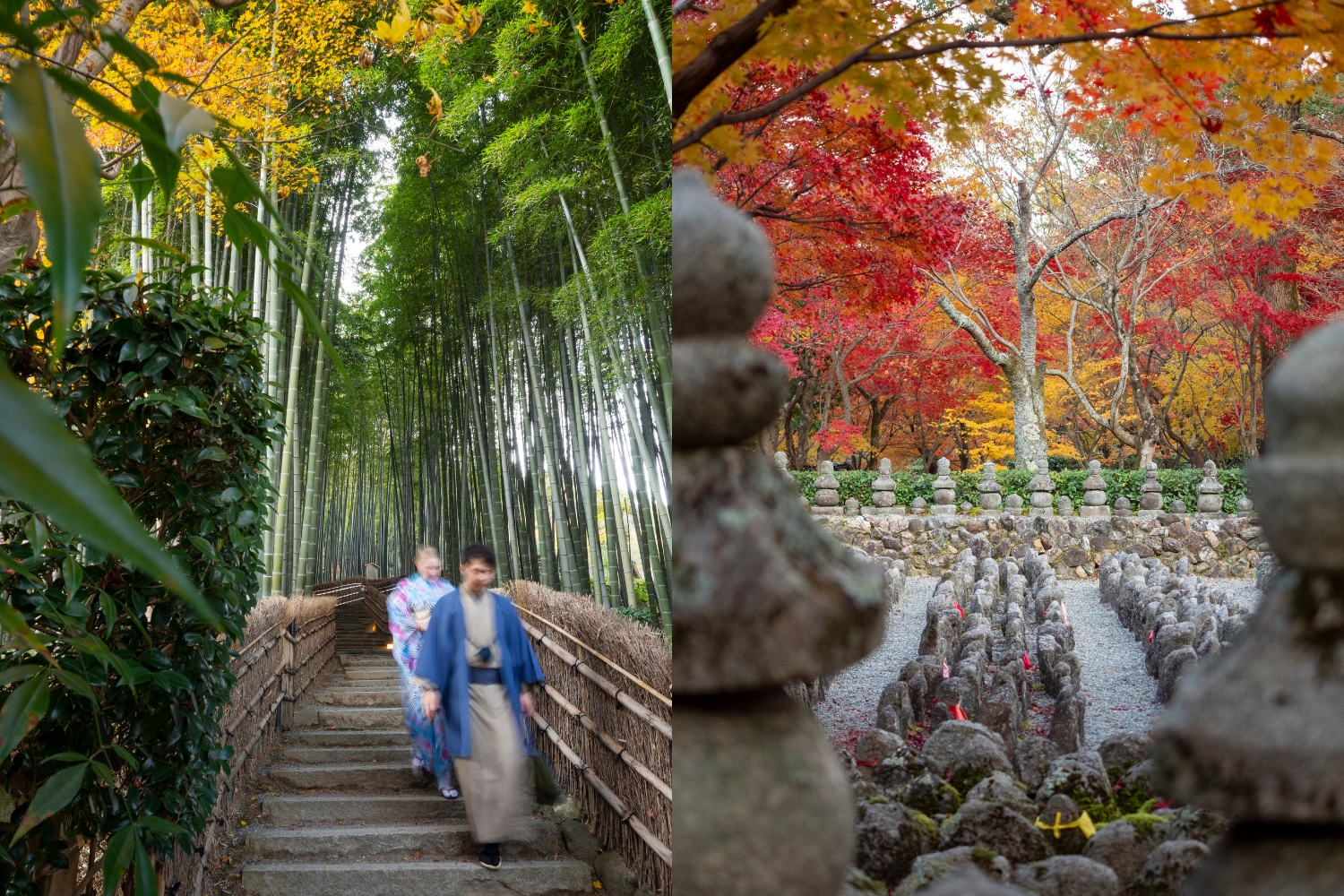
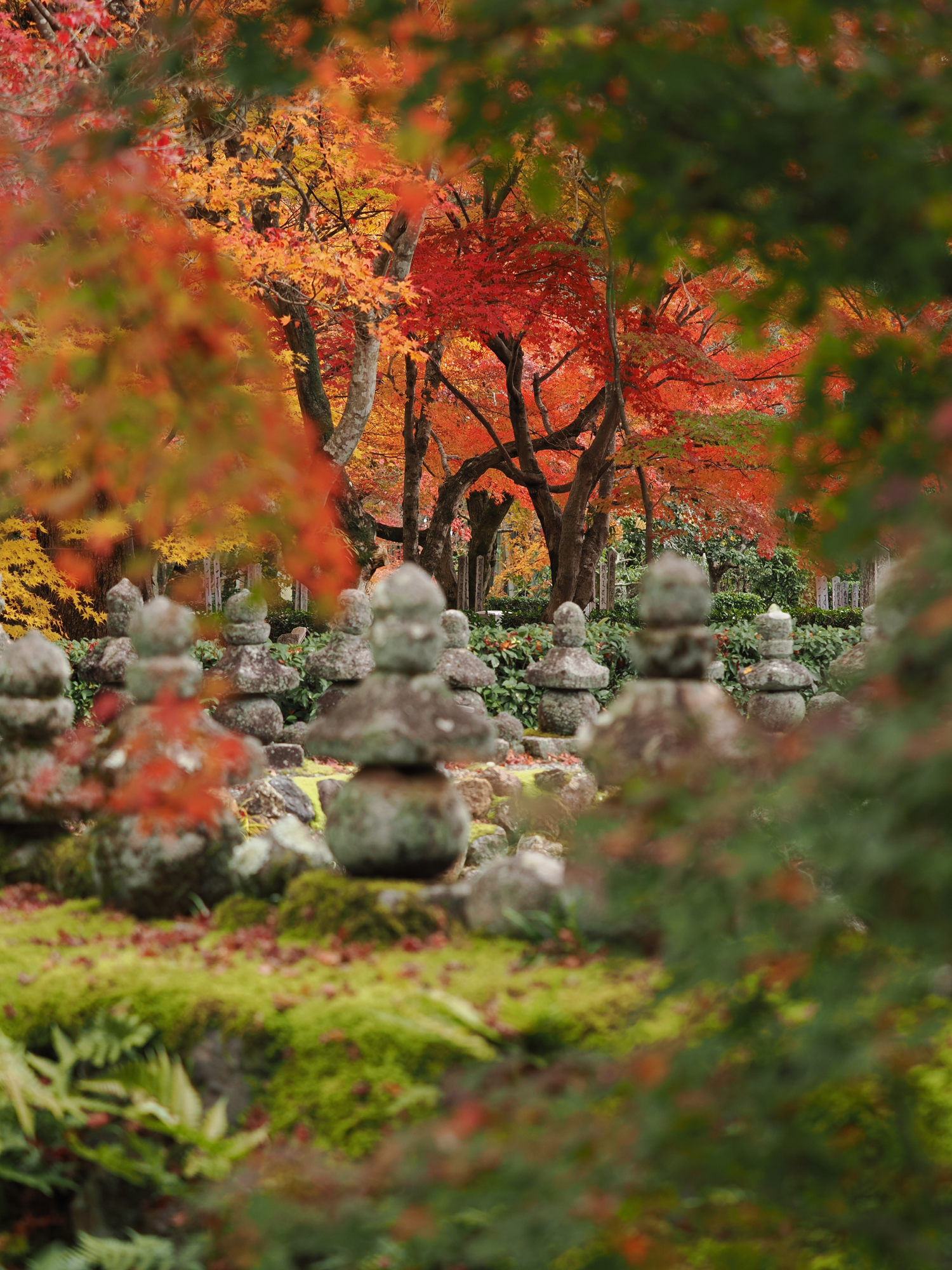
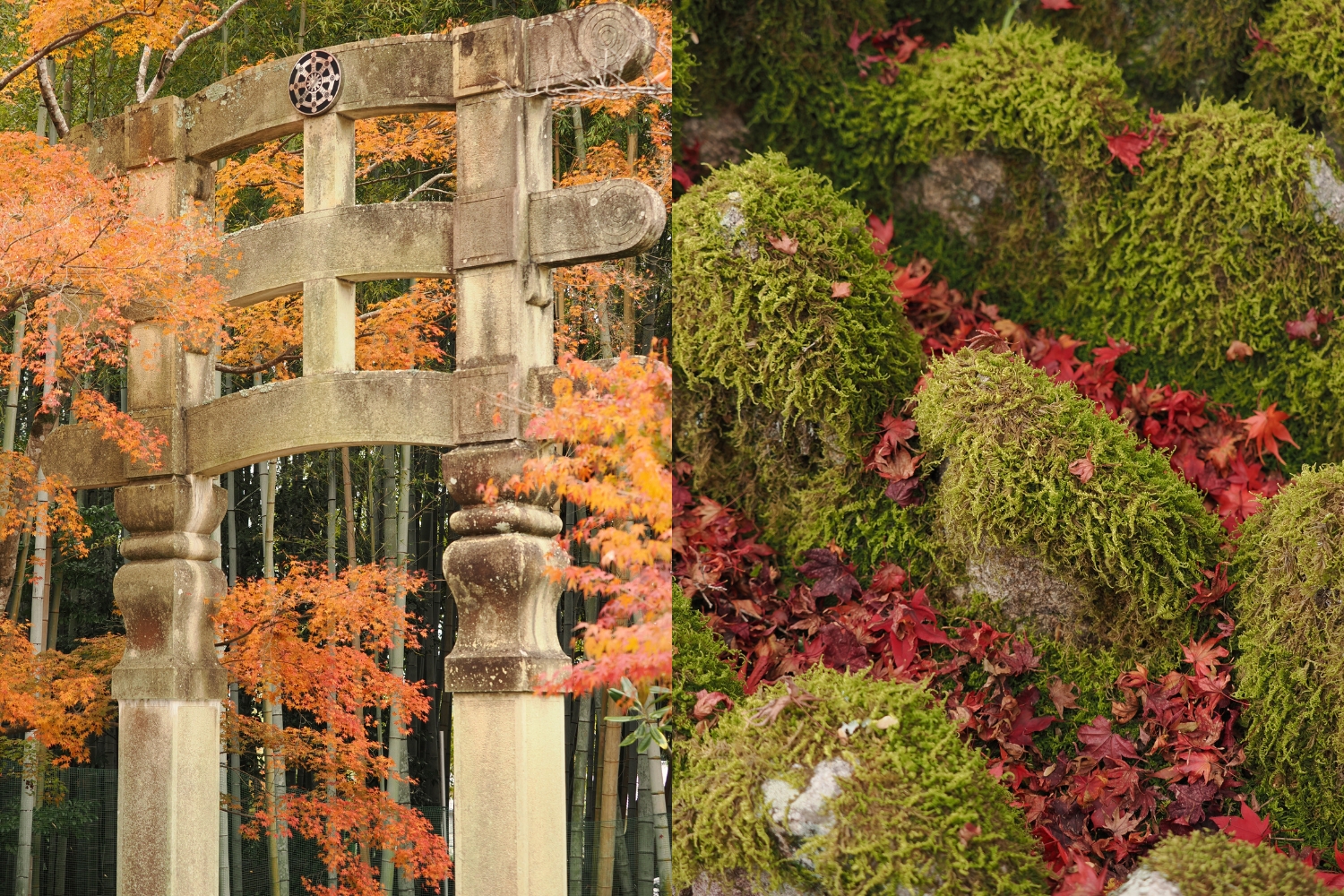
Photographs are banned within the cemetery of Adashino Nenbutsu-ji, so be mindful and respectful of this when you see the signs.
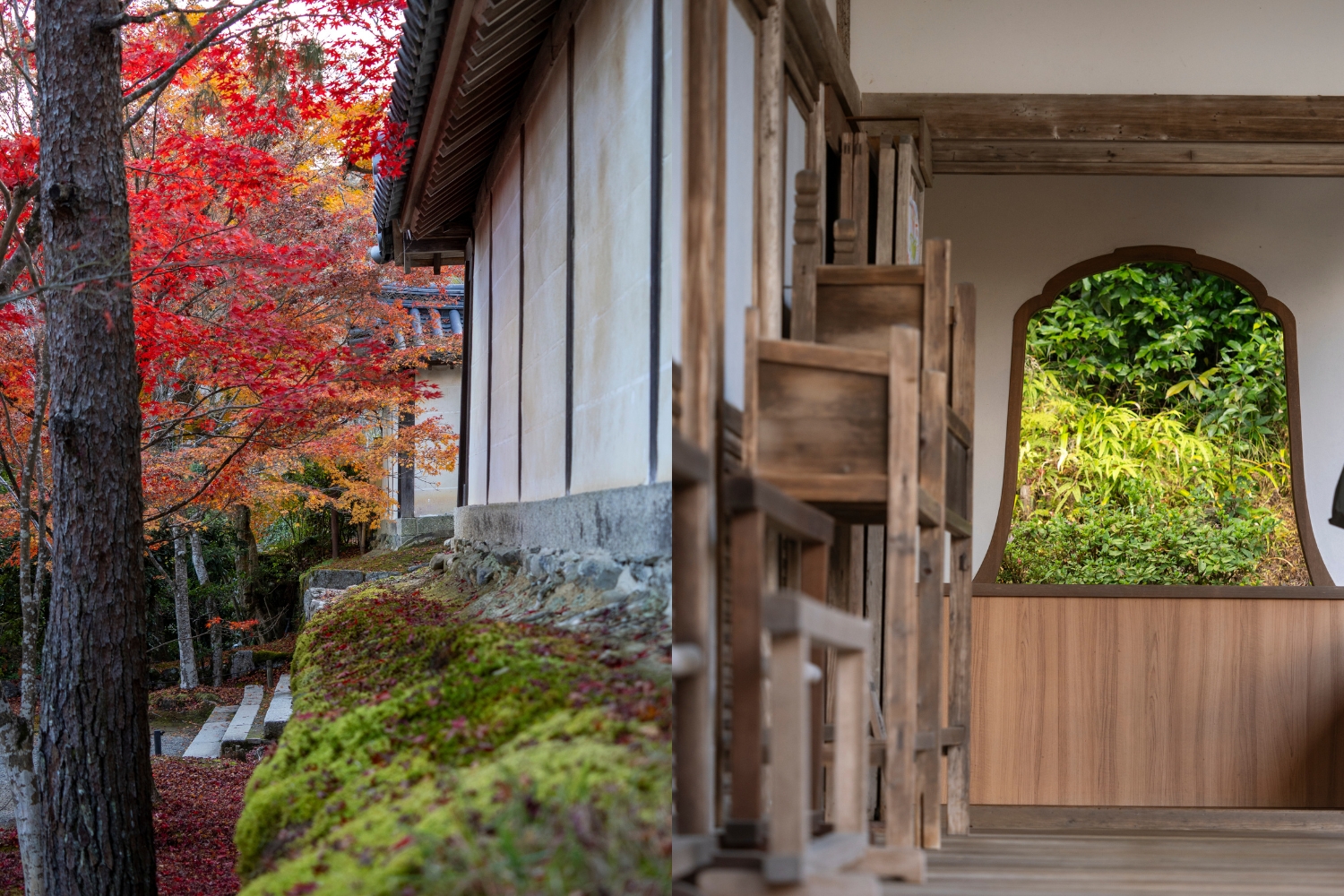
A little wander down the hill back toward Arashiyama town lies Gio-ji, a small moss temple tucked into the forest. Surrounded by tall trees and shaded throughout much of the day, Gio-ji is at its most beautiful in late spring and autumn, when fresh greens or deep reds spread across the garden floor. The simplicity of the moss garden, framed by wooden buildings and forest trunks, makes this a wonderful place for intimate compositions and detail studies.
Gio-ji is one of my favourite temples in all of Kyoto. It’s very small, but the foliage here and colourful mossy carpet has produced some of my best imagery, and I’d encourage anyone visiting to slowly walk around the path and explore the scene, there’s really so much to capture here!
Between these temples, the walk itself becomes part of the experience. In recent years, small cafés, incense and craft stores have begun to line these residential roads, creating an ideal area to wander slowly, away from the crowds around the train station and main street, letting the day unfold naturally through a series of quiet discoveries.
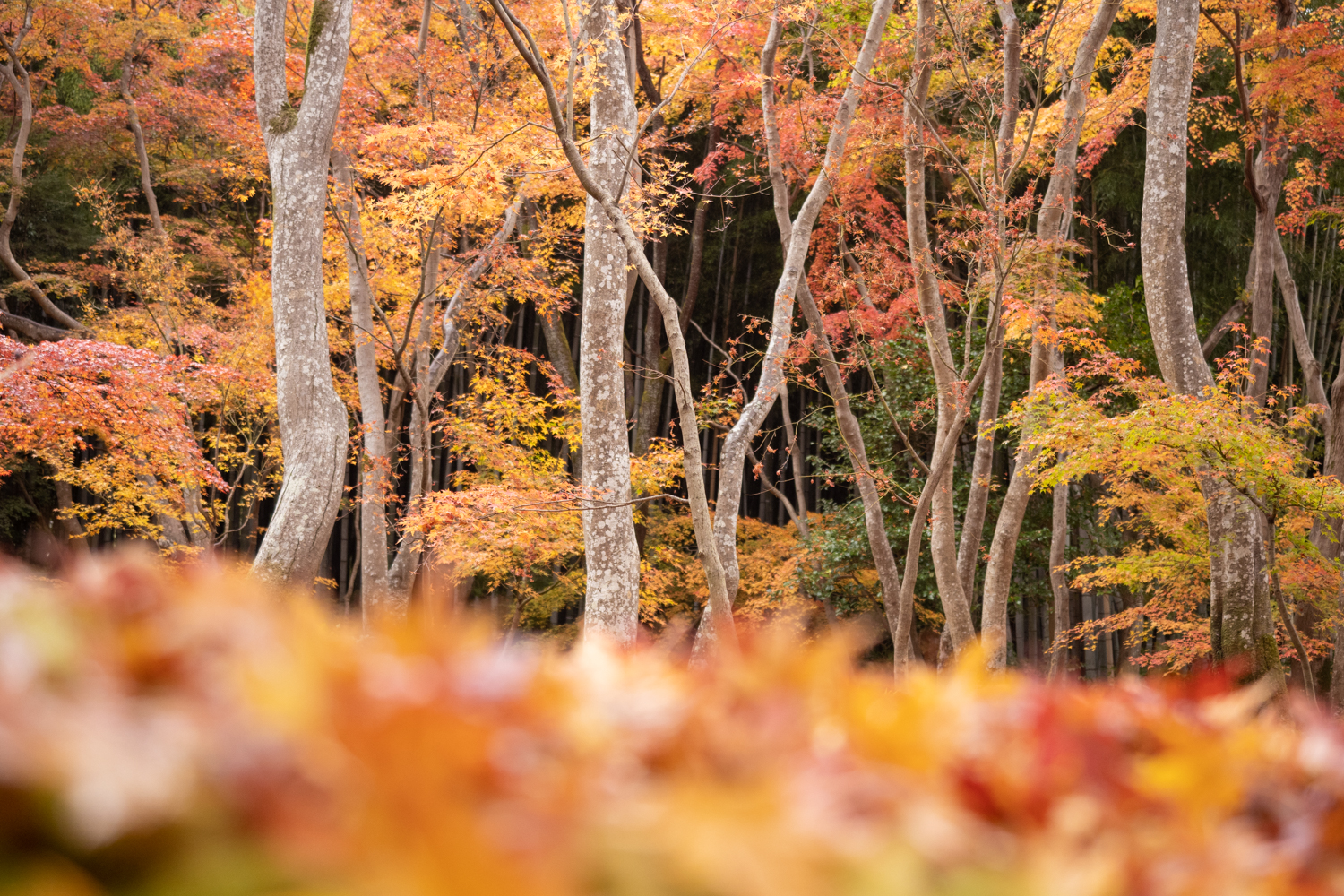
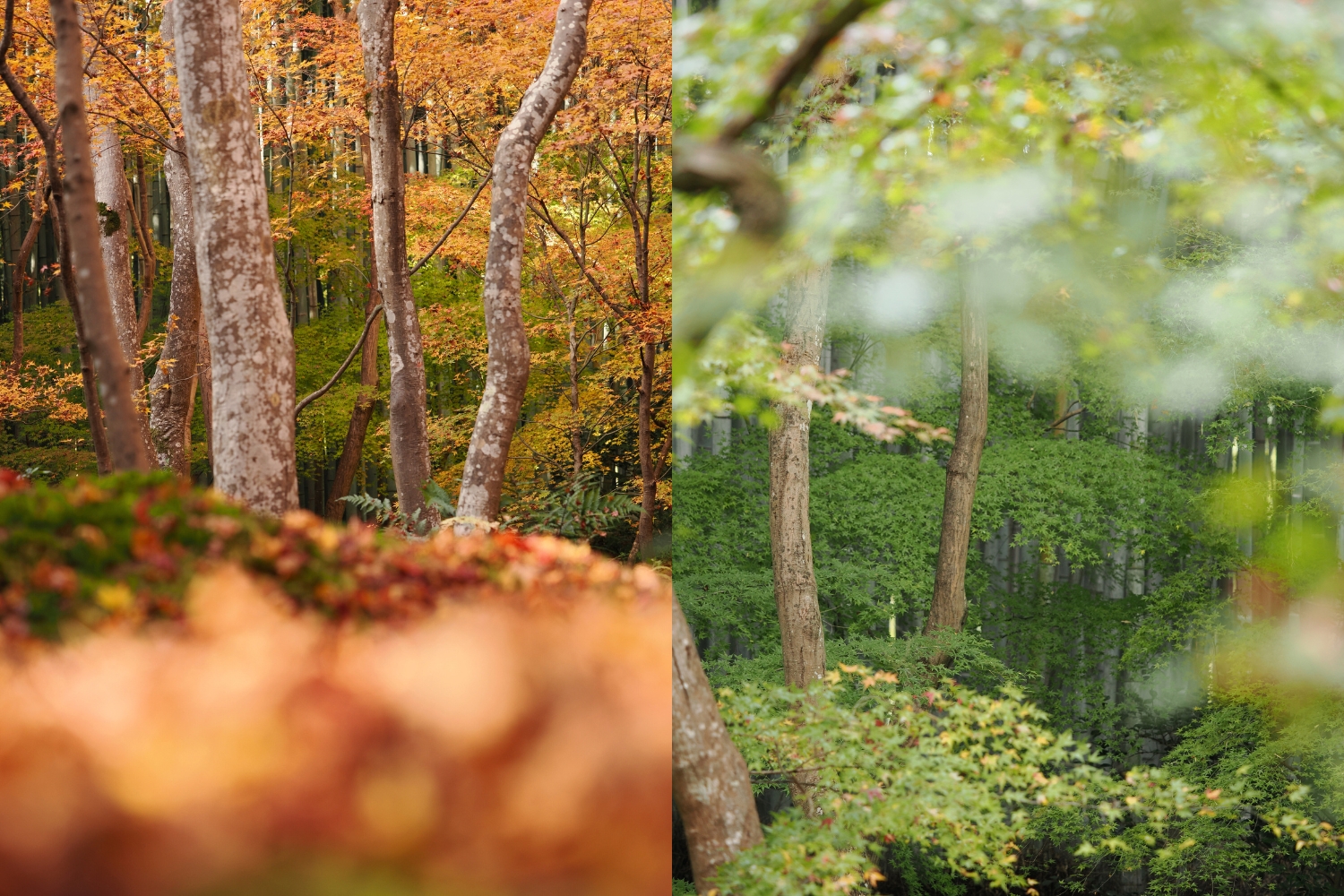
Seasonal contrasts at Gio-ji Temple, Arashiyama
Nison-in Temple: Maple Paths and Hillside Stillness
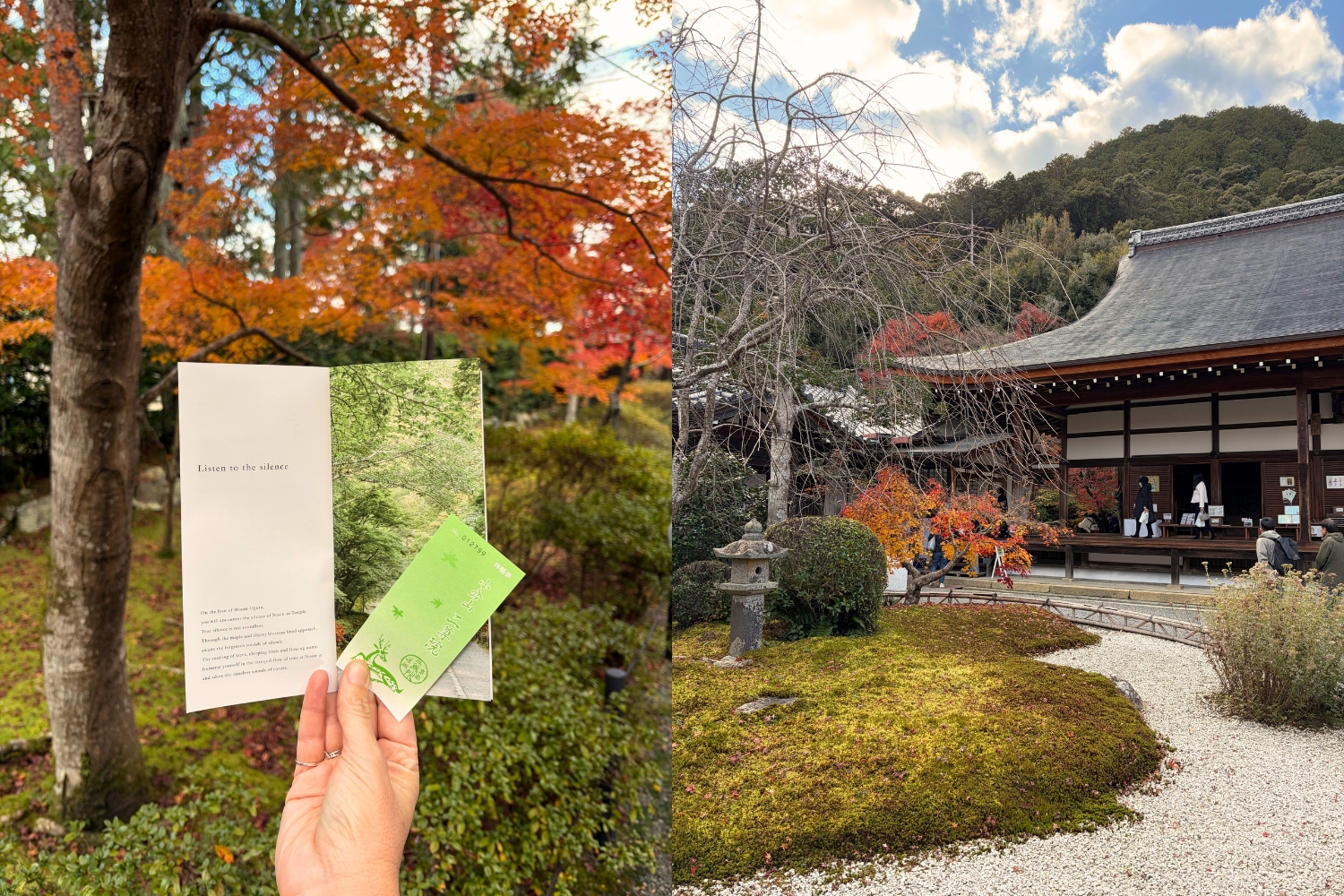
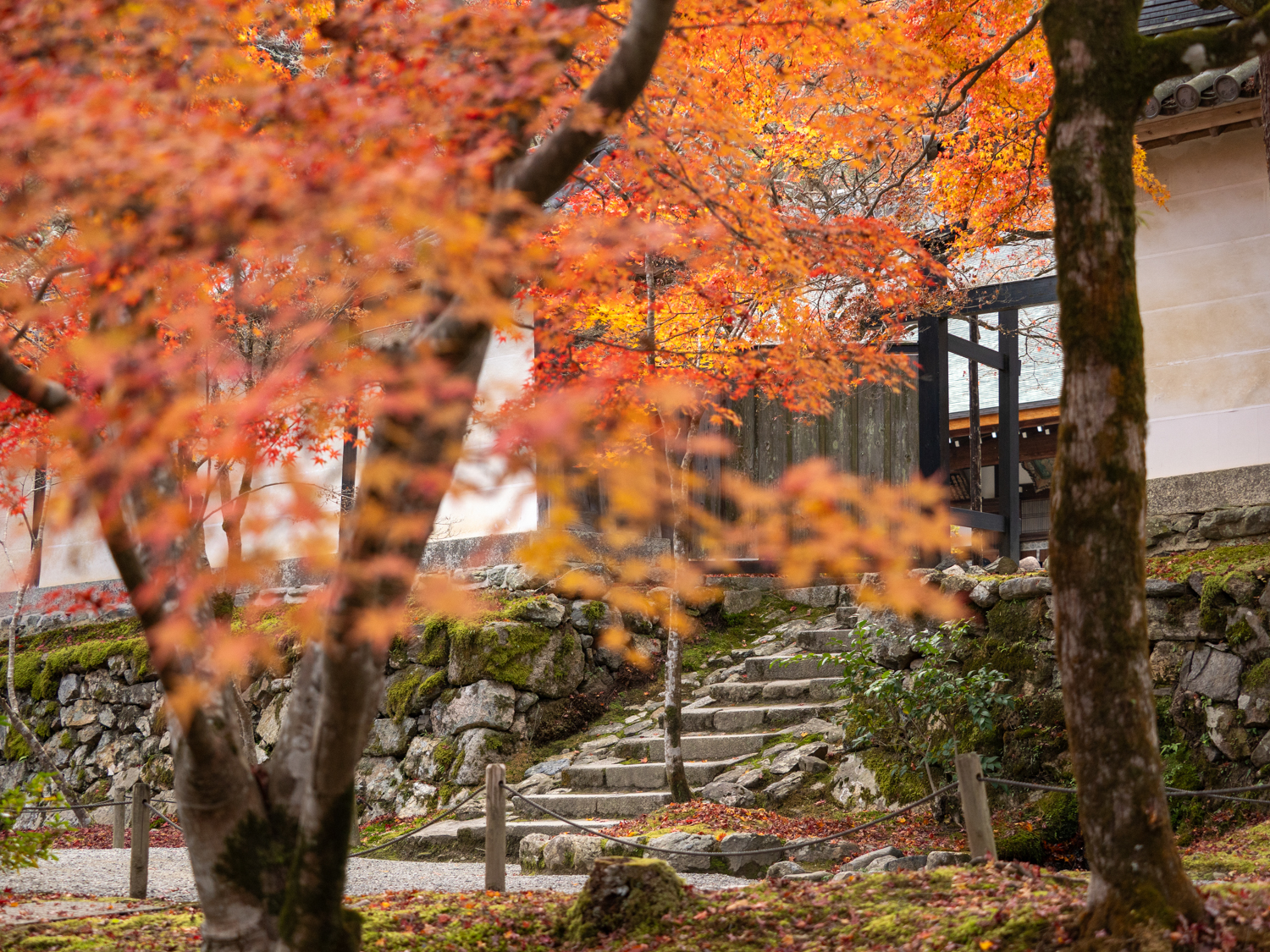
Continuing along the same network of quiet back streets, Nison-in is another temple that rewards photographers willing to wander beyond Arashiyama’s main thoroughfares. Set slightly uphill among tall maples and cedar trees, the approach to the temple is one of its most photogenic features, a long, gently rising path that becomes a tunnel of colour in autumn.
Inside the grounds, Nison-in offers a mix of moss gardens, stone lanterns and forest-framed buildings, with subtle viewpoints back across the valley. Compared to more famous temples, it remains pleasantly uncrowded for much of the day, making it an ideal place to walk slowly and explore different angles without distraction.
In late October and November, the maple-lined entrance becomes one of Arashiyama’s most beautiful autumn scenes, especially in soft morning light or on overcast days when colour and texture take centre stage. It pairs beautifully with nearby visits to Adashino Nenbutsu-ji and Gio-ji, forming a gentle walking circuit through some of the district’s quietest and most atmospheric corners.
There are some stairs that lead further up the hill behind the main Nison-in complex, I’d recommend these if you’re keen to explore the entire temple as it’s quite peaceful and adds a greater understanding to the visit. Inside too, you’re able to take your shoes off and visit, just be mindful of any signs that state photographs aren’t permitted.
Forest Trails and Hillside Paths
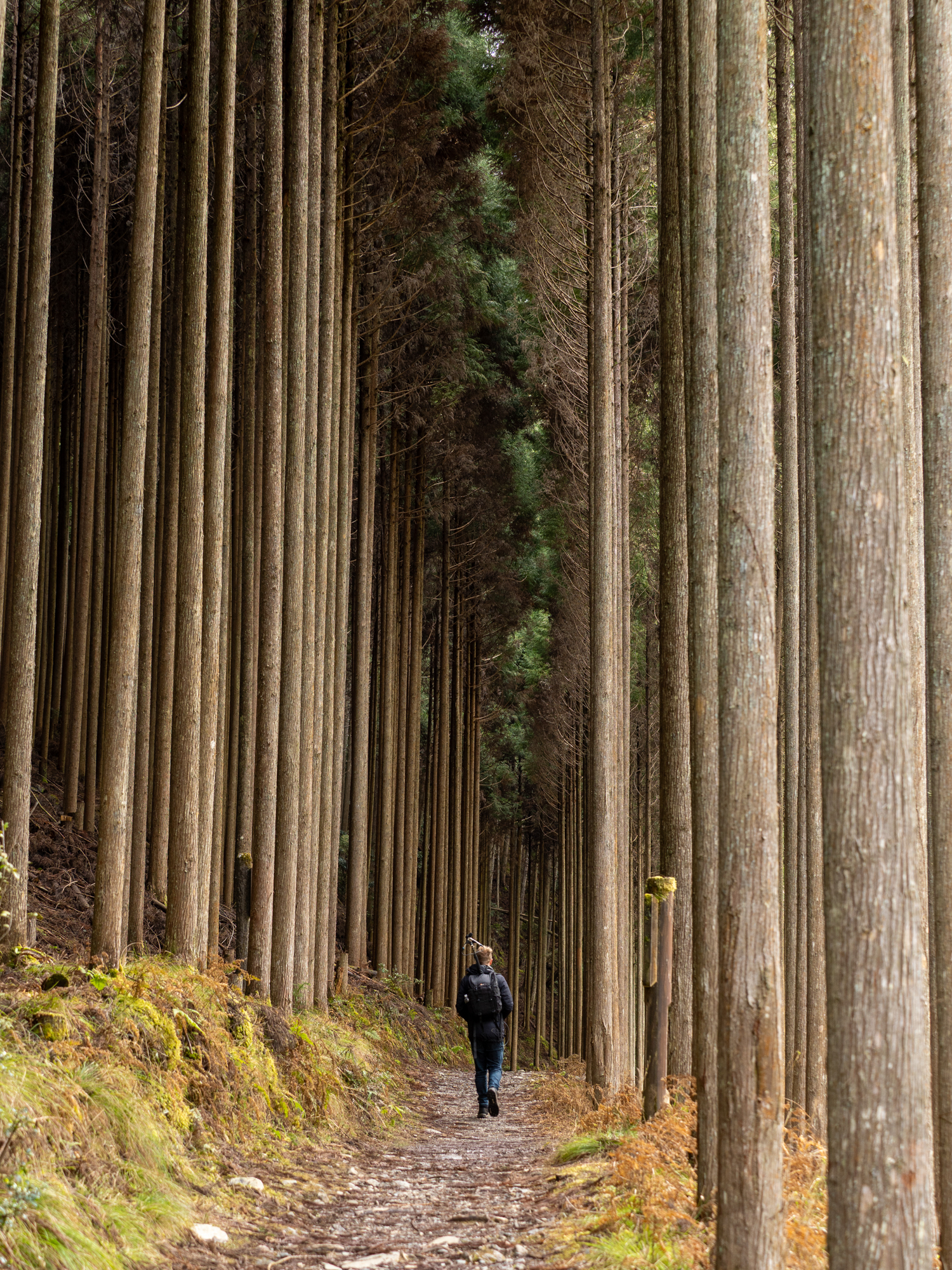
One of Arashiyama’s greatest strengths is the network of forest walks that connect temples, viewpoints and river crossings.
Trails lead through cedar forests, past small shrines and along ridgelines where the city disappears entirely. These paths are particularly rewarding in summer, when the forest provides shade and humidity softens the light, and in autumn, when colour spreads through the canopy above.
I’ll note that in late 2025, there was an increase in bear sightings here, so take precautions and wander with that in mind if you opt to explore the mountain areas behind Arashiyama.
A separate guide will be coming shortly that focuses on the path between Arashiyama and Jingo-ji Temple along the Kiyotaki River. If you’re visiting before it’s published, I’d recommend starting your walk in Takao, accessible via the Number 8 City Bus from Kyoto.
When to Visit and Light Conditions
Early morning remains the best time to experience Arashiyama at its quietest, especially around the bamboo grove and river walks. Because most temples don’t open until 9am, it can be worth spending your morning focusing on the natural environment, from the bamboo grove, to the viewpoints and river walks. During the middle of the day, I’d recommend opting for the temples like Nison-in or Adashino-Nenbutsuji, then enjoying a longer lunch in the small cafes.
Autumn is one of the most popular seasons, with peak colour falling around late-November in recent years. Spring brings fresh greens and softer tones, while summer offers vivid foliage, plus some intense humidity so be weary if you’re not great with heat, I’d advise visiting in the cooler months. Winter is often overlooked, but can be wonderfully calm, particularly because the bamboo is still green and you’re more likely to experience fog drifting through the mountains. You’re also less likely to stumble upon a bear if you’re planning on exploring the forest trails in winter!
Practical Notes for Photographers
- Tripods are generally permitted outdoors but discouraged or prohibited inside temple buildings and complexes. You may find setting yours up in the bamboo forest is quite frustrating with people continually walking past.
- Respect photography restrictions within temple interiors and gardens.
- Comfortable walking shoes are essential, many of the best locations involve staircases and uneven forest paths.
- Carry water in warmer months; humidity can be intense beneath the trees.
- If you’re visiting for sunrise, just a note for coffee lovers that most cafes in Arashiyama don’t open until 8 am, so visit Family Mart, Lawson or 7-11 to pack a little coffee in a can to have with you when arriving at 5am.
Exploring Arashiyama as Part of a Wider Route
Arashiyama works beautifully as part of a longer exploration through western and northern Kyoto, linking forest trails, riverside paths and hillside temples into a coherent photographic journey.
You can spend a full day or multiple days exploring, so it’s worth deciding what you’re keen to capture and planning accordingly.
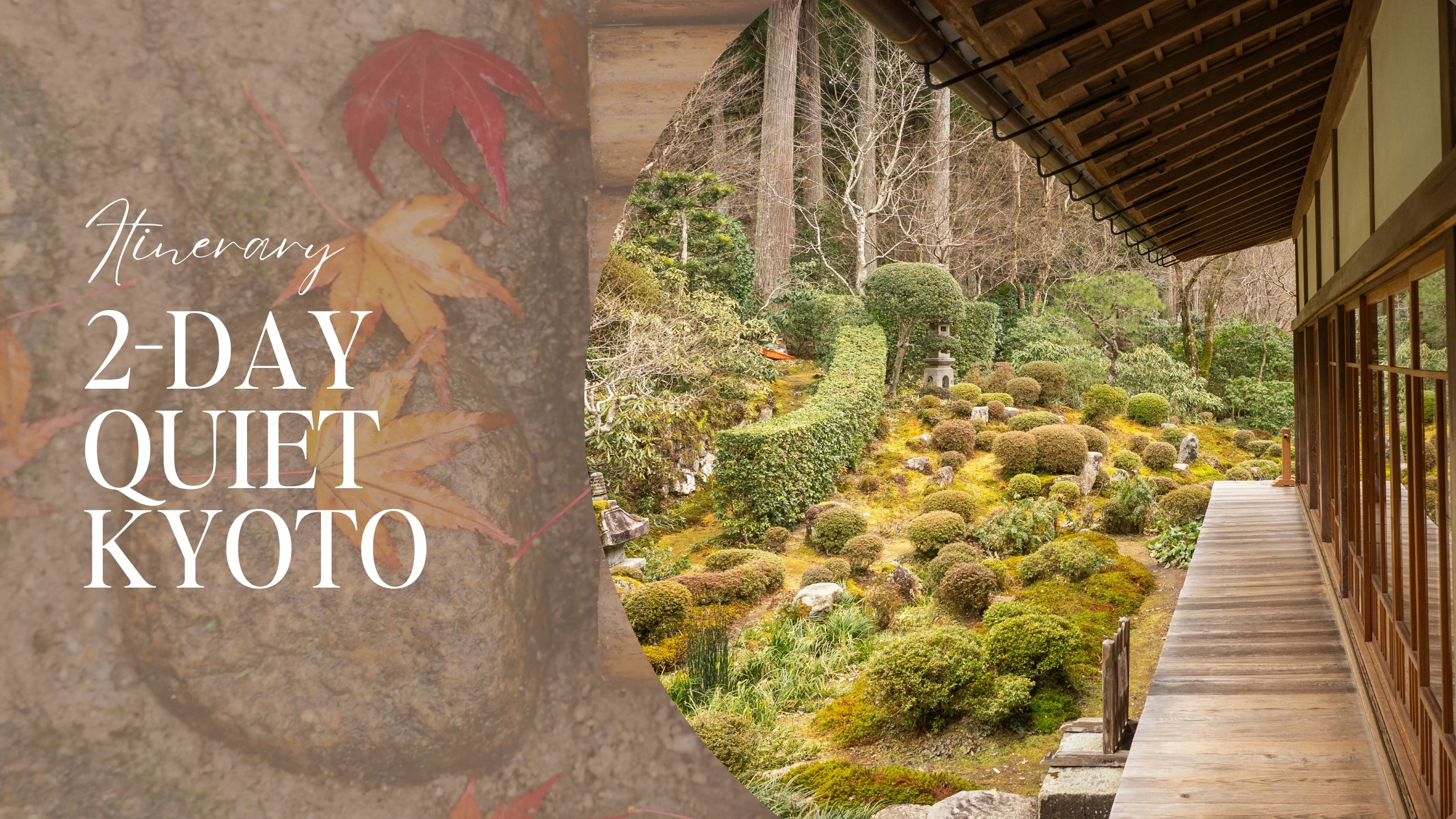
Inside The Travel Photography Club, I’ve created a detailed two-day photography itinerary that connects Arashiyama with the Kiyotaki River trail, Takao’s mountain temples, and the quieter districts of Ohara and northern Kyoto. It includes walking routes, transport notes and suggested sequencing across both days, designed for photographers who want to explore this side of the city with a clear plan.
If you’re planning a visit to Kyoto and would like access to the full itinerary, along with our destination guides, photography community and monthly magazine, you can find more about the Club here.
Arashiyama will always be known for its bamboo grove, but for photographers, its real beauty lies in the spaces beyond it, the river bends, the forest staircases, the quiet temples and the hills that frame the valley.
Step away from the main path, and Arashiyama becomes something else entirely. I’d love to see any images you capture after reading this guide, so please be sure to use the hashtags #thetravelphotographyclub or #thewanderinglens and tag @thetravelphotographyclub so I can see your adventures.
Please find below a link to a custom Google Map you’re welcome to access and use to see the Arashiyama Photography Locations mentioned within this guide.

Hello! I’m the founder and photographer behind The Wandering Lens.
With 19+yrs experience as a professional travel and landscape photographer, all advice found on this site is from my personal experience, or that of contributors, on the road. I hope it’s useful for your own travels and would love to hear in the comments about your trips and experiences around the world.

Leave a Comment