
Day of Adventure with Kali Travels in Patagonia
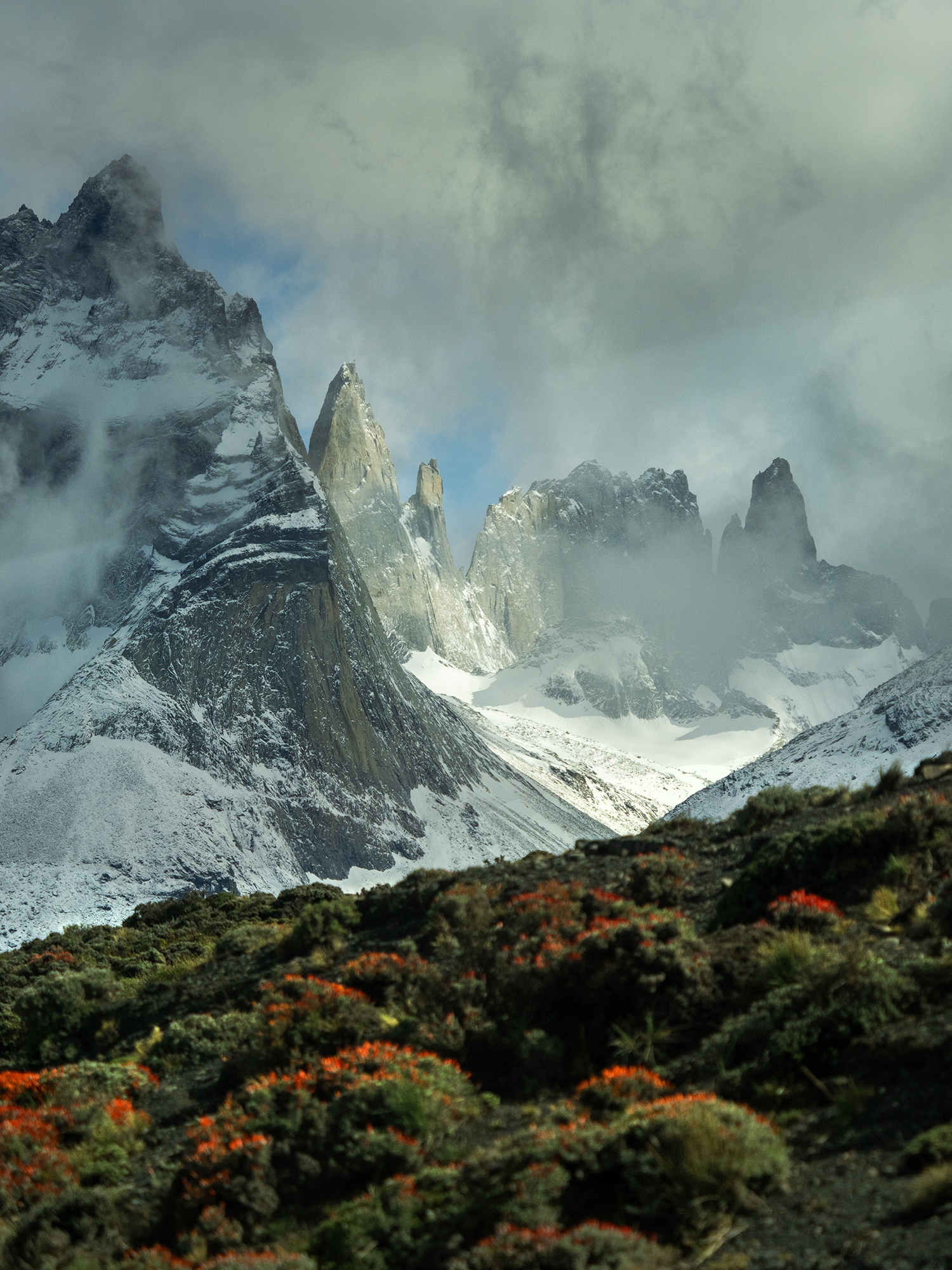
As my alarm went off bright and early, I opened the curtains of my room at Remota Lodge to see the distant peaks of Torres del Paine National Park slowly waking up. This region, known for its explorer-ready landscapes, weather and sculpted peaks, is also home to one of South America’s most elusive inhabitants: the puma.
Having visited Torres del Paine before, I’d explored these valleys, lakes, and trails for two weeks without ever seeing a Puma. The thought that they were there, quietly watching from the shadows, always added a certain thrill to every hike and photograph, and I admit to getting a little faster in my strides once darkness hit on my hike down from Mirador de las Torres.
This time, however, things were different. As part of the Adventure Travel World Summit, I joined Kali Travel and Adventure for a full-day excursion, one that promised not only the chance to witness the park’s wildlife but to do so alongside conservation-minded guides and trackers who know the land and likely movements of these majestic big cats.
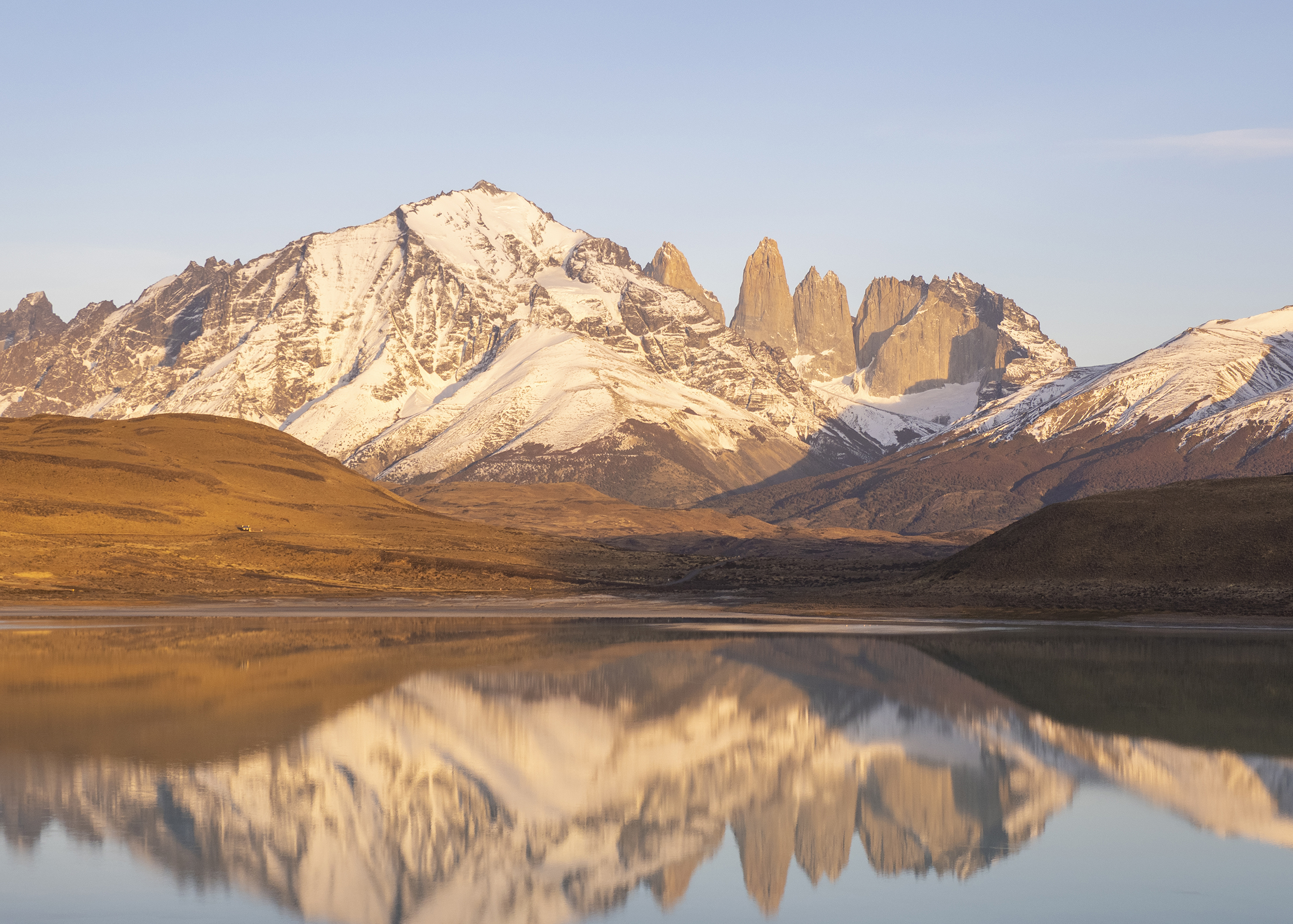
The drive out was filled with anticipation, and a few little naps, before I woke to see we’d arrived in an area of the park I’d not previously been. I instantly felt the benefit of having a local guide and Martin, the owner of Kali Travels, along with Mathias, a local tour guide, encouraged us to stare out the window and stay alert for any movement across the terrain.
Spotting guanaco, and gazing happily at the vast landscapes, I knew I’d be completely content and over the moon with just that. If nothing else appeared for the rest of the day, I was back in one of my happy places, and loving every minute.
Then, no more than twenty minutes into arriving within the park, they received a call from Nico, a trained tracker that was exploring another valley in the hope of spotting a puma for us.
He’d found one. Already.
The adrenaline hit and my happy daze was replaced with a rush to prepare my camera, putting on the MC-20 2 x teleconverter because I assumed the puma would be off in the distance.
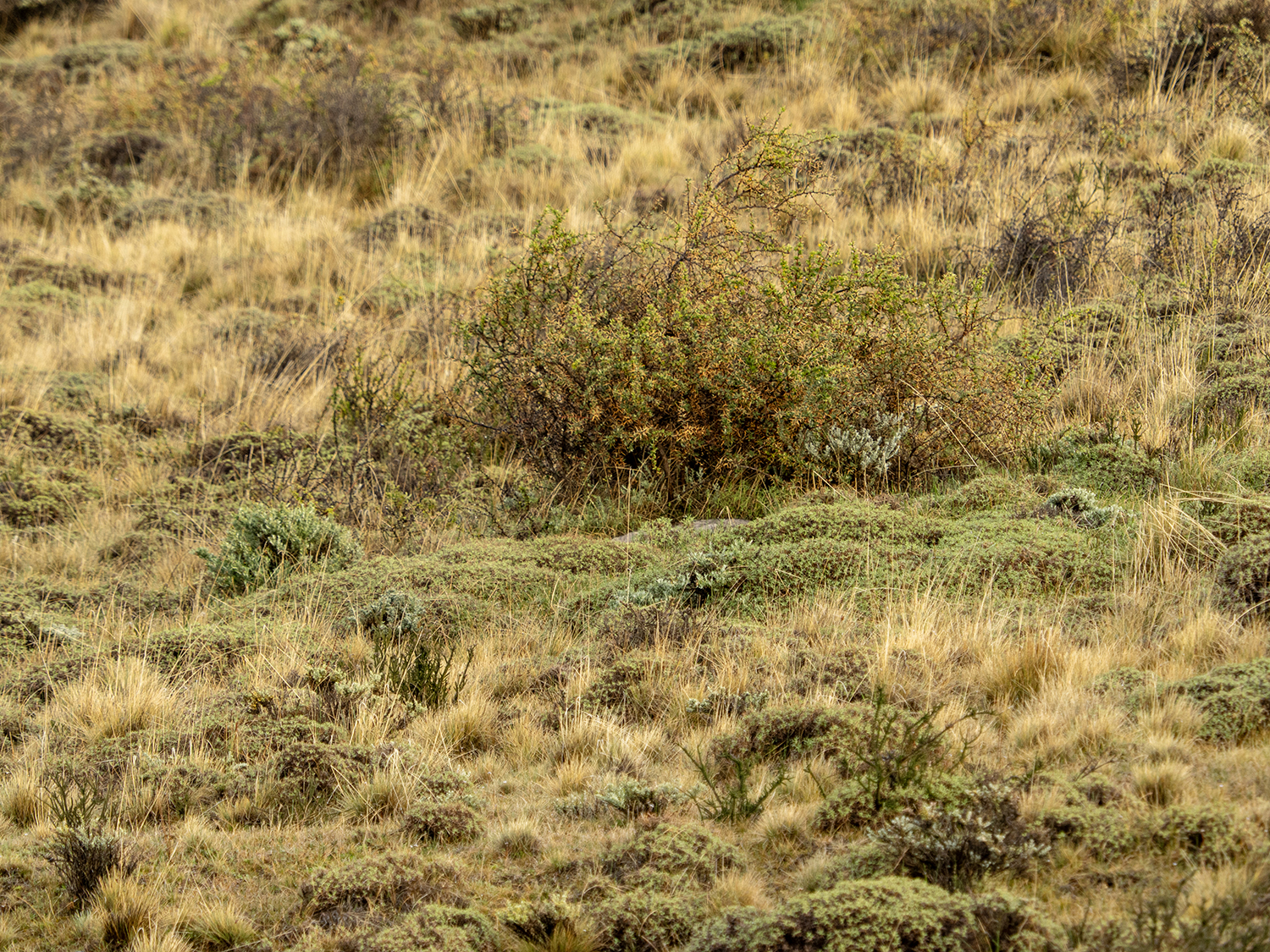
Arriving to see Nico beside the road, our group quickly joined him, staying close together to ensure the puma wasn’t disturbed by our presence. He pointed out that she was resting behind a small bush, and all we could see initially was a tiny glimpse of her back.
All we could do was watch and wait.
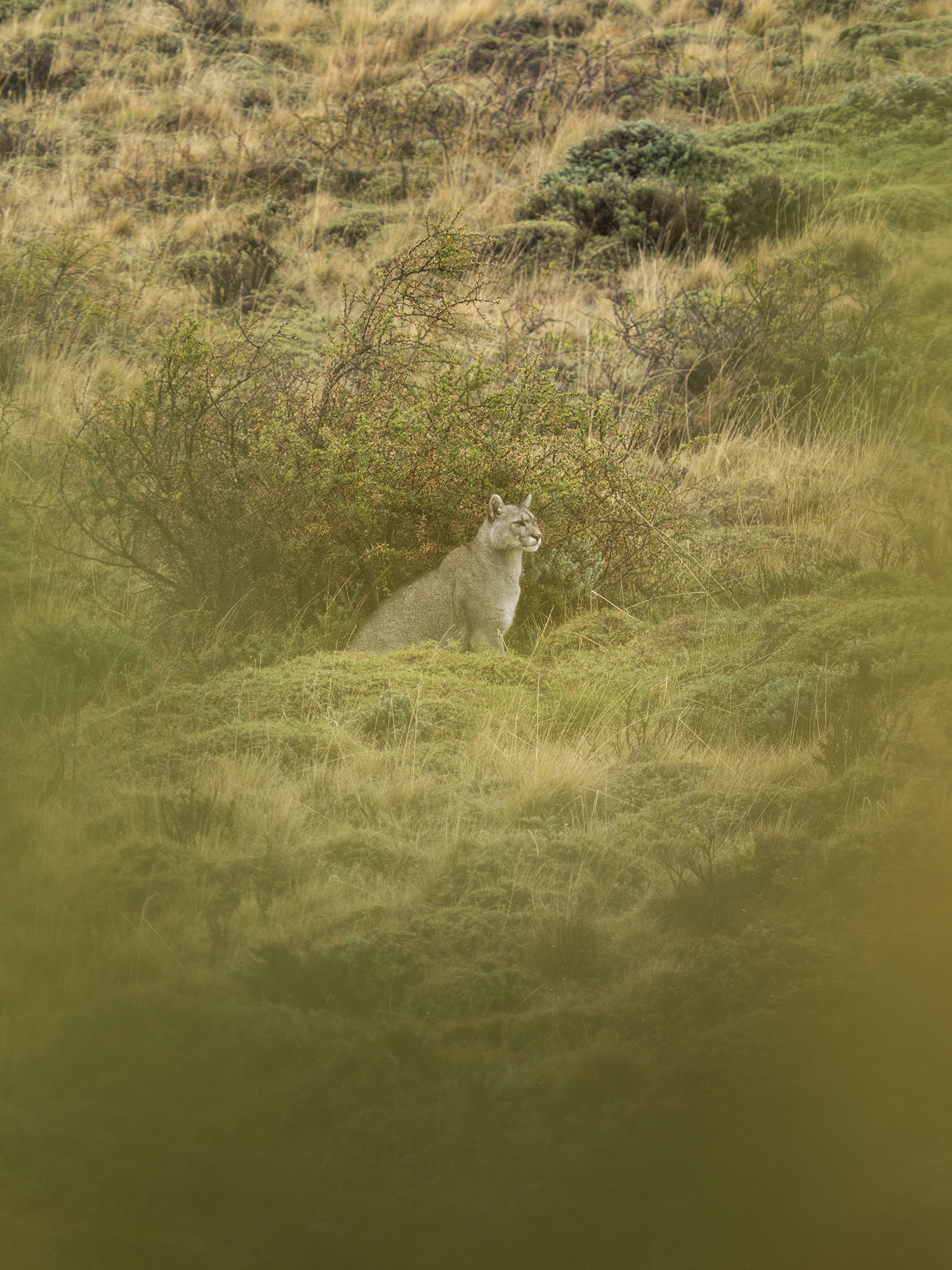
(can you spot her grey back in the image below?)
The temperature was close to zero that morning with constant drizzle, and while a few passing groups grew tired of waiting for her to wake, our group persisted, and for that I’ll be forever grateful to our guides!
In my rush to get out of the vehicle, I’d left my gloves in my bag, and ended up with numb, red fingers after standing in the chilly and wet conditions for about 30 minutes. It was one of those times where you may only get a split-second chance to get your shot, and for that reason, I didn’t want to risk a dash to retrieve my gloves and instead, kept myself busy by chatting with my fellow travellers, hearing stories about Arnie Weissman’s adventures in Antarctica, Tala Dabain’s in Jordan, and David Torres’ in Ecuador and the Galapagos. Events like the ATWS bring together a community of explorers, and I couldn’t help but pinch myself at how lucky I was to be standing there, on a day of adventure, connecting with such well-travelled industry colleagues while waiting for a puma to pop her head up…crazy!
Then, she woke.
Looking exactly like we all feel after a nap, she raised her head slowly, still appearing a little sleepy while assessing her surroundings.
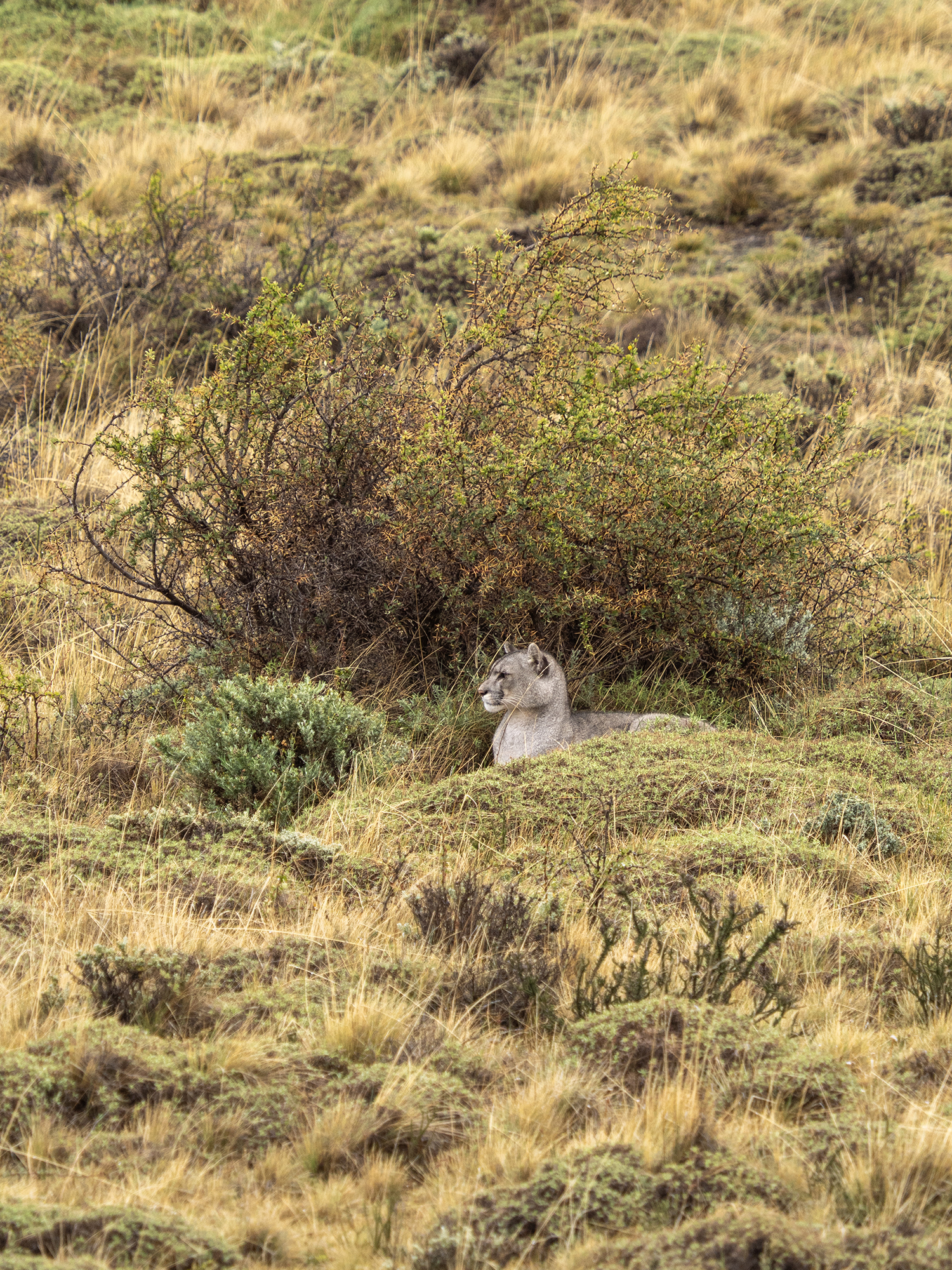
We took a few quick shots before she lay back down, tossing and turning as if she was attempting to get comfortable again and go back to sleep. Luckily though, there seemed to be a scent of guanaco in the air, as she woke again soon after to gaze a little more intensely on the peak behind us.
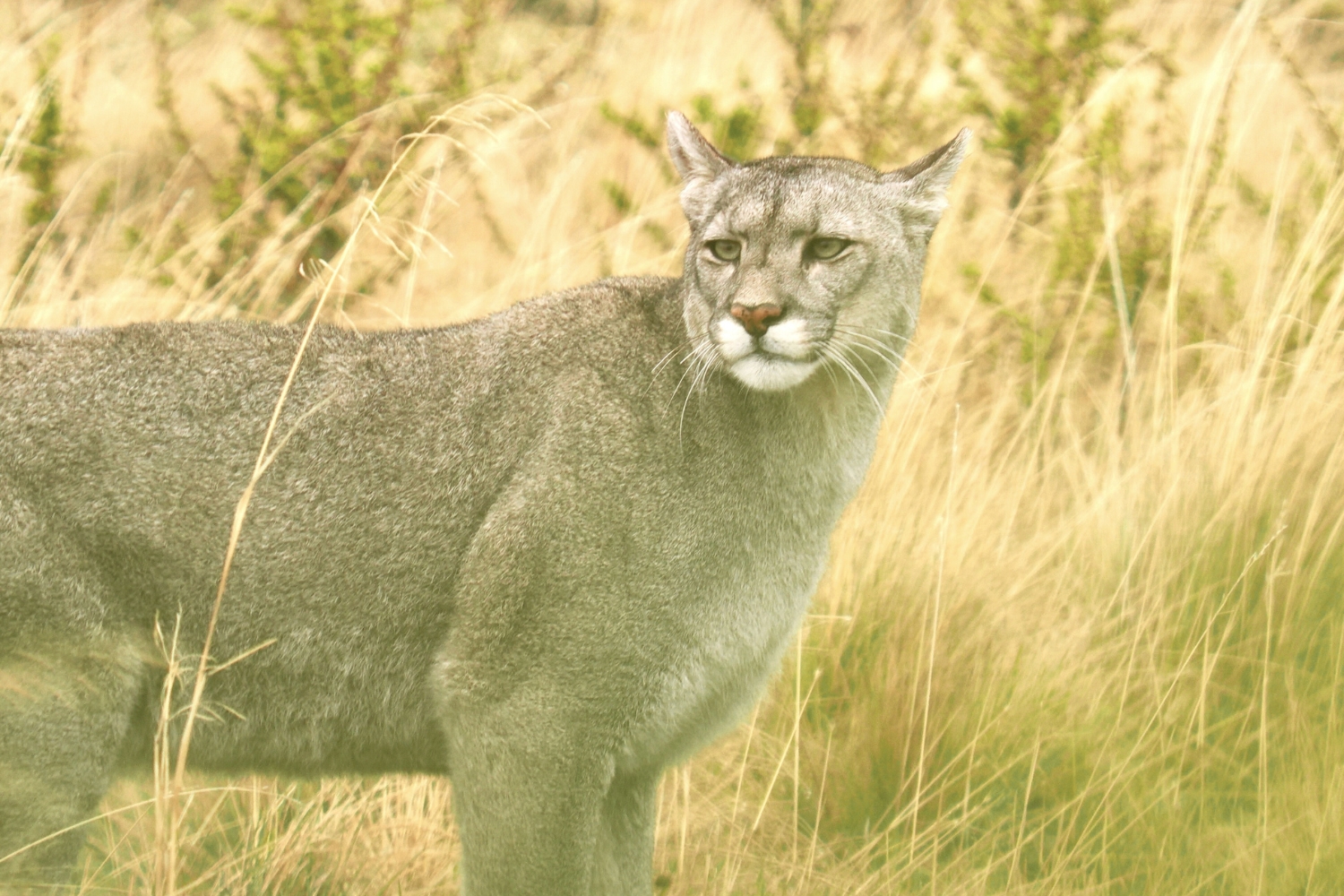
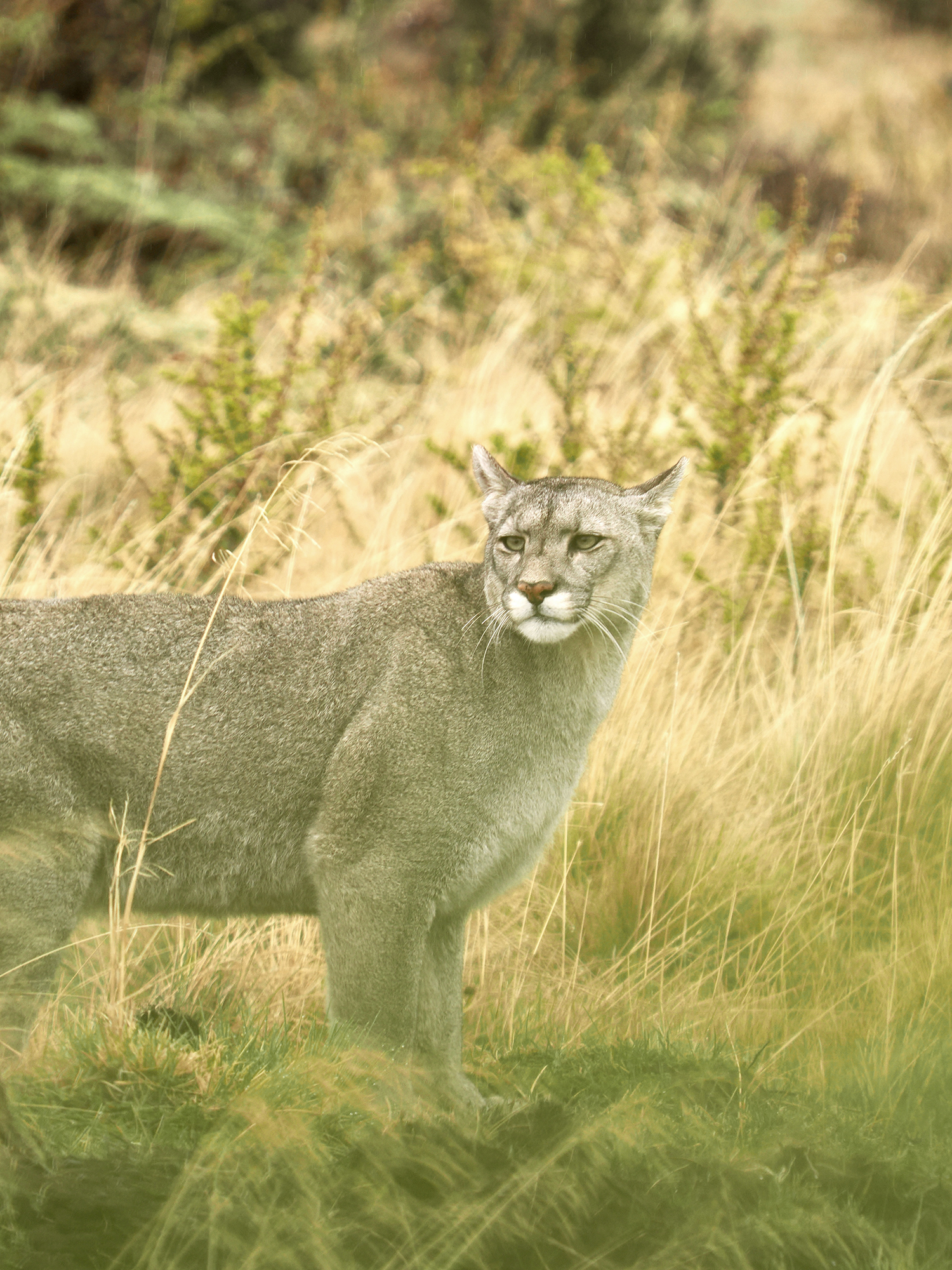
This moment enabled me to quickly capture an image of her staring directly ahead, and to get a closer look at the striking features of a puma’s eyes, nose, and ears. I had the MC-20 teleconverter on, which enabled me to reach a focal length of 300mm, ideal for her position on the hillside.
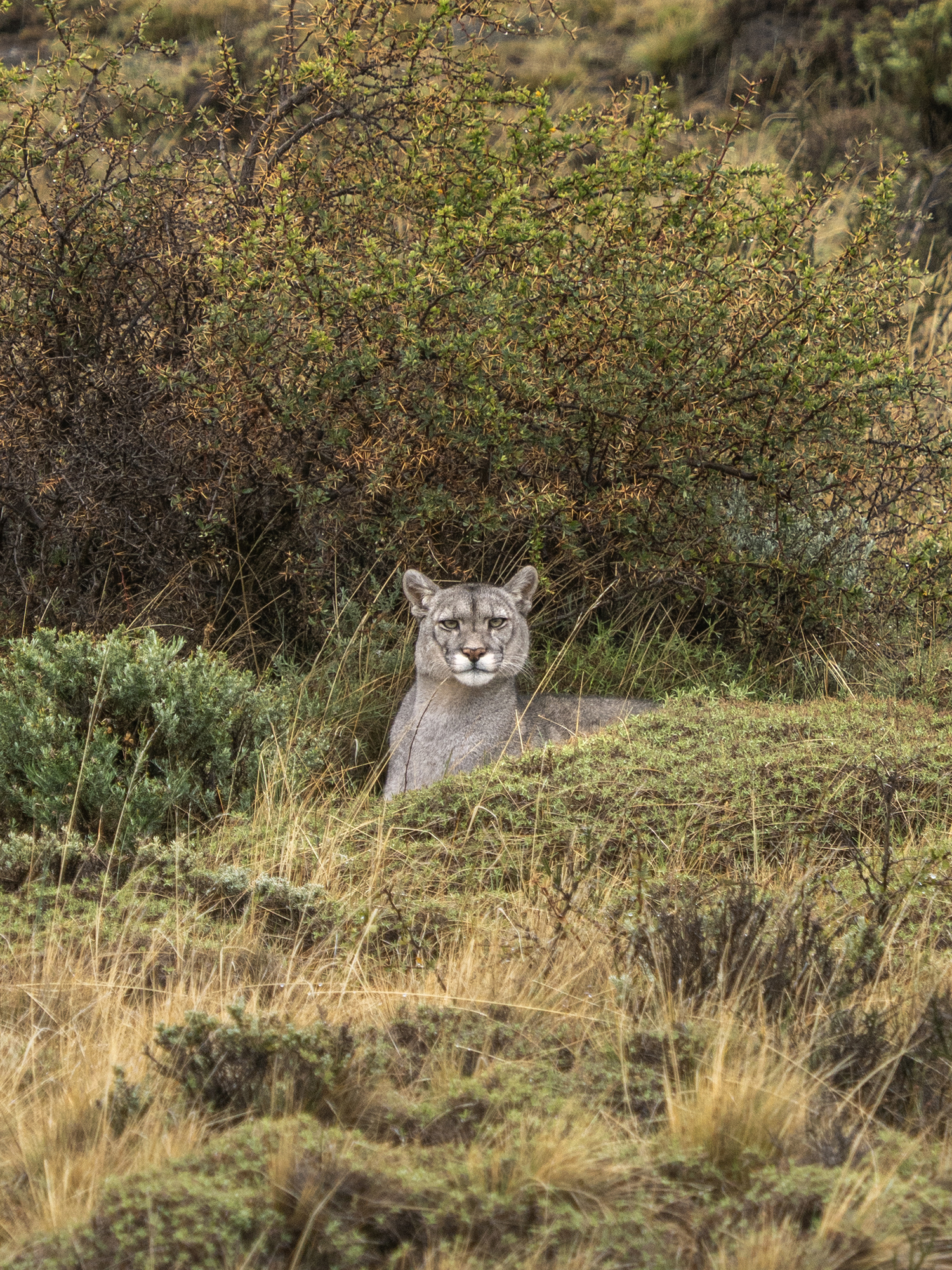
Until she did a big stretch, and began to wander down towards us.
Our guides mentioned she was no doubt hungry, with a possible guanaco in the area directly behind us. This put us in her path, and she didn’t seem at all bothered by the idea of crossing closely. It’s moments like this, where you want the wildlife to have a completely clear path, one unobstructed by tourists, as a photo is never worth impacting the wildlife and their natural behaviour.
She came down the hill at quite a speed, definitely on the hunt, so we couldn’t shift the vehicles for fear of spooking her, and instead, stood very still, moving back slowly and gathering together in the hope she would find a safe path between our group and another that had arrived.
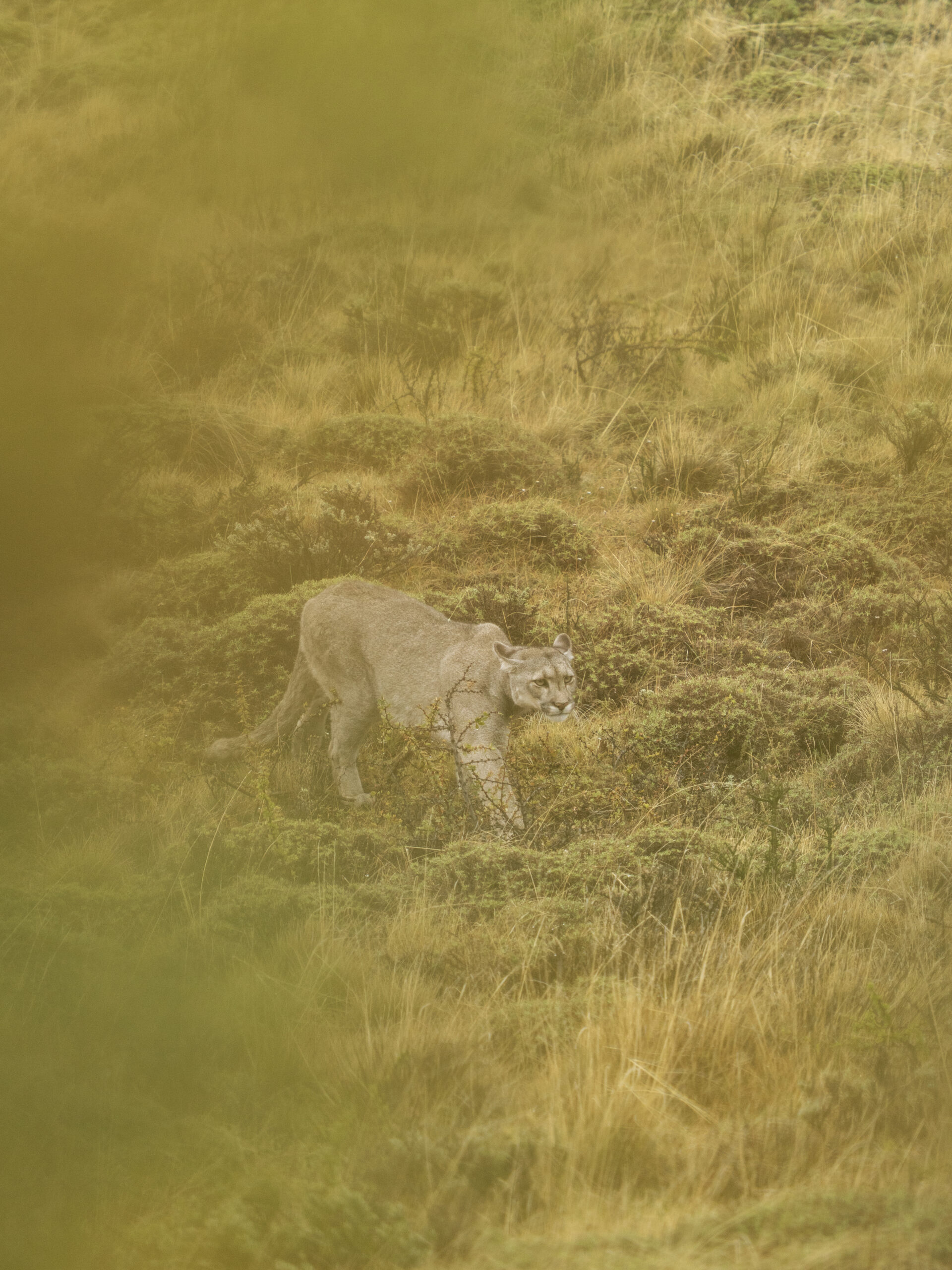
Before crossing though, she stopped. Mere meters from us. Perhaps it was our presence, perhaps she heard or smelt something, but instead of continuing her route, she paused, turned around, and slowly wandered back up the hill.
To watch as she sauntered through the landscape, blending in with the coirón grass, Calafate and guanaco bushes, a figure that forces you to stare in awe, was so special.
Taking a deep breath, we jumped back on the bus, quickly checked the images we captured, and realised it was only 10am.
There was an entire day of photography ahead.
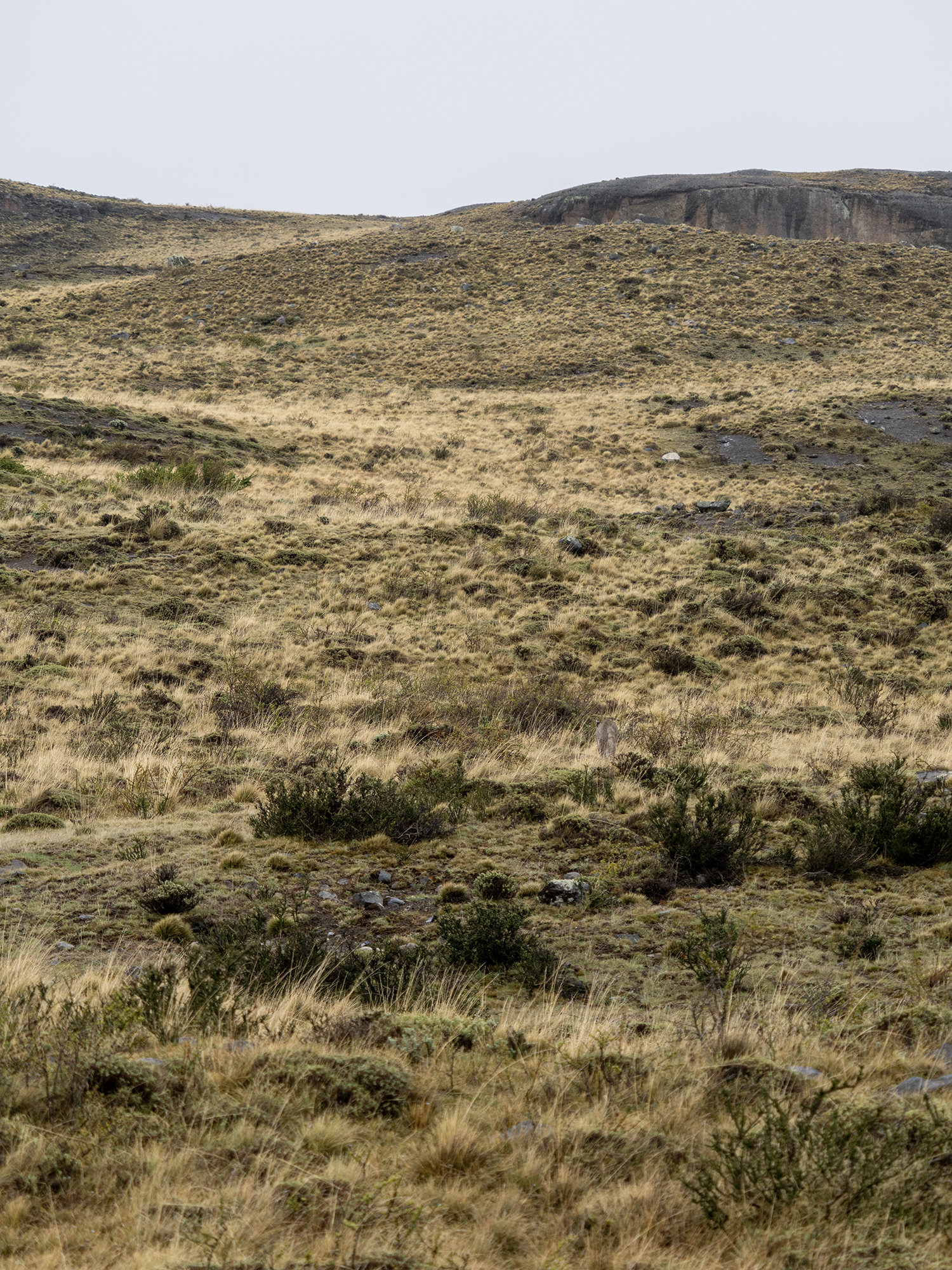
Can you spot her amongst the landscape? This is no doubt the reason I never saw any when I was travelling solo.
Conservation in Action
According to research supported by organisations like Rewilding Chile, the Tompkins Conservation legacy, Torres del Paine now has one of the highest concentrations of pumas anywhere in the world. This success is thanks to decades of cooperation between conservationists, landowners, and ecotourism operators who have transformed public perception of these big cats. What was once conflict has become coexistence.
Today, trackers and guides play an essential role in maintaining that balance. Their presence ensures both visitor safety and minimal stress for the animals. Many trackers, including those working with Kali Travels and Adventures, are local to the region and deeply connected to its ecosystems; their knowledge not only increases the likelihood of sightings but also supports long-term monitoring of puma behaviour and movement.
Wildlife Photography – Photographing Pumas in the Wild
For this experience, I was using the OM SYSTEM OM-1 MKII paired with the M.Zuiko 40-150 mm F2.8 PRO lens and the MC-20 2× teleconverter, giving me an effective reach of 300 mm on a Micro Four Thirds system. The setup offered both versatility and speed, allowing quick reaction to movement while maintaining sharpness and subject isolation.
Here are a few tips for photographing pumas and other wildlife in Torres del Paine:
- Use silent mode. The OM-1 MKII’s electronic shutter is invaluable when working around easily disturbed animals.
- Stability. If your camera doesn’t have great stabilisation, you can brace yourself against a vehicle, rock, or even bend down and use your knee. The OM-1 MKII has incredibly good in-built stabilisation, so even with shaking, cold hands, I was fine snapping away, even at the longer focal lengths.
- Aim for eye-level perspective. While it wasn’t possible to step into the field, shooting low through the grass enhances intimacy and places the animal within its environment. I used a small bush beside the road to try and add a sense of place and texture in the foreground.
- Watch for behaviour. Stretching, yawning, scanning the horizon, these moments tell stories far beyond a static portrait. Usually too, they’ll happen fast, so both patience and observation is crucial!
- Keep distance and respect boundaries. The best images come from patience, not pursuit.
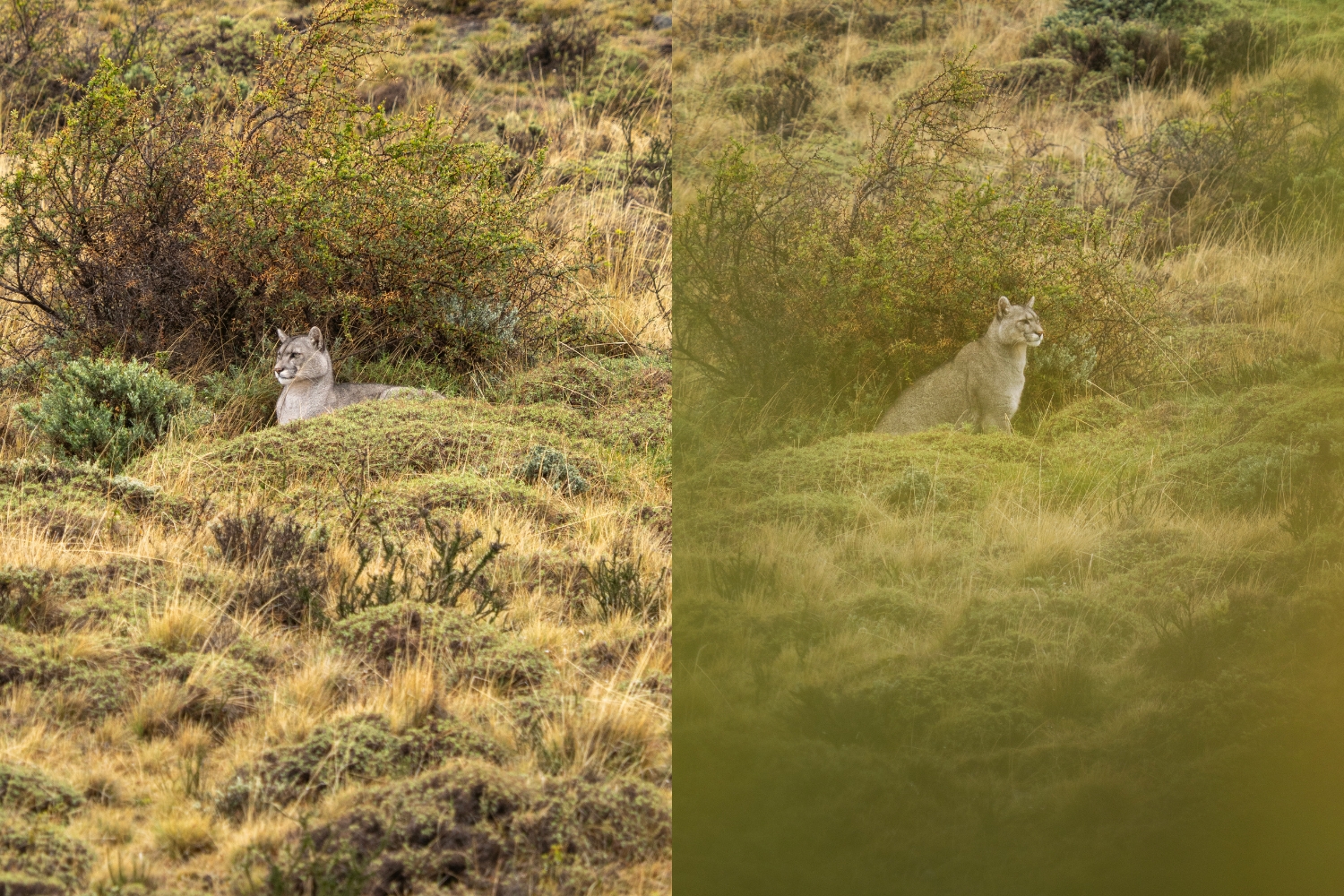
See below image that highlights the difference with using grass as a foreground texture/bokeh blur to anchor the puma as the key subject in the frame, and draw all attention to her. The image on the left is without a foreground, the image on the right is shot through some shrubs to add a pop of colour and remove the majority of distractions and surrounding details.
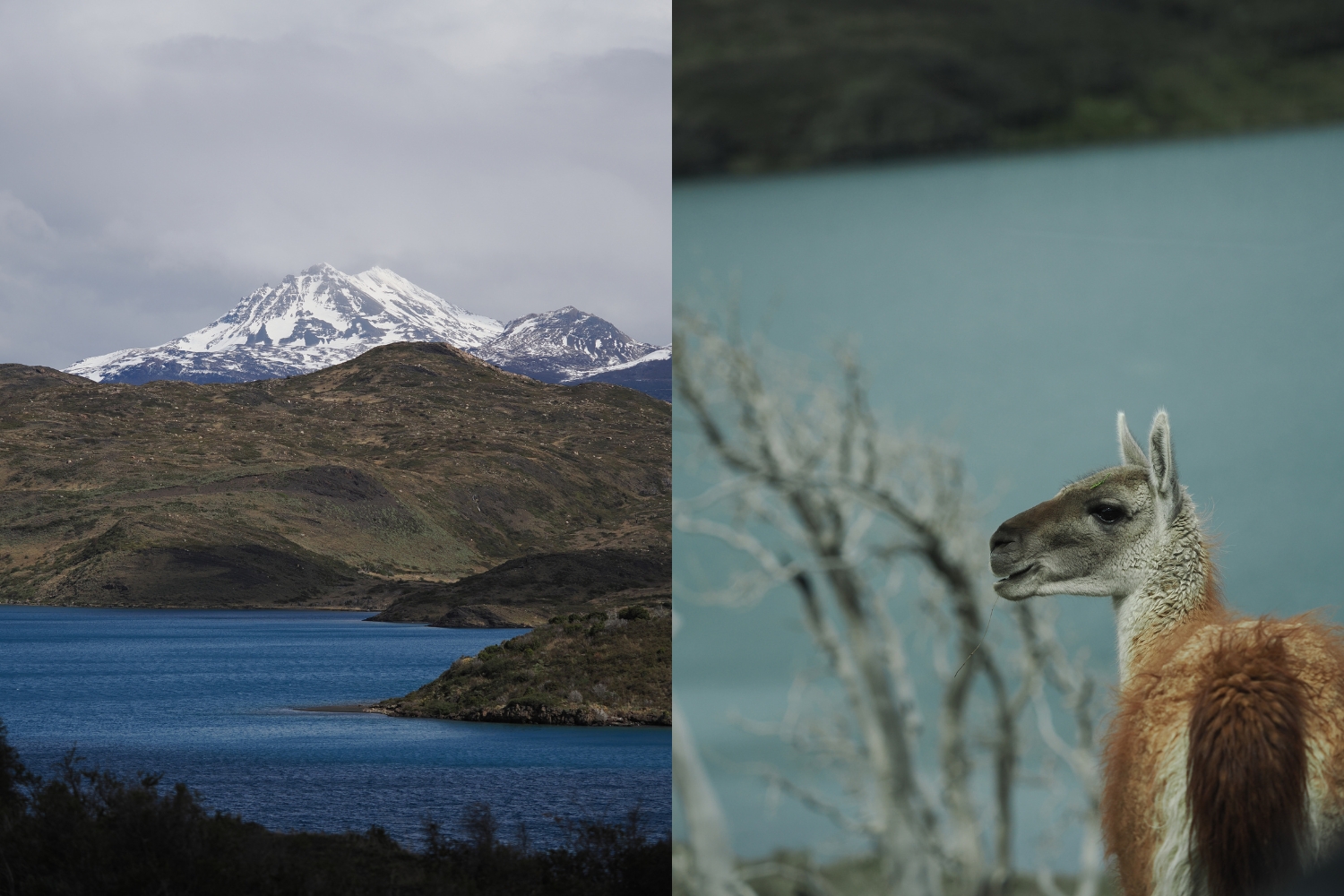
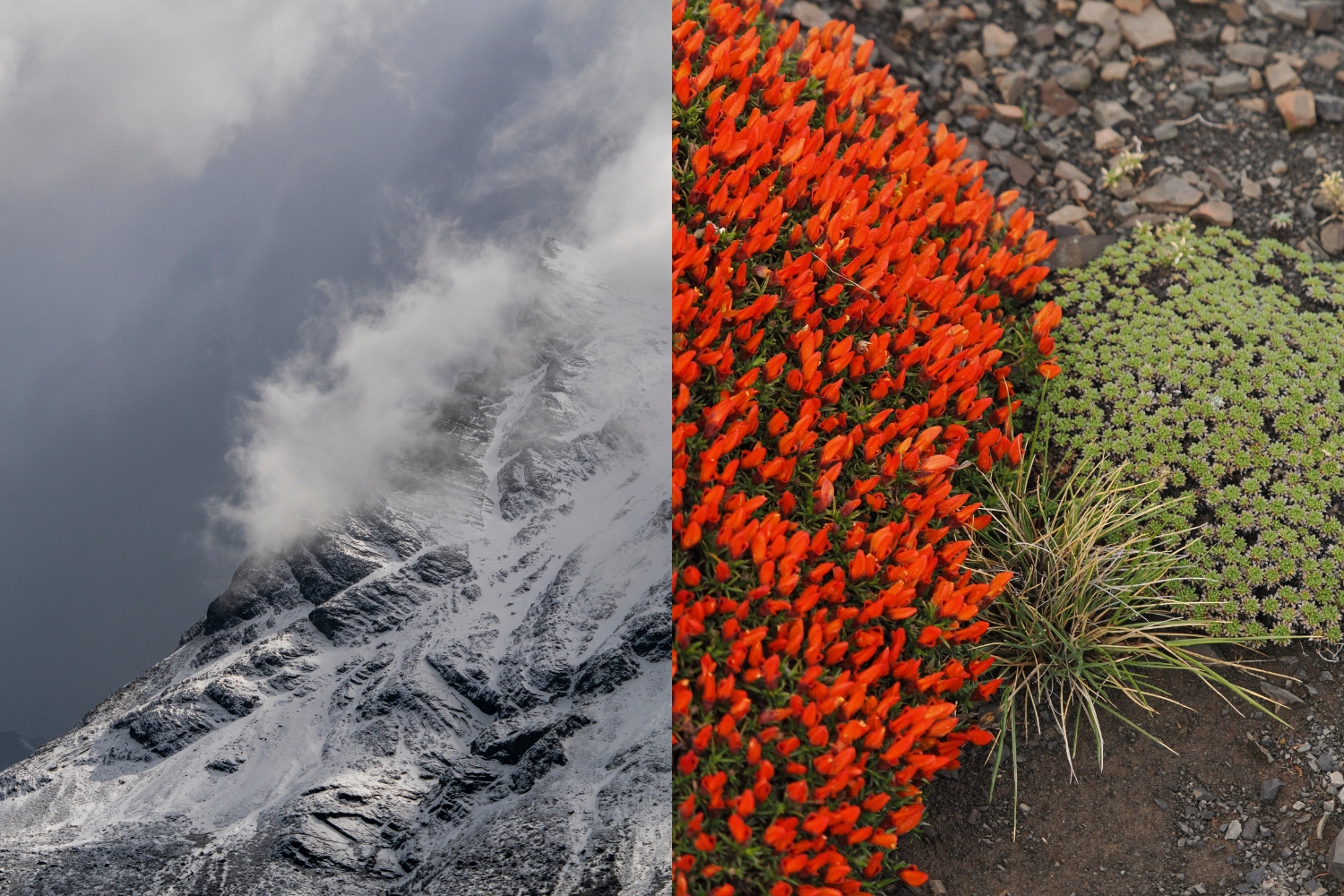
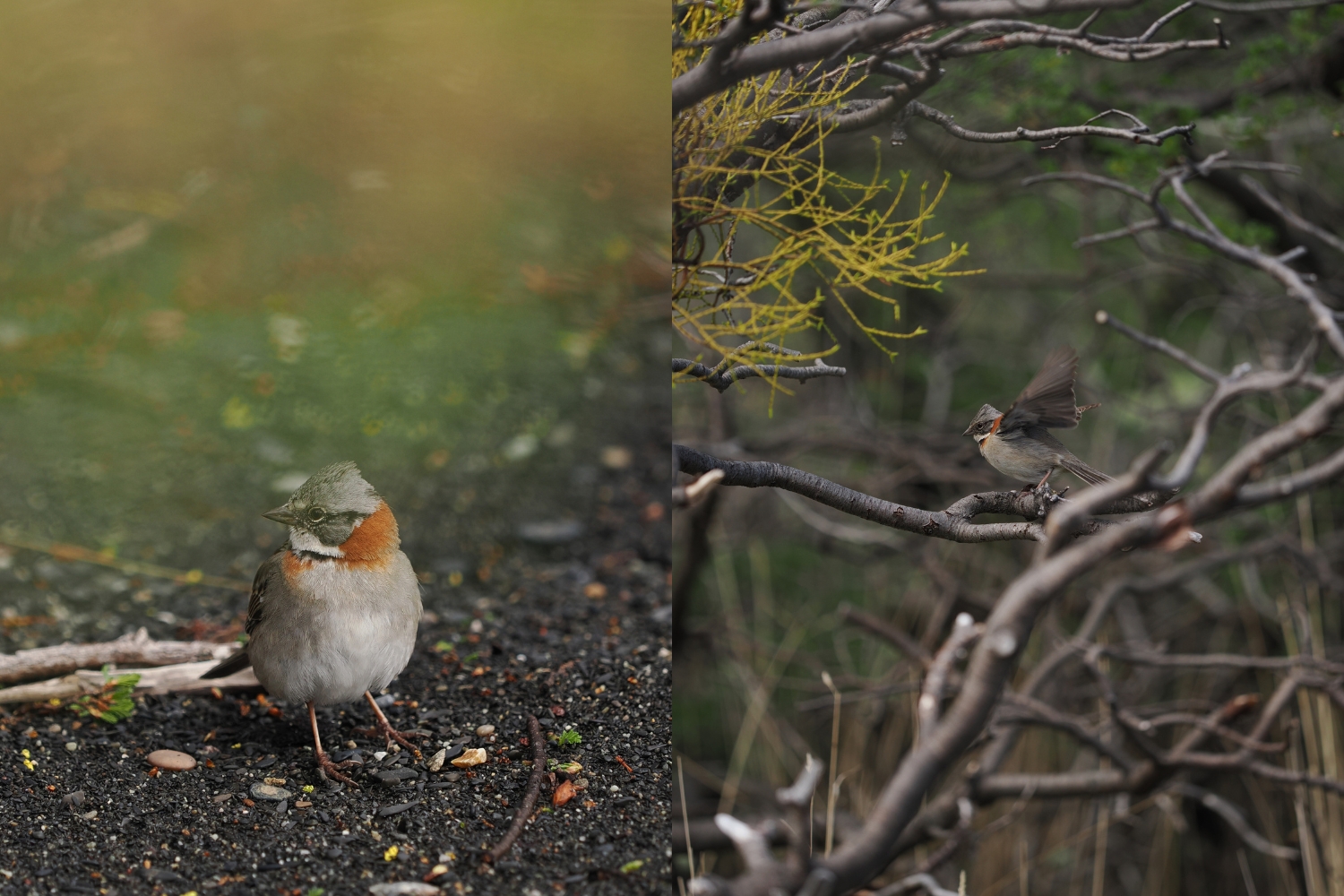
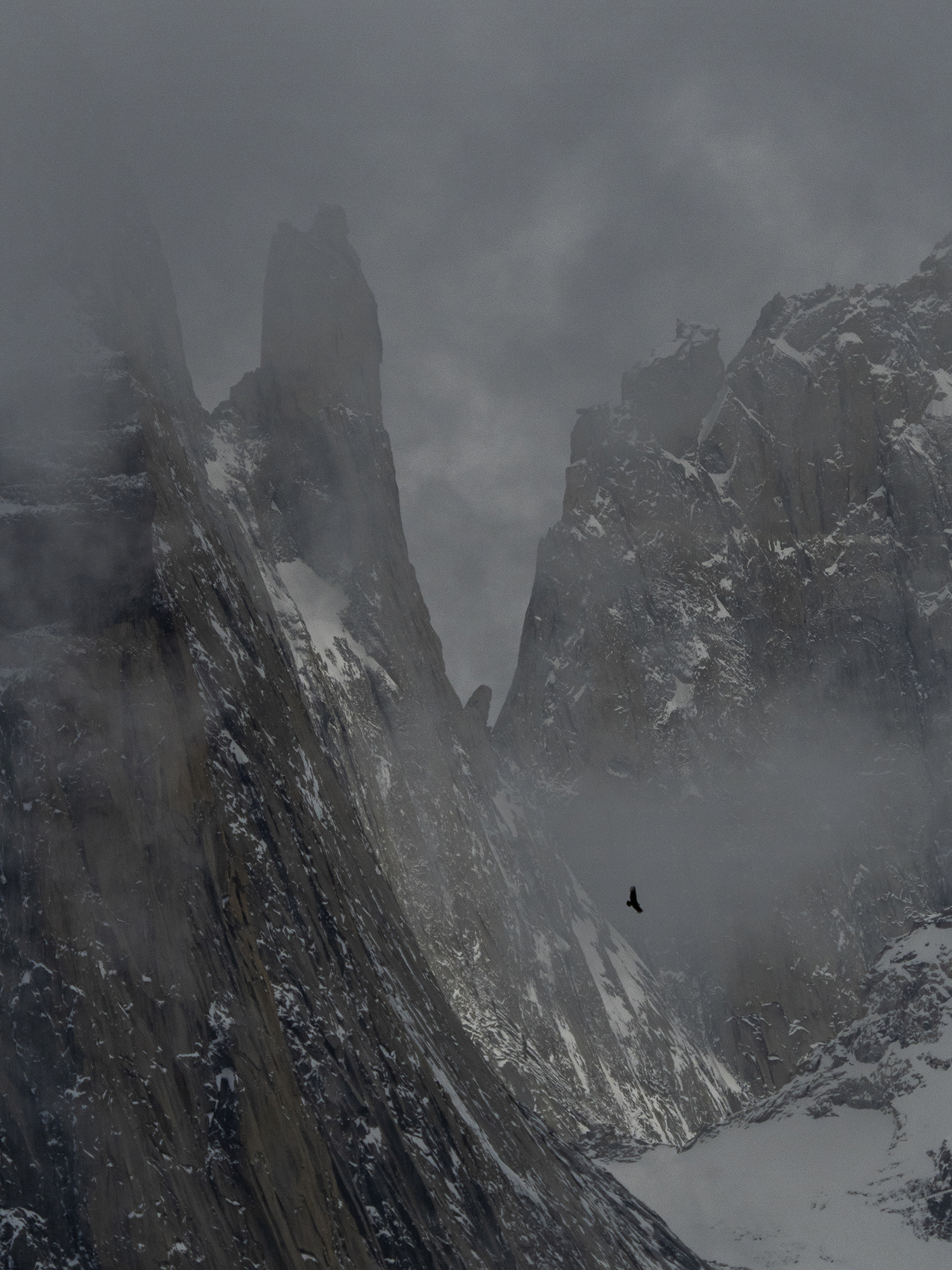
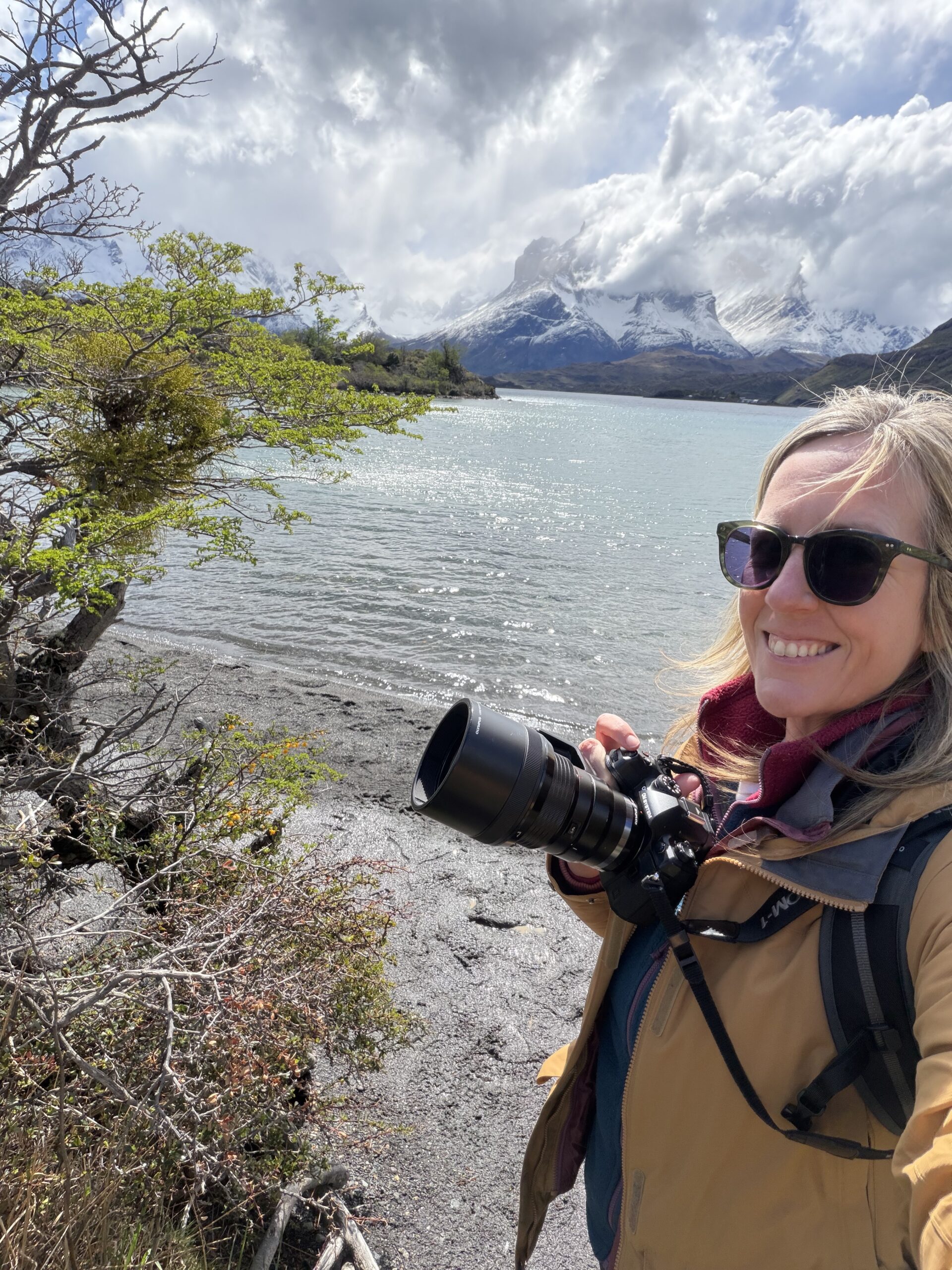
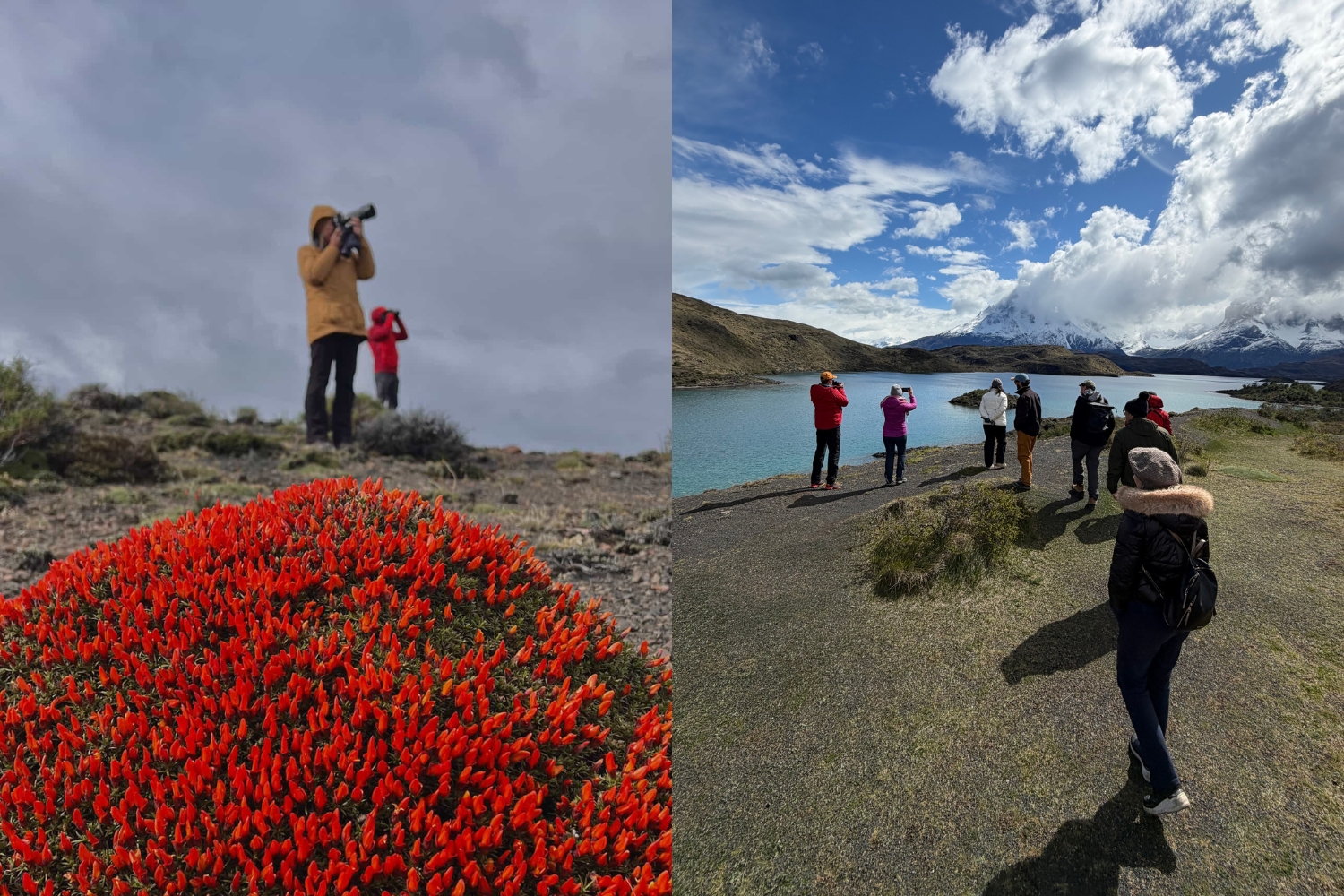
For the remainder of the day, we travelled along the gravel roads to numerous viewpoints, from Laguna Amarga to Lago Pehoé. I was so happy some of our stops were previously placed I’d photographed in the autumn season, seeing them again in Spring was beautiful, with bird life, different colours, and a little more wind, was beautiful.
Take a peek below at some other images I captured on my Day of Adventure with Kali Travels and Adventures, during the ATWS in Puerto Natales.
Travel and landscape photographer from Australia who is far more comfortable in a pair of flippers than heels! Having worked for publications such as Lonely Planet, Wanderlust and the Sunday Times, Lisa founded The Wandering Lens to share destination guides to the worlds most photogenic places and outdoor experiences.
Leave a Comment